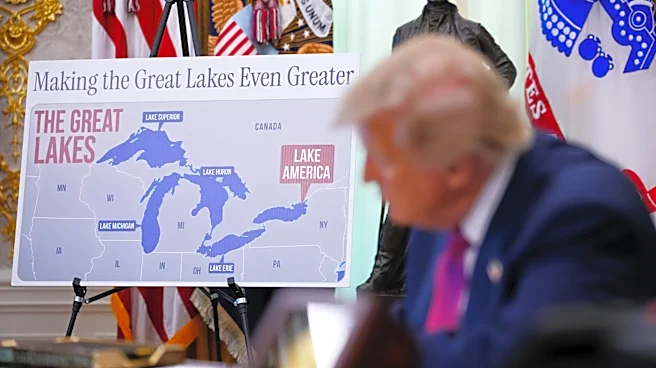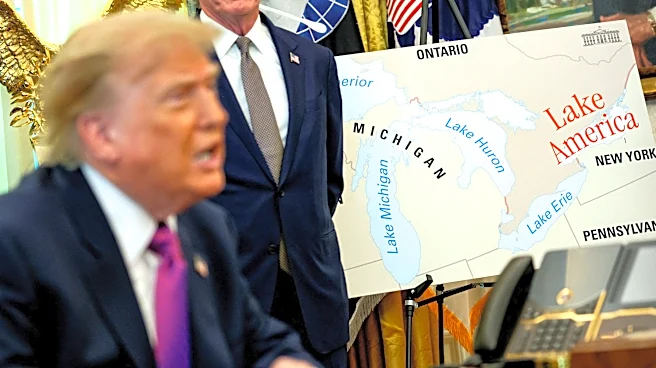








The National Weather Service has begun updating its maps, websites, forecasts and other products to use the name "Lake America" for the body of water historically known as Lake Ontario, the agency announced Sept. 14.
The changes will affect a broad range of weather products, including marine forecasts for Lake Ontario, maps, websites and other forecast products used across the region.
The federal government is implementing the name change following an executive order signed by President Donald Trump on Aug. 27. The order directed the Interior Department and U.S. Board on Geographic Names to take steps to rename Lake Ontario as Lake America within 30 days and update federal geographic naming systems.
When will the National Weather Service use Lake America?
The National Weather Service said the process
of updating its naming conventions is underway. The agency said the changes will be implemented across its maps, weather products, websites and other materials in the coming days and weeks.
As recently as Sept. 13, the name "Lake Ontario" was still being used in the forecast discussion from the weather service's Buffalo office. The discussion noted that a few showers were possible "southeast of Lake Ontario during the predawn hours of Monday morning."
"Caution will be exercised to avoid disruptions to operations," read a weather service statement from Courtney Draggon, director of the agency's business operations and accountability office.
What does the Lake America name change mean?
Lake Ontario is part of the international boundary between the United States and Canada. Trump's executive order directs federal agencies to use "Lake America" in federal maps, documents and other references.
The order does not require Canada, New York state, local governments or private companies to adopt the new name. Canadian officials have said they will continue to call the lake Lake Ontario.
Google Maps has changed the name for users in the United States, while continuing to use Lake Ontario for users in Canada. Apple also has changed the name in its map products. MapQuest has said it will not make the change.
Why is it called Lake Ontario?
The name "Lake Ontario" dates back centuries and is derived from an Indigenous term associated with the lake, although sources differ on its exact spelling and translation.
The Center for Great Lakes Literacy traces the name to the Iroquoian word "oniatarí," commonly translated as "lake of shining waters."
European mapmakers began using the name in the 17th century. The Library of Congress has several maps that reference Lake Ontario, including a 17th-century map.
Lake Ontario has played a major role in the history, development and commerce of both New York and Ontario, Canada.
10 facts about Lake Ontario
- Lake Ontario is the smallest of the five Great Lakes by surface area, covering about 7,340 square miles, according to the National Museum of the Great Lakes.
- The lake forms part of the international border between the United States and Canada, with much of its southern shoreline in New York.
- Toronto, Canada's largest city, sits along the lake's northwestern shore.
- Despite being the smallest Great Lake by surface area, Lake Ontario is deep. Its deepest point is about 802 feet, while its average depth is about 283 feet.
- The lake was formed thousands of years ago as glaciers carved the Great Lakes basin during the last ice age.
- The lake is home to numerous islands and connects to the St. Lawrence River, which carries water from the Great Lakes toward the Atlantic Ocean.
- Lake Ontario's drainage basin covers about 72,500 square kilometers and includes portions of both the United States and Canada.
- The lake supports a diverse ecosystem, including numerous species of fish, birds, plants and other wildlife.
- Lake Ontario has long played an important role in regional shipping and transportation, with major ports in cities including Toronto, Hamilton and Rochester.
- The lake is a popular destination for boating, fishing, bird-watching and swimming, with parks and beaches along its shores, according to the National Museum of the Great Lakes.
What did Trump's executive order say?
Trump signed the executive order Aug. 27 in the Oval Office, directing the Interior Department and U.S. Board on Geographic Names to rename the lake as Lake America in federal geographic records.
The order says the change is intended to recognize the lake's importance to American commerce, transportation, defense and history. It directs the Interior Department, in coordination with the Board on Geographic Names, to update the federal Geographic Names Information System.
The name change is part of a broader series of federal geographic renamings under the Trump administration, including the 2025 change from the Gulf of Mexico to the Gulf of America.
Will Canada call it Lake America?
No. The federal order applies to the U.S. government and does not require Canada or other governments to adopt the new name.
Canadian officials have said they will continue to refer to the body of water as Lake Ontario.
The lake remains part of the U.S.-Canada border, regardless of the name used by either country.
This article originally appeared on Rochester Democrat and Chronicle: NWS begins using ‘Lake America’ instead of Lake Ontario