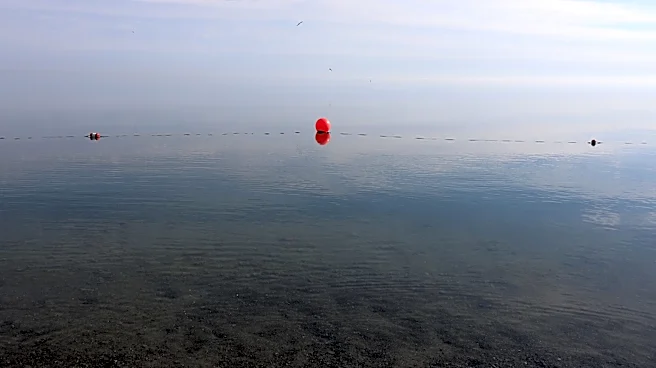



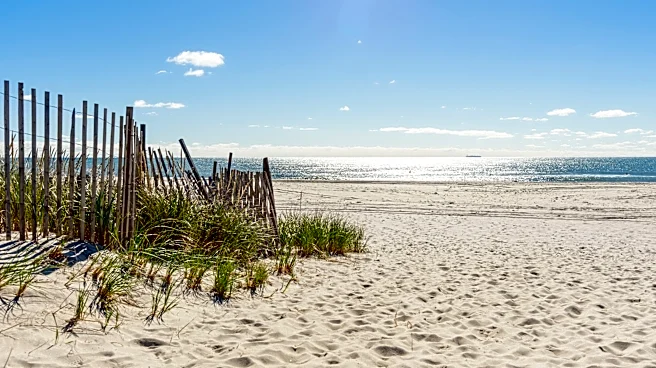

Eight swimming beaches at New York State Parks are closed due to harmful algal blooms, a lack of lifeguards and one other is under advisory due to high bacteria levels, according to the state Department of Parks, Recreation and Historic Preservation.
New York State has 70 state-owned swimming beaches, which are all regularly tested for bacterial levels of impaired water quality and to determine the public's risk of coming into contact with waterborne diseases, according to state officials.
The New York State Department of Parks, Recreation and Historic Preservation tracks and updates the findings from the weekly testing and provides updates on whether beaches are open, closed or under advisory. Test results are available about 24 hours after samples
are taken.
As of mid-August, a handful of swimming beaches have already closed for the season. Most remain open through Labor Day.
Here is what to know.
Which NY parks beaches are closed for swimming?
Taconic State Park- Rudd Pond Area in Dutchess County
- Closed due to harmful algal bloom
- Last tested Aug. 25
Delta Lake State Park in Oneida County
- Closed due to harmful algal bloom
- Last tested Aug. 25
Cayuga Lake State Park in Seneca County
- Closed due to harmful algal bloom
- Last tested Aug. 24
Hamlin Beach State Park on Lake Ontario in Monroe County
- All three swimming beaches within the state park are closed due to lack of lifeguards
- Last tested Aug. 24
Darien Lake State Park in Genesee County
- Closed due to lack of lifeguards
- Last tested Aug. 24
Allegany State Park in Cattaraugus County
- The Red House swimming beach is closed due to harmful algal bloom. The Quaker Lake beach has reopened for swimming.
- Last tested Aug. 24

Which NY park beaches are under advisory?
Verona Beach State Parkin Oneida County
- Open with advisory due to high bacteria levels
- Last tested Aug. 25
What sparks a beach closure in NY state parks?
State officials close beaches within state parks when there is a known or anticipated risk to public health or safety. Whenever this occurs, signs are posted and the public notified 18 to 24 hours after an elevated concentration of bacteria occurs.
The causes of elevated bacteria levels are not always clear. They may be related to land uses in the watershed; stormwater runoff; naturally occurring sand or soil bacteria; or other factors.
Closure decisions are based upon monitoring results in combination with other factors that influence water quality, including water conditions including sewage overflows, cold temperatures, or high waves; environmental conditions, including thunderstorms, heavy rain and strong winds; and historical data.
What bacteria does NY test for?
Freshwater samples are analyzed for E. coli and ocean samples are tested for enterococcus.
A freshwater sample result equal to or above 235 E.coli colonies/100 ml exceeds the state standard. This applies to all regions of the Empire state except Long Island.
An ocean sample result equal to or above 104 enterococci colonies/100 ml exceeds the state standard. This applies only to the Long Island region.
How does NY classify beach closures after testing?
Beach closures are placed in one of two categories:
Category 1 beaches: These beaches can remain open with an advisory. Water at the beach will be resampled and if the sample exceeds the state standard a second time, the beach will close.
Category 2 beaches: The beach is automatically closed until a satisfactory sample is received.
What are the most common reasons for beach closures in NY?
- Common reasons for beach closures include:
- Exceedance – Bacterial indicator levels exceed the state standard
- Predicted exceedance: Model – A model based on environmental conditions predicts that water quality is poor
- Predicted exceedance: Rainfall – Because of recent heavy rain, it is predicted that water quality is poor
- High waves – Waves or rough conditions
- Turbidity – Cloudy water that could prevent lifeguards from being able to see swimmers
- No lifeguard – When lifeguards are not available, beaches are closed
- Closed for end of season – Beach closed for the season
- Cold water – Temperatures below 50°F
This article originally appeared on Rochester Democrat and Chronicle: 8 New York state beaches closed to swimming; 1 under advisory