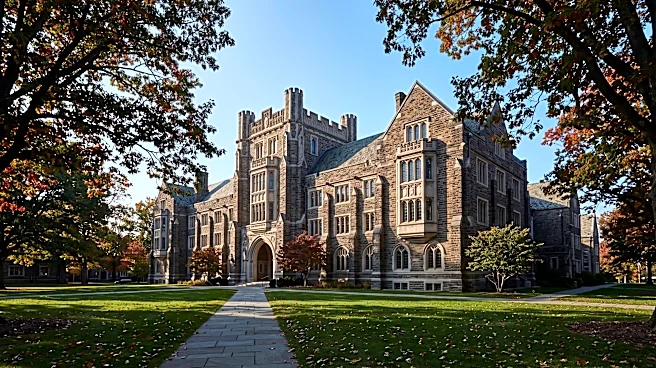





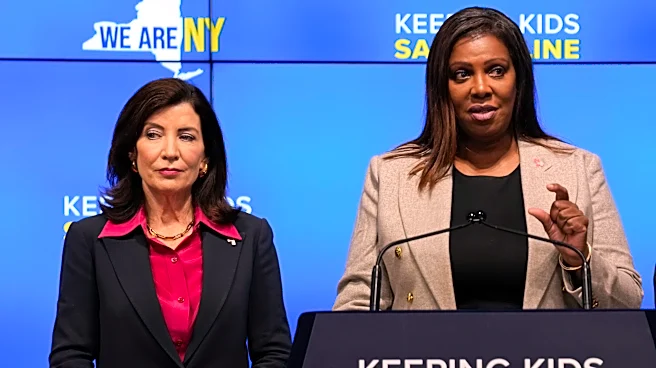
New York Gov. Kathy Hochul explained her decision on Friday, Oct. 2, to appoint New York Attorney General Letitia James as special prosecutor to investigate the alleged gang rape that took place on Cornell University's campus in 2024.
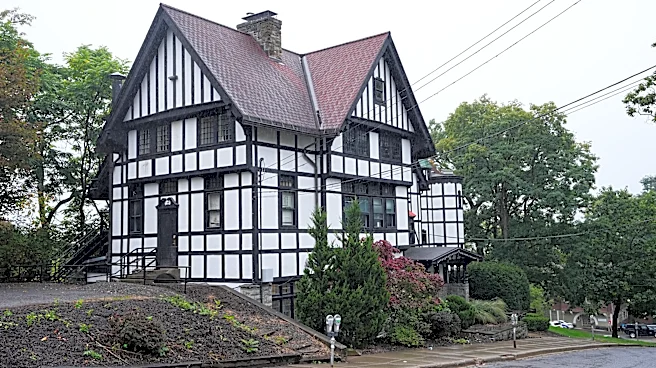
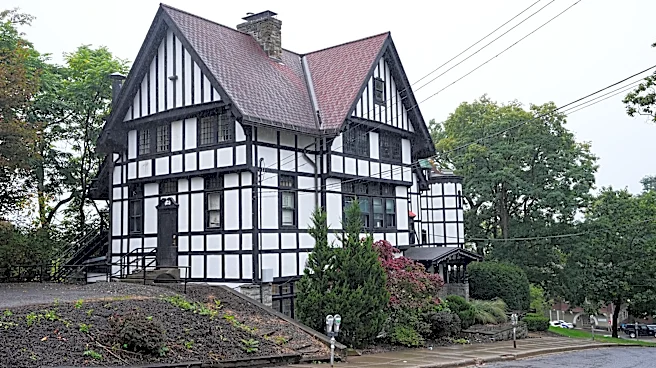
The related lawsuit, which was filed in New York County Supreme Court on Sept. 14, alleges seven members of the Xi Chapter of the Chi Phi Fraternity on Cornell's campus sexually assaulted and raped a then 20-year-old woman inside the fraternity house in October 2024. The woman, who is referred to by officials as Jane Doe, reported the incident several weeks after the incident, but no criminal charges were filed.
Tompkins County District Attorney Matthew Van Houten announced the revisiting of that decision earlier
this week, while also defending his decision to not initially pursue criminal charges. He asserted the initial statement Jane Doe provided in 2024 "described her participation in drug use and sexual conduct as voluntary, conscious, and consensual."
Hochul made the special prosecutor change Thursday night by way of an executive order, saying newly released information has raised questions about how the case was handled by law enforcement, prosecutors and the university. Her comments Friday alluded to reporting in The New York Times that asserts in part a Cornell Police Department report provided to Van Houten omitted the woman's claim she was raped.
Addressing the new information, Hochul noted the woman "could not have been clearer that she was 100% confident that she had been raped; yet, shockingly those words never made it into the account that Cornell police sent to prosecutors."
The district attorney "then declined to pursue charges after reviewing that incomplete account," Hochul said, noting the revelations prompted her to tap James to take over the criminal investigation.

"I have every confidence in our attorney general to do what she has always done," Hochul said, "Look at the facts, examine the record, and draw the proper conclusions."
James said on Friday, however, that her office won't be focusing on Van Houten's actions "at this point in time."
Here's the latest.
NY governor says 'somebody knew more'
Hochul, who is an ex-officio member of Cornell's Board of Trustees, called for an independent investigation of the case earlier this week, and has since spoken with the university, which agreed to bring in outside counsel to do so.
"No institution gets to protect its reputation at the expense of a young person seeking justice," Hochul said on Friday. "No public official gets to look the other way when the system breaks down and fails our young people. And as governor, I will not allow anyone to sweep this case under the rug. We are ensuring that all the facts of this case are brought into the light."

Hochul later added that she's "deeply disturbed" at how the university's police handled the case.
"Somebody knew more than they were letting people know," Hochul said.
Hochul says Cornell case has 'exposed another problem' in NY state law
While speaking with reporters on Friday, Hochul also said there's a "gap in state law" that was exposed by the recent lawsuit.
"If someone is too intoxicated to consent, it should not matter whether they chose to use drugs or alcohol," Hochul said. "Voluntary intoxication is not a license for sexual assault or gang rape, period. I support closing this loophole and will work with the New York State Legislature to accomplish this."

Hochul added that "this is something we can easily take up early in the session in January 2027," and that the state Legislature can look at a piece of legislation that has already passed in one of the houses.
New York Assembly Speaker Carl Heastie, D-Bronx, announced on Sept. 30 that the state Assembly is forming a working group of 14 assemblymembers to take a closer look at the state's sexual assault laws in the wake of the recently-filed lawsuit. He said the group will identify issues and develop legislative recommendations, reporting its findings to Heastie and the Assembly Democratic majority conference before the end of the year so they can be considered in the 2027 legislative session.
What does the Cornell lawsuit allege?
Jane Doe was a full-time undergraduate student attending Cornell and living at the Alpha Beta Chapter of the Tri-Delta Sorority's house on the university's campus at the time of the alleged incident, according to the lawsuit.
The lawsuit asserts that a number of events led to the incident, including:
- Her house mother observed her in an intoxicated state and took her to an event at Moonies Bar & Nightclub in downtown Ithaca on Oct. 19, 2024.
- Moonies employees served her alcohol "to the point of visible intoxication," despite her being underaged.
- She was supplied alcohol and drugs, including ketamine, to the point of intoxication by Chi Phi members at the Chi Phi house.
The lawsuit alleges multiple Chi Phi members then sexually assaulted and raped the victim for several hours. A Snapchat message discussing the incident was also sent to a Xi Chapter's group chat in the early hours of Oct. 20, 2024, according to the lawsuit.
The incident became public knowledge on Cornell's campus the following day, the lawsuit specifies, and Jane Doe reported it to the Cornell University Police Department on Nov. 8, 2024. The Xi Chapter was placed on temporary suspension as well as the seven members alleged to be involved, "who were afforded the opportunity to mitigate their conduct by submitting essays to Cornell," the lawsuit adds.
Tompkins County DA previously defended decision in 2019 Cornell student's death
It's not the first time Van Houten has publicly defended his office's decision to not pursue criminal charges in an incident involving Cornell University.
Cornell freshman Antonio Tsialas was found dead in a gorge at Fall Creek in 2019 after attending a Phi Kappa Psi fraternity party. Cornell University police ruled his death accidental as they said he fell into the gorge, but his family has unanswered questions.
The university paid an undisclosed amount of money to Tsialas' family as part of a settlement, which ended a civil lawsuit they filed claiming a Christmas-themed hazing ritual played a role in his death.
At the time, Van Houten said using a grand jury would be frivolous and unsupported by the evidence and that the case failed to rise to the level of hazing-related criminal charges. The fraternity involved in that incident has had its recognition on campus permanently revoked.
Emily Barnes covers state government for the USA TODAY Network-New York with a focus on how policy and laws impact New Yorkers' taxes, communities and jobs. Follow her on Instagram or X @byemilybarnes. Get in touch at ebarnes@usatodayco.com.
This article originally appeared on Rochester Democrat and Chronicle: Hochul details Cornell prosecutor change, 'voluntary intoxication' law