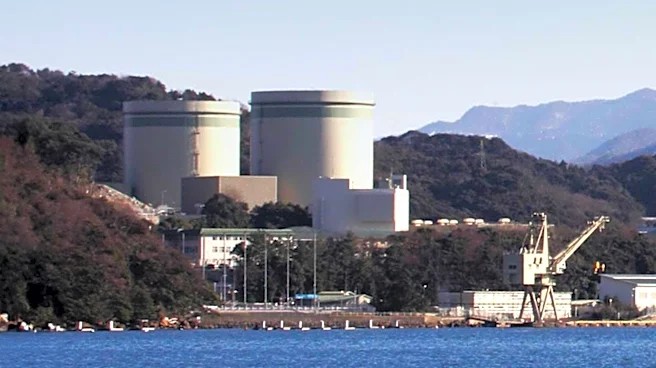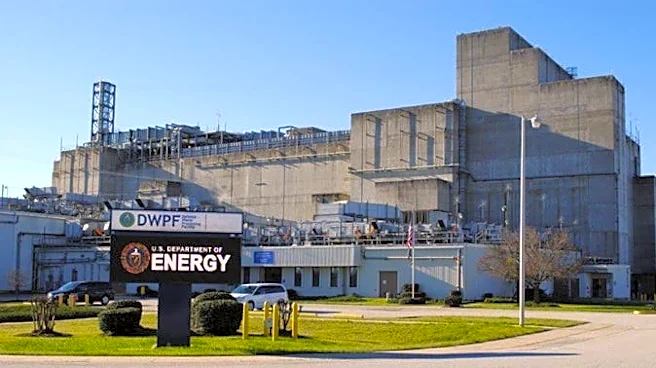


Savannah River Site is reducing its number of nuclear waste canisters to improve safety and accelerate the federal government's legacy cleanup mission.
A revision to the SRS Liquid Waste System Plan disclosed
earlier this year is expected to make cleanup more efficient by using an estimated 300 fewer canisters.
"Continuous improvement is a core value of our mission — whether it’s enhancing safety, streamlining processes or maximizing resources," said Steve Howell, senior vice president and optimization and integration director for Savannah River Mission Completion, SRS' liquid waste contractor. "Every advancement we make brings us closer to our cleanup goals and ensures we deliver the best possible results for the site, the community and the environment."
SRS workers clean up radioactive waste generated from the site's decades of producing materials for manufacturing nuclear weapons. The waste is mixed with melted glass and stored in stainless-steel canisters. The 10-foot-tall canisters weigh about 1,000 pounds empty and about 5,000 pounds full.
Waste typically goes through several tanks in its transition to glass. The newer engineering process allows some waste to go directly into the final processing tank, creating a more uniform mixture and allowing about 5.5 more gallons to fit into each canister.
SRS is also restarting uranium recovery at H-Canyon, America's last industrial-level radiochemical processing and chemical separation facility. That is expected to eliminate the need for a separate waste-handling process begun in 2023.
Fewer canisters to handle means worker safety can improve, and environmental risk can drop.
This article originally appeared on Augusta Chronicle: SRS cuts 300 waste canisters to speed nuclear cleanup