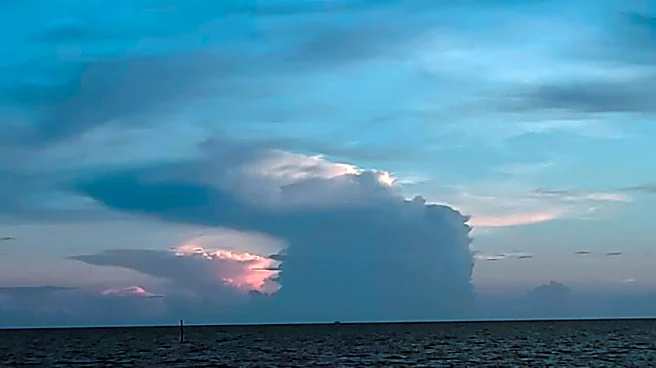


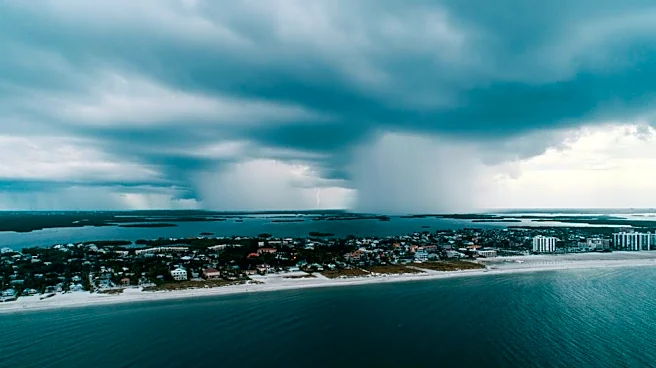

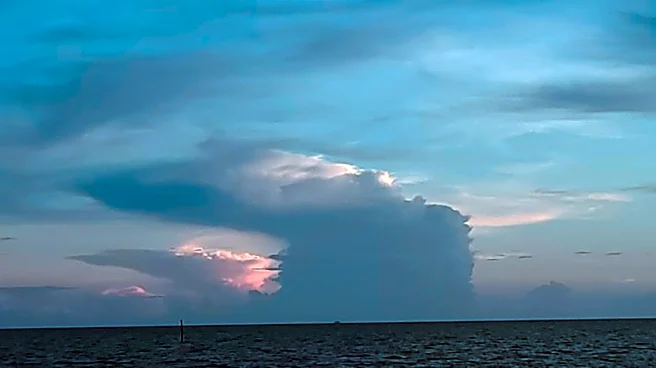
El Niño conditions continue to suppress tropical development across the Atlantic, contributing to one of the quietest hurricane seasons in modern records and raising questions about whether 2026 could end without a single hurricane.
The potential for the 2026 hurricane season to end without a hurricane is something that possibly hasn’t happened since 1914, according to AccuWeather forecasters.
"I would just caution against referencing any date from the early 20th century," said Nick Novella, a meteorologist with NOAA's Weather Prediction Center. "There are significant errors in the historical hurricane database during the pre-satellite era, which began before 1966. This
was because we didn't have broader observational coverage, and storms prior to 1966 were likely undercounted."
Novella said meteorologists generally rely on records from the satellite era when assessing historical storm activity.
"Anything before that really precludes any kind of reliable assessment on the topic," he said. "But I would say this is the longest we've gone without observing the first hurricane of the season since the start of the satellite era in 1966."
According to Novella, the previous latest first hurricane formations occurred Sept. 11, when Hurricane Gustav formed in 2002 and Hurricane Humberto formed in 2013.
"We've surpassed that now," he said.

Novella noted that since the satellite era began, the fewest hurricanes recorded in a season was two, occurring in 1982 and again in 2013. One of those years, 1982, was also an El Niño year.
"There are increasing questions about whether we're going to go the rest of the season without having a single hurricane," he said. "That's a possibility, but I wouldn't call it a probability. Obviously, the longer we go into October without a hurricane, the greater those odds become because the season ends Nov. 30."
The National Weather Service's updated August outlook for the 2026 Atlantic hurricane season forecast seven to 13 named storms with sustained winds of at least 39 mph. Of those, two to six were expected to become hurricanes with winds of at least 74 mph, including up to two major hurricanes with winds of at least 111 mph.
Still, Novella said there remains ample opportunity for hurricane development before the season ends.
"I would say that climatology would suggest that there's still a lot of room left for hurricane development between now and the end of the season," he said.
During this stage of hurricane season, Novella said, forecasters typically see less activity originating from the tropical Atlantic's main development region.
"Even though the season has been largely quiet, and with the expectation of the season remaining below normal, people should still take the proper steps to prepare," he said. "The hurricane season is still in full swing, and storms are capable of forming close to the coast."
What should be in a hurricane emergency kit?
Experts recommend keeping enough emergency supplies to sustain each household member for at least three days. A hurricane emergency kit should include:
- At least 3 gallons of water per person for drinking and sanitation
- A three-day supply of nonperishable food
- A manual can opener for canned food
- A battery-powered or hand-crank NOAA Weather Radio with extra batteries
- A flashlight and extra batteries
- A first-aid kit
- A whistle to signal for help
- Face masks, plastic sheeting and duct tape for sheltering in place if needed
- Sanitation supplies, including moist towelettes, garbage bags and plastic ties
- Tools such as a wrench or pliers to shut off utilities
- Local maps in case power or cell service is unavailable
Novella said residents should remain vigilant because late-season storms can develop closer to land.
"With the climatology showing the shift back toward the tropical Americas, some of the storms that do form in the Caribbean, Gulf or western Atlantic can develop with little advance warning," he said. "Build a kit, make plans for emergencies, know your evacuation routes and continue to monitor the National Hurricane Center website."
This reporting content is supported by a partnership with Journalism Funding Partners.
Erica Van Buren is the climate change reporter for The Augusta Chronicle, part of the USA TODAY Network. Connect with her at EVanBuren@usatodayco.com or on X: @EricaVanBuren32.
This article originally appeared on Augusta Chronicle: Hurricane season nears record late start as El Niño lingers | Exclusive