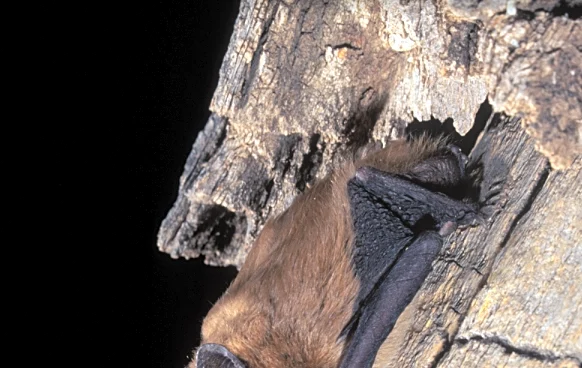








Often cast as mysterious and frightening creatures of the night in popular culture, bats play an important role in our ecosystem. October is Bat Appreciation Month, which is meant to recognize the winged mammals' contributions to the environment.
Symptoms of climate change, like hotter temperatures, more intense storms, and drought, are creating obstacles for bat populations in Georgia. According to the National Park Service, heat waves can cause bats to overheat and die, especially during extreme temperature events. Climate change is increasing the frequency and intensity of heat waves across much of the U.S.

Bats act as natural pest controllers, pollinators, and seed dispersers,
helping maintain healthy forests and biodiverse environments, according to The National Wildlife Federation.
Georgia is home to 16 species of bats:
- Rafinesque's big-eared bat
- Big brown bat
- Silver-haired bat
- Eastern red bat
- Hoary bat
- Northern yellow bat
- Seminole bat
- Southeastern bat
- Gray bat
- Eastern small-footed bat
- Little brown bat
- Northern long-eared bat
- Indiana bat
- Evening bat
- Tri-colored bat GA
- Brazilian free-tailed bat
There are a number of eco-friendly ways to celebrate Bat Appreciation Month, according to various sources, including the U.S. National Park Service, U.S. Fish and Wildlife Service, and the Georgia Department of Natural Resources Wildlife Resource Division.

Install a bat house
Hurricanes, tropical storms, flooding, and high winds can damage trees and other roost sites used by bats. Researchers note that increasingly severe storms can increase bat mortality and reproductive failure. Putting up a certified bat house can provide roosting habitat for bats that have lost natural tree cavities or other shelter, according to the U.S. Fish and Wildlife Service. Place it at least 12 to 20 feet above the ground in a sunny location. Bat houses can help local bat populations while reducing backyard insect pests naturally.
Reduce pesticide use
Many Georgia bats feed on insects. Limiting pesticides helps protect the insects bats rely on for food and reduces chemical exposure throughout the food web, according to the Georgia Department of Natural Resources Wildlife Resource Division.
Plant a native pollinator garden
Bats depend heavily on insects. Changes in temperature and seasonal timing can shift insect emergence and abundance, potentially creating mismatches between when bats need food and when prey is available. Native flowering plants support moths, beetles, and other nocturnal insects that bats consume. Native landscaping also provides a more resilient habitat for wildlife.
Protect water sources
Birdbaths, ponds, and other wildlife-friendly water features can provide drinking water for bats, particularly during hot, dry periods. Water availability is increasingly important as drought conditions become more common. Scientists with Bat Conservation International say prolonged drought can reduce aquatic insect populations and limit drinking water for bats. Female bats are particularly dependent on water during pregnancy and nursing.
Turn off unnecessary outdoor lighting
Many bat species are sensitive to artificial light, which can disrupt feeding and movement patterns. Using motion sensors and reducing excess nighttime lighting helps bats and other nocturnal wildlife.
Attend a bat walk or wildlife program
Many state parks, nature centers, and conservation organizations host bat-viewing events that promote appreciation and conservation without disturbing animals in their roosts. Many can be located through online search engines.
Leave dead trees when it's safe
Some bat species use cavities under loose bark or in dead trees for roosting. Retaining suitable snags can provide valuable habitat.
This article originally appeared on Augusta Chronicle: Hotter weather puts Georgia bat populations at greater risk | Exclusive