








I love feeding my birds. I know they aren’t really my birds because they can come and go as they please, but lately they have been eating me out of house and home.
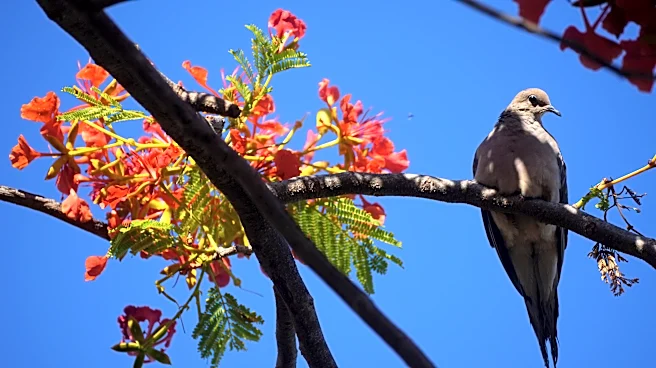
The main culprits in this gluttonous devouring of the Vaughn family bird buffet are the mourning doves (Zenaida macroura). Monday afternoon, the official count on and under the bird feeders was 25 doves, and across the yard where I piled up some old sunflower seeds there were 14 more. I have been to plenty of dove shoots where I have seen way less than that. It must be a good year for dove breeding.
Doves and pigeons are in the same family of birds (Columbidae), which consists of more than 300 species. Native to
southern Canada all the way to central Mexico, the mourning dove is one of the most common birds in North America.
Monogamous during at least one nesting season, the male uses the vocal “coo” to court the females. In warm climates, this medium-sized grey bird is a prolific breeder with up to six broods per year. Six broods a season is more than any other native bird.

With mortality rates close to 60% a year for adults and 70% a year for juveniles, the dove needs all the breeding they can get to maintain populations.
The female lays two white eggs, and is incubated by both parents for about 14 days. Mom and dad both feed the young birds “pigeon milk” or “crop milk,” which is a milky liquid that comes straight from the adult’s beak to the baby’s throat. The term crop is a section of the lower esophagus in doves and pigeons that is used for storing food before digestion.
Pigeon milk doesn’t come from a mammary gland like a mammal would have, but from special cells in the crop that are full of antioxidants and immune boosters that help the new hatchlings survive.
A few days before the dove eggs hatch, both parents start making the milky substance. They will use this to feed their hatchlings over the first 10 days of their lives. When these feedings stop, the special crop cells return to normal. There are only a couple of other birds that can make this crop milk, including flamingos and a few species of penguins.
Doves are very well adapted and forage mainly on the ground. They are quick eaters, feeding almost entirely on seeds of cultivated grains, grasses, and ragweeds, but rarely ever insects or snails. I know when I throw a few handfuls of millet on the ground weekly, they come in to feed in droves. Eating 12-20% of their body weight daily, they love to fill up quickly and rest in trees and shrubs to digest their food.
Early fall is the beginning of dove hunting season, and it is one of the most popular game animals. Approximately a million U.S. hunters harvest between 15-20 million birds a year, according to the Cooperative National Dove Hunter Survey.
Opening day in Georgia is one half hour before official sunrise on Sept. 5. If this hunting season is indicative of how many mourning doves are frequenting my backyard, I think hunters are in for a good season.
This article originally appeared on Augusta Chronicle: Mourning doves flock to feeders as breeding season pays off | Exclusive