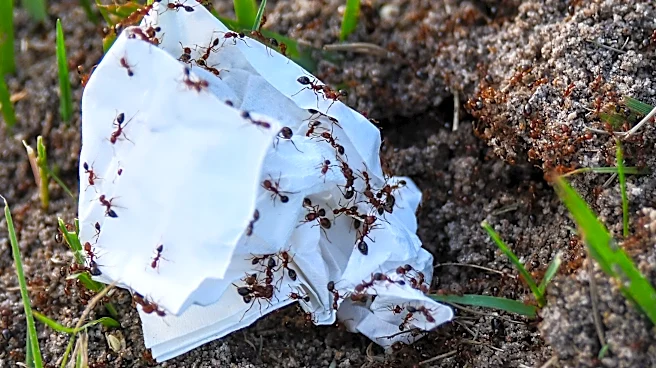






I have made it clear that I dislike fire ants. I pretty much hate them. They sting for fun, make huge mounds that will ruin mower blades, and under a microscope they are just ugly.
Unfortunately, fire ants are here for the long haul and don’t seem to want to leave.
In the Southeast, we have two species of exotic invasive fire ant − the red imported fire ant (Solenopsis invicta) and black imported fire ant (Solenopsis richteri). These ant pests have also hybridized to make another fire ant whose stings can cause serious medical problems.
Imported fire ants hinder outdoor activities and harm wildlife throughout the South. These insects are a major factor in the decline of
the bobwhite quail numbers over the last few decades.
Fire ants do prey on flea larvae, chinch bugs, cockroach eggs, ticks, and other pests, but the problems they cause outweigh these small benefits.
Although eradication is nearly impossible, there is some good news in controlling fire ants locally with some well-researched methods. There are control programs that can vastly decrease fire ant populations using a bait that has a tasty treat with a built-in insect growth regulator plus a slower-release contact killer.
Baits are absolutely the best method for treating fire ants because you have an appetizing product that these crafty sting machines search out and take back to the colony for supper. These baits are embedded with a poisonous oil, and the workers bring them back to the nest, where it eventually kills the queen. When the queen is dead, the colony is dead.
The trick to these baits is timing.
Fire ant baits work best when it is warm and dry and are especially effective when applied in April and late September. They are soy (protein) based and can easily turn rancid with the addition of moisture via rain or irrigation. When the food becomes unappetizing, these ants won’t take the bait.
Look for the weather to have a few days where it isn’t going to rain, procure an appropriate spreader, and lightly dust the entire area that needs to be treated. With a hand-held rotary spreader, use the lowest to second-lowest setting.
Cover as much territory as you can handle, because the ants will forage for the food. I especially like to spread on the edges of walkways, driveways, and the south-facing side of trees, especially pines. It may take a week or two to get visible results, but good control will happen.
These spring and fall treatments will, over time, lower fire ant population in an area.
If an occasional mound does present itself during the summer, use a contact killer like bifenthrin or carbaryl to treat the individual mound.
As fun as it is, kicking the mounds and dumping insecticides on really mad ants is not effective control, so please read the label for the best methods of applying these chemicals. Once a bait bag is opened, it will go bad within a couple of months, so use what you have wisely.
For homeowners, Amdro bait is a really good product. For larger areas, like over an acre, Extinguish Plus combines growth regulators with a poisonous snack to attack these six-legged jerks from multiple fronts.
Let’s have a united front to eliminate these fire ants from the places we like to frequent. Revenge for all those years of getting stung by these nasty little pests is best served from a rotary spreader.
This article originally appeared on Augusta Chronicle: Fire ant bait cuts colonies when spring, fall timing is right | Exclusive