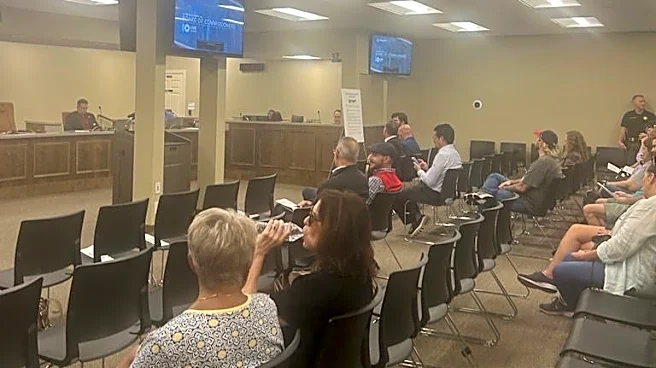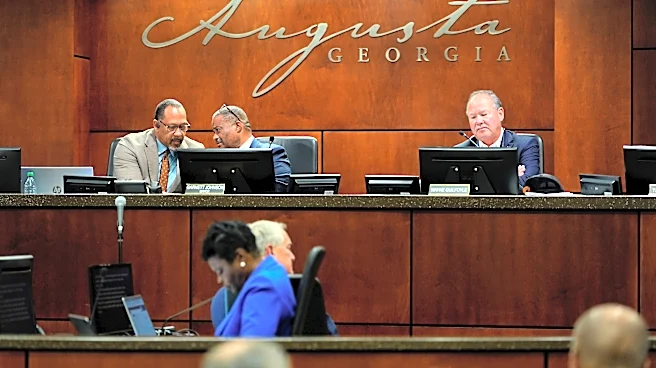






Augusta commissioners approved a proposed data center ordinance Tuesday despite opposition from some commissioners and members of the public.
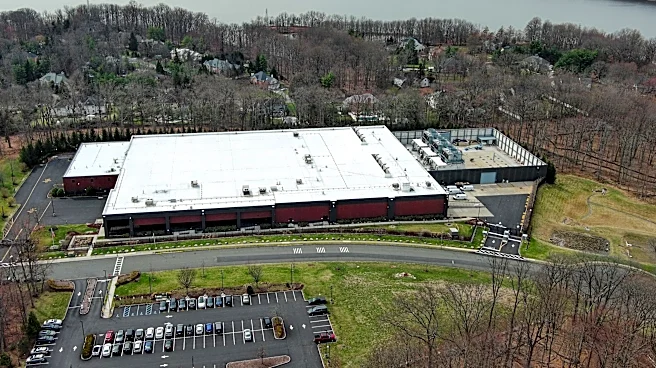
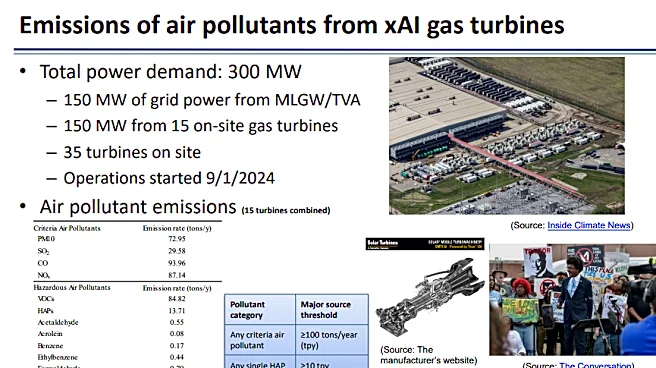
Data centers are facilities that house computer servers and provide computing power for artificial intelligence, or AI. Augusta leaders have been considering an ordinance to establish guidelines for future data center development and address potential impacts on nearby residents.
Commissioners voting in favor of the ordinance were District 5 Commissioner Don Clark, District 10 Commissioner Wayne Guilfoyle, District 3 Commissioner Catherine Smith-Rice, District 7 Commissioner Tina Slendak, District 8 Commissioner Brandon Garrett and Mayor
Garnett Johnson.
The 21-page ordinance outlines zoning, siting, development and operational standards for data centers and other high-density computing facilities in Augusta. It also provides guidance on where the facilities may be located and how future projects should be coordinated with surrounding land uses, infrastructure, utilities and natural resources.
Before the vote, District 1 Commissioner Jordan Johnson addressed fellow commissioners and residents, expressing concerns about potential unintended consequences.
"I hope that whatever we pass today is sufficient for the community," Johnson said. "And I hope that we don't have to come back here with unintended consequences that we failed to pay attention to because we're so ready for these businesses to come to our community. At some point, we have to start taking care of our people, too."
The ordinance establishes standards for:
- Appropriate zoning districts for data center development.
- Minimum setbacks and buffers from residential neighborhoods and other sensitive land uses.
- Site design, landscaping and architectural compatibility.
- Noise, lighting and visual impact mitigation.
- Utility coordination and infrastructure capacity.
- Emergency access and public safety requirements.
- Environmental performance and stormwater management.
- Ongoing operational standards and compliance monitoring.

The ordinance also outlines Augusta's expectation that developers work with the city on community benefits agreements. Those agreements could support workforce development initiatives, educational partnerships, infrastructure improvements, opportunities for local contractors and suppliers, and environmental stewardship efforts.
In July, Augusta commissioners unanimously declined to move forward with the proposed regulations and instead extended the city's data center moratorium for an additional 60 days. The extension gave officials more time to gather public input and study how other communities regulate similar facilities.
Clark said the ordinance is intended to protect residents while allowing the city to prepare for future development.
"Let's put the safeguards in place that do not exist today for our community," Clark said. "I get it. We want to go back and forth. It's not going to be perfect, and everybody's not going to be satisfied with it. We have to rely upon our subject matter experts. And we have to continue to do the research because this is an industry that's continuing to emerge."
This reporting content is supported by a partnership with Journalism Funding Partners.
Erica Van Buren is the climate change reporter for The Augusta Chronicle, part of the USA TODAY Network. Connect with her at EVanBuren@usatodayco.com or on X: @EricaVanBuren32.
This article originally appeared on Augusta Chronicle: Augusta sets data center standards after months of debate