
Next June, I am either moving to South America or going completely nocturnal until the heat returns to a level that is not comparable to the surface of planet Mercury.
This miserable weather is making me
ornery. I can look outside and see all the things I want to be doing in the yard, but as soon as I go outside, it is like someone is trying to burn me with a giant magnifying glass.
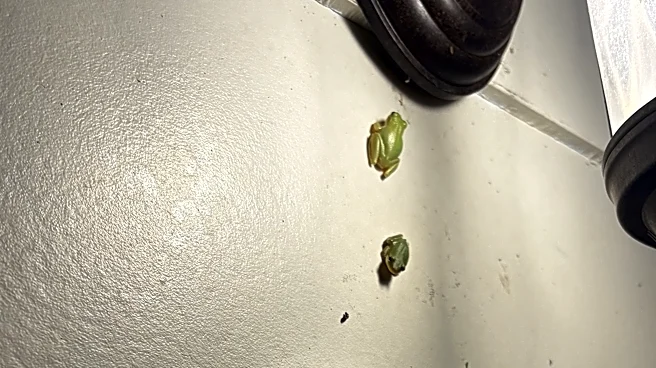
Despite the miserable heat, I have noticed something interesting over the past few weeks that makes me smile in the evenings: Green treefrogs are abundant at my house. They seem to love the condensation on the windows from the inside AC competing with the outside humidity-riddled hellscape that is currently Georgia.
With the outside porch lights on in the evening or even the lights from the living room shining, the bugs are swarming. These gatherings of bugs are great feeding grounds for our insect-eating green friends that seem to be multiplying rapidly in my landscape.
The American green treefrog (Dryophytes cinereus) is native to the Southeast.
Green treefrogs were designated as Georgia’s state amphibian in 2025, so in our parts, people must really like them. I think they are super cool. Even my mostly squeamish daughter isn’t freaked out by them.
They are about 1.5-2.5 inches long, usually bright green with a distinctive creamy white stripe running from below their eyes down the side of their body. They have large adhesive toe pads that allow them to climb. Interestingly, the pads aren't actually suction cups but microscopic structures combined with a thin layer of mucus to create adhesion, allowing a frog to cling to remarkably smooth surfaces.
These green fellows thrive in warm and humid conditions, which explains why I am beginning to think that Moses’ adoptive father, the Egyptian pharaoh, may be living a couple of doors down. You can find them around ponds, swamps, ditches, and wetlands, but they're also common around homes near my porch lights. They feast on moths, flies, mosquitoes, beetles, crickets, and other small insects.
One interesting feature is their call. Males produce a hard to believe it is so loud, nasal "quonk-quonk-quonk" during warm weather, particularly before and after summer thunderstorms. My buddy Henry once told a story about how he had a frog in his little fountain outside his bedroom window and said it was deafening. He went out in search of what he thought was a gigantic bullfrog and he said when he found it, the frog was about the size of a key fob. He couldn’t believe how much something so small could make that much noise.

This croaking call is to attract females and possibly deter other males from approaching. Interestingly, green treefrog females discriminate among males based on characteristics of their calls, not on how loud they are.
In Georgia, breeding is generally concentrated from spring through summer. Even though they are “tree” frogs, the females lay eggs in shallow water, and after two to three days, the eggs hatch into tadpoles. They remain as tadpoles for about eight weeks before undergoing metamorphosis. During this transformation, the tadpoles develop hind legs, then front legs, and gradually absorb their own tails. Total time from egg laying to a small frog averages 34 days. In the wild, green treefrogs can live up to five years.
I love seeing these green treefrogs around the house. They're harmless to people and plants while also being beneficial around homes and gardens as an amphibious insect controller.
This article originally appeared on Augusta Chronicle: Treefrogs thrive in Georgia heat and feast on porch pests | Exclusive