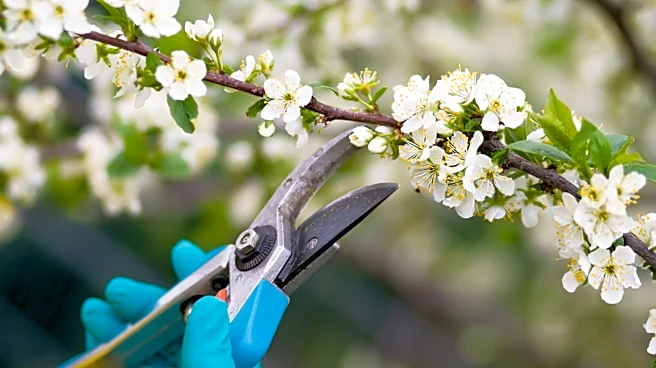





One of the more consistent questions I get year-round is “Can I prune this tree, shrub, bush, flower, etc. now?” In other words, I don’t really like the way it is looking, or I know this plant needs pruning sometime, so I am considering getting out in the yard and making something happen.
Here are some easy steps to follow.
A good rule to follow is to prune a plant after it blooms. Once a plant blooms, it will rest a little while and then start forming buds for the following year’s bloom. The perfect example is the ubiquitous azalea. Most of these heavy spring bloomers flower around Masters time and then start setting buds to bloom for the next spring in July. That gives
us a good three-month window to get to whacking.
Another good rule to follow is to not prune non-flowering evergreens like boxwoods, cleyera, ligustrum, pittosporum, and podocarpus heavily in the fall and early winter. Most plants respond to pruning by flushing out with new tender leaves if the climate is right. Our weather can be warm when it isn’t supposed to be, and that can mean new tender growth can sprout just in time for a hard cold spell. The tender leaves don’t usually handle the cold well, and the new plant growth can freeze-burn.
My recommendation is to wait until February or early March to trim back these evergreens. February and March are generally a good time to heavy prune hollies because they usually berry in the fall and winter.
Also, it is never a bad time to remove a long, out-of-place branch no matter when a plant is going to flower or berry.
A specific plant that I get asked about pruning this time of year is hydrangeas. Hydrangea macrophylla (Mophead) is a group of hydrangeas that include repeat bloomers. These shrubs bloom on both the old wood from the previous year and on the current season’s wood. The best time to trim these is in August.
If you are a little late and wait until October, you may be OK. By winter, you are too late.
The ever-popular Hydrangea paniculata ‘Lime Light’ blooms a little later in the summer on this year’s growth. So pruning in the spring is just fine. Oakleaf Hydrangeas really aren’t meant to be pruned, but if you must trim them, lightly cut them after they bloom in early summer.
If you feel uncertain about which variety you have, a safe rule for all types of hydrangeas is that no pruning is better than the wrong type of pruning, so just deadhead the spent flowers.
A few other popular ornamentals that may need attention in the landscape are leggy plants like forsythia and nandina.
Forsythia doesn’t have a base trunk, but grows as a bunch of individual canes. Trim one-third of the cane back at the soil line yearly. It is best to take the older canes out over the younger ones.
Old-fashioned nandina can spread over an area in time and become tall and leggy. This plant doesn’t grow from a single base, so the best way to get fuller nandina is to stair-step the cuts. Cut one at 12 inches, one at 18 inches, and one at 24 inches until you have a desired massing. Waiting to prune nandina until after they berry through the winter and spring is best.
The Augusta Area Master Gardeners are hosting a plant sale from 10 a.m. to 1 p.m. on Sept. 19 at Pendleton King Park. There will be all kinds of trees, shrubs, perennials, and fall vegetables for sale, along with a host of local vendors. All proceeds go toward grant money for local projects. Should be a good time.
This article originally appeared on Augusta Chronicle: Prune at the wrong time and you may lose next year's blooms | Exclusive