




This is Part 3 in a series where The Augusta Chronicle explores the mental health side of high school athletics through conversations with student-athletes, parents, coaches and subject matter experts.
Jonathan Baggett feared for his life.
The Georgia High School Association referee was officiating a high school baseball game where the coaching staff of a team became increasingly disruptive despite continued warnings. Baggett and his officiating crew were forced to make an ejection because of it. Suddenly, two spectators yelled out at the officials.
“We’ll be waiting for you in the parking lot after the game,” Baggett recalled them saying. “We’re here giving our time and trying to make sure these kids have officials for their games, and here we
are getting threatened with actual violence.”
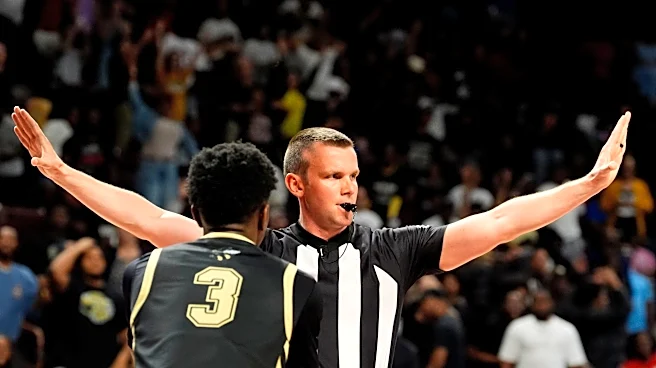
This isn’t an isolated incident. Multiple high school referees who spoke to us for this story described being verbally abused or threatened by fans, parents and coaches becoming increasingly normalized. That, in addition to the pressure that comes with officials being tasked with perfection despite low pay and demanding hours for what is in most cases a part-time job, is detrimental to their mental health.
The constant stress and anxiety that the referees face both on and off the field of competition also plays a large role in the nationwide officials shortage across youth sports. Not only are younger generations increasingly unwilling to don the black and white stripes, but veteran officials are becoming more likely to put down the whistle for good.
“It comes to a point,” Baggett said, “do I really want to deal with this anymore?”
The pressure of perfection
For officials, the best games are the ones where they aren’t noticed. The ones where they are able to make the right calls and the games go smoothly and end without a hitch. But, as any sports fan would know, that isn’t always the case.
Controversial calls become headlines and talking points long after the game is over. And while fanbases will either celebrate or denigrate the calls based on which side it favored, the official that made the call is arguably affected the most; particularly if the call turned out to be the wrong one.
Officials like Baggett spend hours of their free time studying the rule books in order to make dozens of split second decisions during games. They want perfection just as much, if not, more than the players, coaches, and spectators. Yet the reality is that it's just not possible.
“In youth sports, these players are amateurs, just like we’re amateurs, and there’s going to be things that happen in the game that you’re just totally not expecting,” Baggett said. “So it’s that anxiety of always trying to be one step ahead of the play, understanding what could happen, where I need to be, that sort of thing.”
During the car ride home after a game, it’s commonplace for officials to replay sequences in their heads, nitpicking and trying to figure out if they made the right call. Compounding that anxiety is that after games, game film will be evaluated based on the officials' performance. For a Friday night football game, for example, officials will gather for a Monday night meeting to go over film from that weekend. Everything that was done wrong will be brought to light.
This constant cycle of evaluation, particularly in the case of self-criticism, can have a major effect on one's mental health. It can impact a person’s mood, sleep quality, decision-making and relationships. But in the pursuit of perfection, officials continuously go through this cycle to do their job to the best of their ability.
“If you can’t rise to the occasion, you can totally just screw up a whole game just from one call,” said Lynn Carter, an official with over a decade of experience.
Disrespect from spectators, coaches, players at breaking point
Jeff Woodard has been officiating sports since 1986. Over the years, he's noticed that the treatment of officials has been getting worse over time.
“It’s taken for granted,” Woodard said of officiating. “The level of people’s humanity has really decreased.”
A decrease in humanity could be a culprit for why officials aren’t as respected today as they once were. Another potential reason is that instead of simply disagreeing with a decision an official makes, people today are much more emboldened to voice their opinions.
Prior to a football game between Evans and Greenbrier, Woodard got word of one of the schools using an illegal football per GHSA regulations. He spoke with the coaches about it. During the game, those same coaches were cursing Woodard out. When the alleged football made its way into the game, Woodard had enough. He took the ball and punted it off the field so it couldn’t be used. Woodard was then suspended.
“I had a mental health lapse,” Woodard later admitted.
During the 2026 Nike EYBL Peach Jam, Carter was one of the many referees officiating at the event. After one of her assigned games ended, she went back to the dressing room where the officials changed.
A few moments after she walked in, a mother of one of the kids that just played in the game followed her. She was berating Carter, trying to get her to watch a video of a play that she believed was called incorrectly.
“I put her out of the gym, because that’s a whole violation,” Carter said. “It’s just like how far do you really go to try to prove yourself?”
Baggett has had targeted comments towards his body weight. Carter, who officiates boys basketball and football, has been verbally assaulted because she’s a woman.
“You’re taking something that you disagree with on the field, and you’re taking that and you’re making it a personal, individual attack against the official,” Baggett said. “I think that adds up over time, especially when you consider this something that we’re doing to give back. We’re not really making a living off this, and it makes it tough to stay in the game.”
Mental health pressures are driving referees away
The common thread between the aforementioned examples is that both officiating the game, as well as the interactions they deal with because of it, is draining. Add in the low, pay, travel, and it oftentimes being a thankless job, and being a high school official can begin to feel like a chore.
Woodard has experienced plenty of burnout during his years as an official. The 62-year-old is officiating nearly 10 months out of the year. He’s had to miss holidays with his family for almost a decade because he was traveling to officiate. It got to a point where he took a year off so he could take a break from it all.
The stress and anxiety that comes from spectators’ threats is another prominent reason why people step away from officiating. Baggett, Woodard and Carter have all been in moments where they felt an imminent danger to their safety. Once at a private school game, Woodard and his crew were attacked by fans of the home team. They had to get the law enforcement from the away team to help them get off the field.
Not only are these instances making veteran officials quit, but they are also keeping people who may have an interest in becoming a referee away. In a 2023 survey conducted by the National Association of Sports Officials, nearly 59% of respondents agreed with the officiating adage that most new officials quit within the first 1-3 years.
“None of [the new officials have] complained to me about how hard it is to officiate, knowing rules, the things we have to do to be better officials,” Woodard said. “They said none of that bothers them. It’s the way you’re spoken to by players, coaches."
Woodard believes that the nationwide referee shortage is as much of a recruiting problem as it is a retention one. Both of which stem from the struggles that impact one's mental health while doing the job.
The answer to fixing the shortage isn’t clear cut. Baggett believes it should start from within the various governing bodies for high school sports. Beyond a short preamble before games to encourage respectful behavior, the GHSA doesn’t do much when it comes to supporting their officials from a mental health perspective.
“I don’t think I’ve ever seen where the GHSA has acknowledged the impact of what we go through on our mental health,” Baggett said. “It makes me feel isolated.”
Some officials try to take things into their own hands. After a Friday night football game, Woodard and his officiating crew will go out to eat at a restaurant nearby to decompress. In the past he’s also bought members of his crew pink whistles and pink wristbands during Breast Cancer Awareness month. For Woodard, being able to lean on his fellow officials for support helps keep him going despite the stressors of the job.
Debriefing after stressful encounters is one of the best strategies to deal with the pressures that comes with officiating, according to psychological performance expert Dr. Jo Lukins. Journaling those experiences can also provide officials with an outlet to be open and honest about the feelings associated with those interactions.
Even with those strategies and group outings, though, that won’t change the pay or the time one has to sacrifice for a job that at a time seems thankless. It then comes down to a simple question for officials; is it worth it?
Does the risk outweigh the potential reward?
Some officials believe what they do is worth the struggle. Baggett and Woodard stay in it because they enjoy staying close to the game and giving back to their community. Carter, in addition to those things, uses officiating as a way to stay in shape.
All three of them have contemplated stepping away multiple times during their careers. While they’ve managed to make it through and all want to continue officiating, the odds aren’t in their favor.
When Woodard started officiating high school sports in Augusta back in 2006, there were about 150 referees within the Augusta association. Two decades later, Woodard believes that number is closer to 70 now. Without a major change to the treatment of high school officials and the attitude towards them, the number of referees both in Augusta and across the country will continue to shrink.
“We’re more than just the uniform we’re wearing on the field,” Baggett said. “We’re just like everybody else. We have families. We have personal problems we deal with, and we still show up and we’ll still be the best that we can be and throw out a fair game to everybody involved.”
This article originally appeared on Augusta Chronicle: 'Do I really want to deal with this anymore?': Mental toll of being a high school referee