



This article is from the Students United News Network (SUNN) and provided by the first citywide student-led newspaper in the U.S., the Nashville SUNN (NashvilleSUNN.com).
An earlier version of this story was originally published on Inklings News, a student newspaper in Westport, Connecticut.
We live in a culture that embraces the challenge of certain “foreign” names. We learn about Michelangelo in art class, Tchaikovsky in music, the Treaty of Versailles in history. In Westport, Connecticut, where I live, people drive Porsches to order their açai bowls. Millions of people become die-hard fans of characters like Hermione Granger and Daenerys Targaryen. We see these names as marks of sophistication or worldliness and make a point to practice spelling
and pronouncing them until they stick in our memories.
But sometimes, when a name belongs to a political opponent of color, that enthusiasm evaporates.
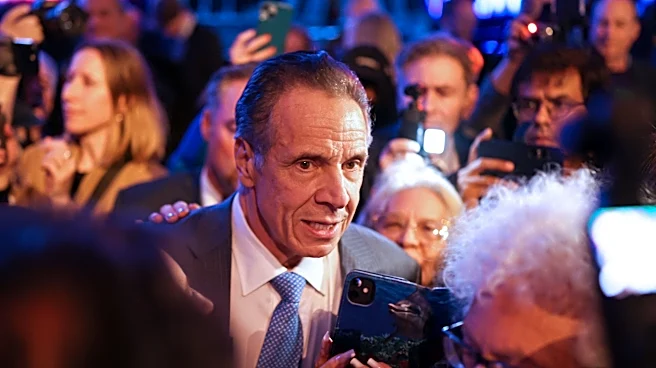
During this past fall’s mayoral race in New York City, the New York Times reported on repeated mispronunciations of mayoral candidate Zohran Mamdani’s name. Over the course of his campaign, former New York governor and fellow mayoral candidate Andrew Cuomo called Mamdani “Mandani,” “Mandami” or simply “the assemblyman” in various settings.

Mamdani argued that these instances were reflective not of Cuomo’s actual inability to pronounce his name, but of a prejudiced outlook in which Cuomo didn’t bother to try. In an interview with The Times, Mamdani said, “Andrew Cuomo never struggles with names like John Catsimatidis, but somehow Mamdani is too difficult.”
This ineptitude goes beyond the actual difficulties of pronunciation and delves instead into a conscious ranking of what sort of names mispronouncers consider “worth the effort” of pronouncing correctly. This lack of effort has been weaponized as a political strategy used against politicians hailing from diverse backgrounds. The dismissal of their identities is not a mistake, but a message: Politicians deliberately mispronounce and mock ethnic names to cast opponents as perpetual foreigners. It’s a way to dismiss their legitimacy without engaging with their policies.
Mispronunciation becomes a political weapon
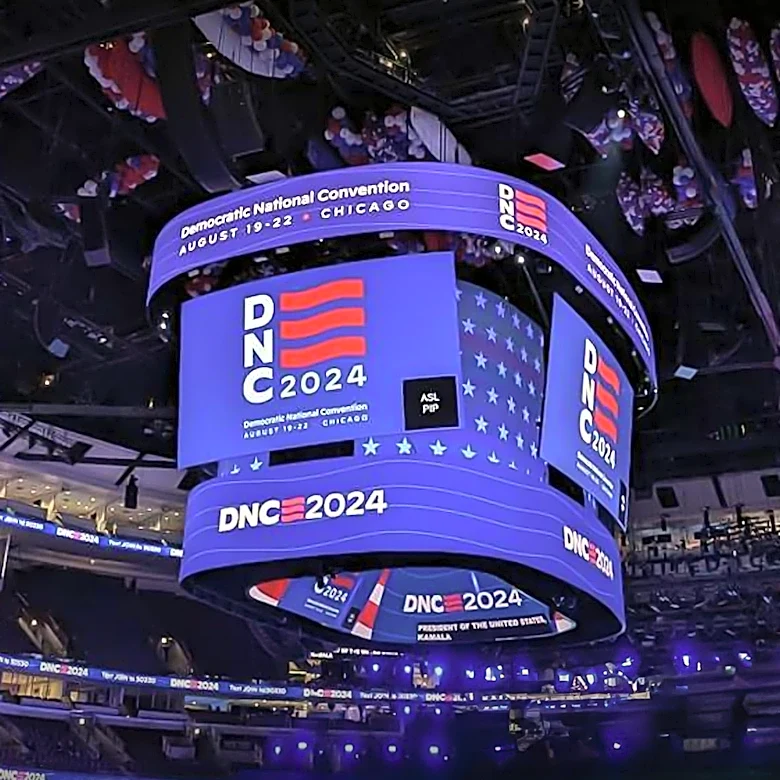
During a CNN panel in August 2024, South Carolina Republican Rep. Nancy Mace mispronounced Vice President Kamala Harris’ name. When called out by other panelists, Mace said, “I will say Kamala’s name any way that I want to.” Mace’s defiance was a public performance of disrespect – a refusal to grant a political opponent the basic dignity of their own identity.
This ignorant, uncurious approach demeans the individual personally, reducing their rich cultural heritage and legacy to make a political statement.
Arguably more damaging, it sends a glaring, malicious message to the rest of the country about the candidate. When millions of people watch a congresswoman or former governor treat an opponent’s name with disrespect and contempt, it normalizes that same contempt within our communities. It signals that disrespecting the identity of a woman of color or a child of immigrants is politically acceptable – in some cases, even commendable.

The tactic appears across the political spectrum
This issue transcends party lines. In 2023, Democratic strategist Donna Brazile repeatedly mispronounced Republican presidential candidate Vivek Ramaswamy’s name during an appearance on “Real Time with Bill Maher.”
When corrected, Brazile initially responded with a dismissive “whatever,” prompting Maher to argue that people’s refusal to learn Ramaswamy’s name reflected a subtle form of prejudice. Ramaswamy later criticized Brazile’s behavior on X, asking how the public reaction would differ if a white Republican had intentionally mispronounced the name of a political opponent while telling them to “go home.”
Whether one agrees with Ramaswamy’s politics or not, his response echoes concerns raised by politicians like Mamdani and Harris: Name-based disrespect is often about more than pronunciation. Across the political spectrum, it signals whose identities are worthy of recognition and whose are not.
Why getting a name right matters
Calling out this pattern of disrespect isn’t about maintaining an arbitrary standard of “political correctness.” It’s about confronting a pervasive form of prejudice with an actual detrimental impact.
Public discourse often treats ethnic name mispronunciation as a “minor offense,” an insignificant and immediately forgivable infraction. But glossing over these incidents only reinforces the behavior and normalizes underlying disrespect.
Refusing to say someone’s name correctly is a modern repackaging of an age-old American weapon: using language to subtly define the boundaries of a “true” American identity.
A long history of exclusion through language
In the past, the U.S. government ripped away the sacred names of Native American children at places like the Carlisle Indian Industrial School to sever them from their culture.
Today, politicians use mispronunciation to publicly mark minority opponents as eternal outsiders.
Unless we identify and forcefully reject this tactic, we allow a culture where anyone with an ethnic name can be told, in thousands of subtle and unsubtle ways, that they do not belong.
Olivia Saw ('26) is the former business director for Inklings, the student newspaper of Staples High School in Westport, Connecticut, where she wrote attention-grabbing op-eds and reviews, along with local and national news articles. In the fall, she will attend McGill University in Montreal and pursue a degree in finance. When she's not writing, she enjoys rowing, listening to music, and trying new restaurants.
The Nashville SUNN (NashvilleSUNN.com) is the first citywide student-led newspaper in the U.S. and a publication of the Students United News Network.
This article originally appeared on Nashville Tennessean: Whose names are worth the effort in politics? | Opinion