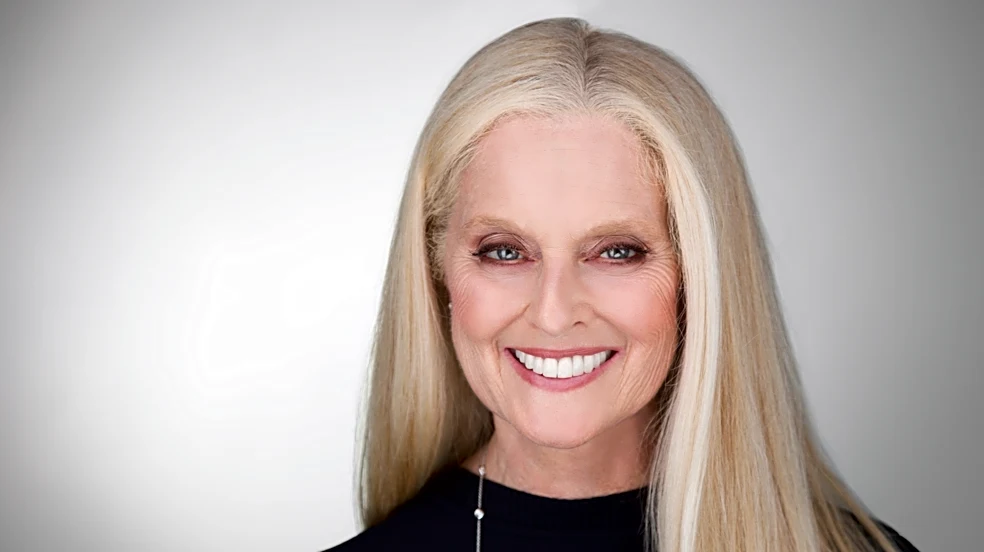









"There was definitely some hesitation about starting a family," said Maggie Rose, the Grammy-nominated Americana artist who has carved her music career from nearly two decades of independent effort.
She joined The Tennessean with her husband Austin Marshall and their son one-and-a-half-year old Graham on a warm fall day in Nashville’s Shelby Park, looking like the dictionary definition of a happy family. As leaves fell gently in a soft breeze, it was the type of moment parents everywhere cherish. However, Rose explained with the exhausted smile familiar to working parents everywhere, there are many reasons that people looking to build careers in Music City’s signature profession feel they cannot risk having children.
"We were married for eight
years before we even thought that we could begin to attempt to have kids," she admitted.
Rose is not alone. The lack of formal support for family caregivers is a longstanding issue in the music industry. Most roles in the industry lack parental-leave benefits, plus the routines of late nights and weekend work often don't align with childcare options. According to the Greater Nashville Music Censusin 2024, 83% said they were concerned about low and uncertain pay, plus almost 46% of respondents worked other jobs in order to afford opportunities in music. Juggling multiple jobs, or general financial stress, can become even harder with children to support.
Even for Nashville residents who do make a sustainable living with music alone, Rose said that common worries include a changed perception of their career priorities and the loss of work opportunities.
“I had people even a couple years ago being like, ‘Whatever you do, just don't have a kid,’” Rose said. “And these weren't bad people.”
That's why music professionals like Rose are joining the community of working parents building the nonprofit Family Alliance in Music (FAM), which helps facilitate studies about family life in the industry and offers support to working parents. It joins several other nonprofits in Nashville dedicated to helping families, like Ella's House, which helps young single mothers seeking a college education, theNew Life Centerwith programs for fathers, and Tennessee Alliance for Kids, which supports foster kids and the families that want to adopt them.

Pregnancy and childbirth are complicated for touring musicians
“The state of our industry right now, it's not like it used to be,” Rose explained. “We have to be road dogs and a lot of what I bring home comes from touring and being out on the road, which is not conducive to starting a family.”
However, musicians like Natalie Stovall show that women are capable of incredible performances and tours while pregnant. Whether parents can afford to take time away from the road or choose to continue touring, there are many ways for artists in Music City to prioritize both a career fueled by live events and family planning. It just becomes a bit more stressful.
As a member of the country trio Runaway June, who also plays fiddle in superstar Keith Urban's touring band, Stovall recently experienced how complicated it can be to work in music while pregnant. Finding a team that values family, like Urban's, is crucial. The "Somebody Like You" singer is himself a father of two daughters.
Stovall and her husband James welcomed their first child in August, a girl named Norah. Stovall spoke with The Tennessean on what turned out to be the day before her delivery.
“For so long in music careers, it was taboo to be pregnant,” she explained. “I have many girlfriends that were let go of their record deals because they got pregnant. And it wasn't even hidden.”
Even with a supportive team, Stovall said she always worried about "losing her spot" if she stepped away.
Despite all the horror stories, she said she always dreamed of starting a family. She and James tried for six years including three rounds of IVF through the Nashville Fertility Center before becoming pregnant naturally.
“It's nerve-racking to call your boss at the beginning of the year and tell him you're going to be pregnant for touring with him this whole time,” she admitted. Fortunately, she said Urban was happy for her, and even made sure the dressing room at each stop was stocked with healthy food options.
Stovall described herself as “one of the lucky ones.” Doctors told her that, as long as she kept healthy and hydrated, she could keep traveling and performing. She could even keep doing her signature backbend during fiddle solos, poking her baby bump sky high.

"I went to six different countries over this pregnancy,” she said.
She remained a full member of the band. Their performance schedule paused at just the right time for her to recover from birth and bond with her newborn. But not everyone in music has such a solid foundation, even if they are not on the road.
Why Family Alliance in Music is pushing for parental leave benefits
Family Alliance in Music was founded by music industry colleagues Jackie Jones, Margaret Hart and Haley Montgomery in 2022. The nonprofit began when Haley came to Jones, who is also a mom, asking for advice. Haley thought that she'd need to leave the music industry entirely in order to start a family.
Jones said she had been fortunate to work for companies with good benefits packages, but began to realize how rare that was in the industry.
"I was just blown away," Jones, who works for the Recording Industry Association of America, recalled.
Many organizations are small businesses or startups, and the artists themselves are essentially self-employed. Even "big companies" were behind other industries in terms of caretaker benefits, with less than 10% of benefits packages addressing expensive fertility treatment, according to FAM estimates. Montgomery works at the Academy of Country Music and Hart works at YouTube, so all three have business roles rather than making a living from performing. They found support resources were rare across music industry roles.
Jones said she and her friends began to worry about what Montgomery's statement signaled. If young women did choose to leave the industry, it could lead to a lack of female representation in leadership. And parental leave, for all genders, is crucial to diversity across the industry.

“It's so scary because it's also about women in the industry and losing really valuable perspectives, and people that can be great leaders,” Jones emphasized.
In response, FAM has developed a list of proposed minimum benefits for the music industry, including 12 weeks of fully paid leave for birthing caretakers and six weeks paid for non-birthing caretakers. Jones said they have convinced 10 companies to offer better benefits so far.
FAM has also distributed $135,000 in grants donated by stars like Lainey Wilson, in addition to many other small donors. The money has helped families afford fertility treatment, special-needs therapy and childcare or eldercare, as well as everyday needs. After ice storms knocked out power to much of Nashville in January 2026, Jones said "dire" applications for aid poured in from areas of the industry she never expected to need help.
"There was an artist who had played the Opry," she said. "A legitimate artist who reached out and asked for $500 because they had frozen food [ruined] and needed to get their family through the next month."
More fundraising is needed, so FAM has teamed with artists like Rose to spread the word. The organization also joined with singer-songwriters Lucie Silvas, Caitlyn Smith and Jillian Jacqueline, who co-founded the MOTHER concert and conversation series in 2025 to highlight artists balancing their career and family life. MOTHER has put on events in Nashville and Los Angeles, with guest-star moms like Maren Morris and Amy Grant.
Building a family can inspire creativity, not detract from it
One of the longstanding fears women in music face is that they will be viewed differently after becoming a mom. Rose explained that old assumptions still exist today, including the idea that new mothers have new priorities.
“Is she still as ambitious as she once was?” Rose offered as an example.
Her latest album “Half Moon” is a clear example of why that question is a “fallacy.” Rose found out she was pregnant just after losing a previous record deal, and the new chapter of life only pushed her to become more determined in her work.
“Half Moon” was largely inspired by Rose’s experience, and by the iconic feminine symbol of the moon itself, with its changing phases of ever-present soft light. Her soulful new songs became an artistic chapter encouraged by a changing home life, not encumbered by it. Rose noted a duality to the album inspired by an "identity complication," and the evolution of her marriage. Both are fertile ground for musical expression.
"I don't want to lose the wild streak that I know I have," she said, noting the dichotomy between being a "rock star" at night and "singing Miss Rachel" in the morning. "But also, I want to make [Graham] proud and someday he's going to know that these songs were about him. That's going to be a big deal."
Stovall said she had gained a new perspective as well, “which, as a songwriter, that's something that you're always looking for.”
With regard to fathers, while they may face less workplace stigma before entering parenthood, they may also feel the pressures of balancing childcare and hectic careers. Women are not the only parents responsible for childcare. And, although parental leave benefits remain hit or miss in the music industry, all of the music industry veterans The Tennessean spoke with said that attitudes across the industry are changing.
Fans are more interested in the personal lives of their favorite artists than ever, and being a good parent is no longer seen as the opposite of being a high performer, whether in the boardroom or on the stage.
"I'm not scared anymore going forward," Stovall said.
Outside of artistic circles, Jones believes there is evidence a new generation of parents will not settle for the choice between music or family. And, to Rose, that mindset shift is a major step.
“You need to prioritize your happiness, and happiness at different stages in our lives will come at different costs,” she said. “Sometimes that will be at the cost of slowing down the pace of your career for a moment, but you're not giving up your place in line.”
This article originally appeared on Nashville Tennessean: Parents in the music industry need help. Here are Nashville resources