







The American Bar Association is having another moment.
For years, the ABA has behaved less like a neutral guardian of the legal profession and more like a political organization that happens to possess extraordinary regulatory power. It issues pronouncements on contested political questions, grades judicial nominees through an increasingly ideological lens and has attempted to impose fashionable social policies on law schools through the accreditation process.
Until recently, the rest of the legal profession was largely expected to pretend this was normal.
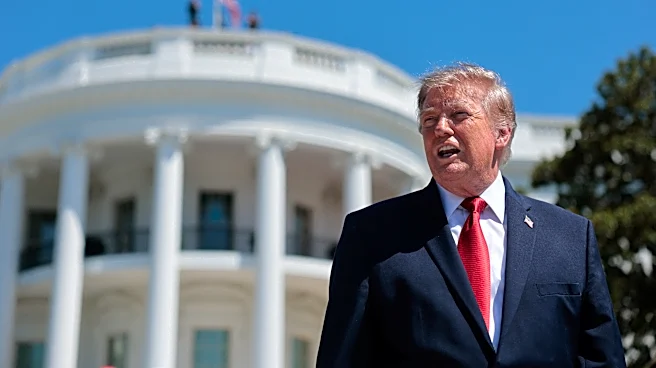
President Donald Trump is no longer pretending.

A challenge to the ABA's longtime authority
Last week, the U.S. Department of Education took an extraordinary step: Department staff recommended that the federal government decline to renew
the ABA Council of the Section of Legal Education and Admissions to the Bar as a federally recognized accreditor of American law schools.
That is a very big deal.
The ABA has occupied this privileged position since 1952. Its accreditation decisions affect access to federal student aid and, because most states tie eligibility for the bar examination to graduation from an ABA-approved law school, exercise enormous practical influence over who may enter the legal profession.
For decades, the ABA has wielded that authority with remarkably little competition.
The Trump administration is now asking a question that should have been asked long ago: Why?

When accreditation becomes ideological enforcement
Accreditation is supposed to ensure educational quality. It should tell prospective students, employers, courts and the public that a law school adequately prepares its graduates to practice law. It should not be a mechanism for a private membership organization to impose its preferred politics on an entire profession.
Yet that line has increasingly disappeared.
Consider the ABA’s diversity standards. The organization used its accreditation authority to pressure law schools on the composition of their students and faculties even as the constitutional landscape shifted dramatically. After Students for Fair Admissions v. Harvard, state attorneys general, including Tennessee Attorney General Jonathan Skrmetti, warned the ABA that its proposed accreditation requirements risked conflicting with federal civil-rights law.

Why federal officials are pushing back
And now the consequences are arriving. The Education Department’s recommendation is not simply a political broadside against an organization the administration dislikes. Department staff concluded that the ABA’s accreditation arm had failed to demonstrate that it is sufficiently “separate and independent” from the larger membership organization, as federal accreditation rules require. The Department also criticized the ABA’s response to concerns surrounding its diversity requirements.
The irony is difficult to miss.
The ABA has spent years insisting that its accreditation apparatus is an independent professional authority rather than an extension of its political advocacy. But when its own accreditation council recently sought to eliminate its controversial diversity standard, the larger ABA’s House of Delegates refused to go along.
The supposed firewall suddenly looked rather porous.
The Department’s action is not yet final. The National Advisory Committee on Institutional Quality and Integrity will consider the recommendation, and the ultimate decision will come later. Nor would federal derecognition instantly erase the ABA from American legal education. States separately decide who may sit for their bar examinations, and many currently rely on ABA accreditation.
But that is precisely why this moment matters.
For the first time in generations, policymakers are seriously questioning the assumption that one private organization should possess something approaching a national franchise over legal education.
What this means for Tennessee
This is where Tennessee has an opportunity to lead.
The Tennessee Supreme Court has already considered reforms to the state’s reliance on ABA accreditation for bar eligibility. Texas and Florida have likewise challenged the assumption that ABA approval must be the indispensable gateway into the profession.
Those efforts once could be dismissed as isolated state-level rebellions against an entrenched national institution.
Not anymore.
The ABA will undoubtedly portray this as an attack on the independence of the legal profession. But no organization is entitled to permanent regulatory authority simply because it has exercised that authority for a long time. And no private association should be permitted to transform delegated gatekeeping power into ideological leverage while insisting that questioning its authority is somehow an attack on professionalism.
Advocacy and regulatory power are different things
The ABA is perfectly entitled to be a political organization. It may publish statements, lobby governments, criticize presidents, support causes and take positions on every disputed question in American life. But political advocacy and regulatory authority are different things.
Tennessee can demand rigorous legal education, serious bar preparation, ethical formation and professional competence without outsourcing those judgments to a national organization that increasingly treats its own political worldview as synonymous with the rule of law.
At long last, the federal government is reconsidering why the ABA should have a monopoly on doing either.
Tennessee should do the same.

Brandon Smith is a partner at Holtzman Vogel, where he focuses on government investigations, white-collar matters and specialty litigation. Smith previously served as chief of staff and assistant solicitor general in the Tennessee Attorney General’s Office.
This article originally appeared on Nashville Tennessean: Why the ABA's legal education monopoly may finally be ending | Opinion