



One hundred and one years after a woman first became governor of one of the 50 states, Tennessee is poised to elect its own female governor.
For the first time in the state’s 230-year history, both major political parties selected women as their gubernatorial nominees, and a third, independent woman's campaign for the role has some momentum.
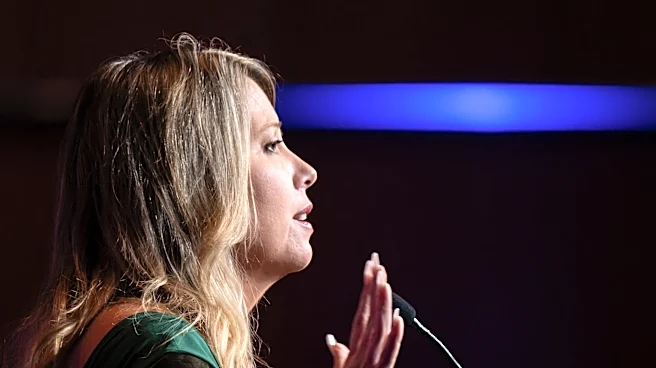
“There’s never been a woman in this office," said Democratic nominee Jerri Green, noting that women typically bear more responsibility for child care and elder care, household finances and education decisions. "There are a lot of unique perspectives that a woman will bring — particularly on these kitchen table issues."
Who will it be?
To date, 23 other states have elected women as their chief executive, starting in 1924 with
Nellie Tayloe Ross in Wyoming and Miriam Ferguson in Texas. On Nov. 3, Tennessee will almost certainly make history by doing the same. But who will it be?
In August, Republicans chose U.S. Sen. Marsha Blackburn for their nominee. Blackburn won a three-way Republican primary with 43.6% of the vote.

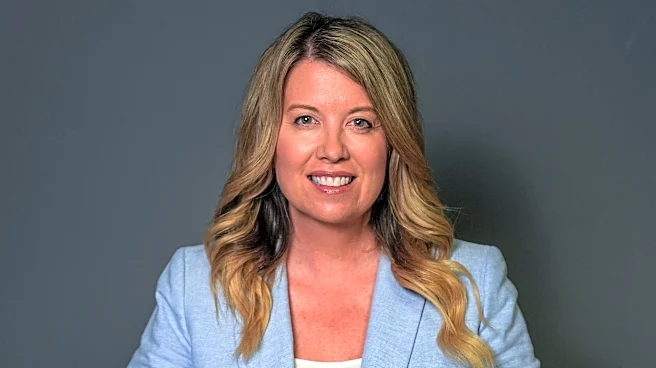
Memphis Councilwoman Jerri Green is the Democrats’ candidate, having earned 69% of the vote in the Democratic primary.
Also for the first time, an independent woman has gained significant support. Columbia businesswoman Lauren Pinkston has been endorsed by the Forward Party and earned grassroots support across the state.
Self-funded independent David Hatley, a spa manufacturer, is also in the mix. A September poll put Hatley at 10% of the vote, with Pinkston at 2% and 7% of voters undecided. Hatley made headlines when the Blackburn campaign launched an attack website citing his past felony fraud conviction and history of financial difficulty.
Despite challenges from Green and Pinkston, Blackburn has said she does not intend to debate her opponents.
"I'm not going to give air to a socialist candidate who is running on trying to destroy the agenda of Tennessee, destroy the United States, defund the police, uh no. Uh-uh," Blackburn told WSMV.
As such, it's unlikely voters will hear from candidates side-by-side before they vote. Blackburn has not debated a political opponent since her initial bid for U.S. Senate in 2018. She has held invite-only tele-town halls in her capacity as senator but has not held a public town hall to take questions from voters in that time frame.

How Tennessee women paved the way
Women throughout Tennessee's history have paved the way to this moment, Tennessee State Museum Director Ashley Howell said.
“It's important to note that women have been political throughout our history,” Howell said.
In fact, Tennesseans first elected a woman to public office in 1806. Knoxvillian Elizabeth Raulstone was elected state printer, responsible for printing copies of new laws passed by the General Assembly.
Raulstone was the daughter of a Revolutionary War veteran and married to the man who founded Tennessee’s first newspaper, the Knoxville Gazette. Widowed at age 27, Raulstone served out her husband’s term as state printer following his death, then sought reelection to the post under her own name, and won.
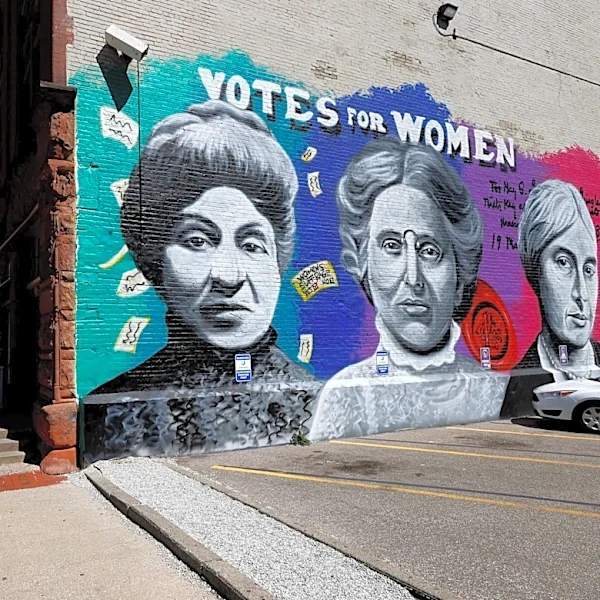
More than a century later in 1920, the women's suffrage movement was ultimately successful in advocating for the state to ratify the 19th Amendment — extending to women across the United States the right to vote.
“My great-great-grandmother sent my great-grandmother to the polls in 1910 wearing a yellow rose to hand out yellow roses to all the men that were going to vote,” Pinkston said. “She asked her 8-year-old at the time to encourage the men to think in terms of women’s suffrage. That’s our lineage.”

The 19th Amendment paved the way for women to hold elected office in the state legislature. Ironically, the first woman to serve in the state Senate, Anna Lee Worley in 1921, was an anti-suffragist. A few years later in 1922, Shelby County's Marion Griffin — who was also the first woman admitted to the Tennessee Bar in 1907 — became the first woman elected to the state House of Representatives.
It took five more decades before Tennessee elected a woman to a full term in Congress. A Chattanooga Democrat, Marilyn Lloyd took office to represent the 3rd Congressional District in 1975 and went on to serve 10 terms. She helped pass House legislation to complete TVA’s Tellico Dam in Loudon County and advocated for the Mammography Quality Standards Act, which became law in 1992.
Blackburn won her U.S. Senate seat in 2018, making her the first woman Tennesseans elected to that office.
“I want to stress the importance an individual action can make participating in the civic process,” Howell said. “Whether that’s voting in an election, connecting with your representatives and senators, there’s an engagement in this process that continues. It was true 230 years ago, and it’s true today.”
Each candidate’s approach
The candidates are approaching the governor's race with their own flair, and informed by their personal experiences.
Blackburn is one of President Donald Trump’s foremost allies and has centered her campaign on strong alignment with his agenda. Among her top priorities are cracking down on China, supporting the president's deportation agenda, expanding the state's ban on cell phones in schools and cutting the size of state government — which she has compared to Trump's DOGE initiative led by billionaire Elon Musk.
"We absolutely have to unite as a party and defeat the Democrats in November," Blackburn said in her August primary victory speech. "The Democrats are not just running on different policies. The Democrats are running to destroy our state and our nation. We cannot let them get one smidge of momentum."

Trump won Tennessee by 60.7%, 60.6% and 64% in the last three presidential elections. But it's possible Blackburn’s close alliance with him could become somewhat of a liability, as Trump’s approval rating in Tennessee has gone underwater, with just 44% of residents approving of the president in an August survey.
The Tennessean reached out to Blackburn's campaign multiple times by email, phone call and text message to request an interview for this story, but recieved no response.
Green’s leadership is informed by her experience as a mother of school-age children, which fuels her desire to fully fund public schools, pass common sense gun reforms and restore women’s access to abortion.
“There are so many perspectives that a woman will bring to this role that are unlike all her predecessors,” Green said.
“My daughter has less rights than her grandmother had, and I think that’s wrong,” Green added. “I want to make this state a place where my children want to come back. Nobody fights like a mom for her kids.”

Pinkston's policy platform is also informed by her experiences as a mother of four, including a child adopted from Uganda. Her children were born on three continents.
"We have walked through the immigration process with our kids," Pinkston said.
One child has special needs, for which Pinkston sought financial assisstance from TennCare's Katie Beckett program, which helps pay for at-home care, but was denied. She said parents need more support and more choices should be built into the system.
"We have spent a lot of money trying to find the best education environments for our children, whether in public school, private school, homeschooling,” Pinkston said. “Having touch points in all those different types of learning environments has given me an understanding of how parents really should have choices for their schools — but those should be available to us through the public school process."
Who is in the lead?
No Democrat has won a statewide election since former Gov. Phil Bredesen won re-election in 2006. Analysts with five different national forecasters, including Cook Political Report and RealClearPolitics, rate the governor’s race as “safe R” or “solid R.” Blackburn undoubtedly has the advantage and has since before declaring her candidacy last year.
An August poll of 1,200 voters by the Beacon Center of Tennessee found 55% supported Blackburn and 34% supported Green.
But nationally, polling projects a strong year for Democrats. Will that impact the governor’s race? Green said this is the year Democrats come back to win statewide in Tennessee.
“I have an opponent who is a career politician who refuses to talk to her constituents,” Green said. “People are tired of having politicians that think they don’t have to answer to the voters.”
By mid-September, Green had held nearly 200 campaign stops and was encouraged by the energy she’s been met with from supporters of all political stripes. Recently, she said, a three-time Trump voter approached her at an event to pledge support.
“I’m not trying to move Tennessee to the left or right. I’m trying to move it forward,” Green said.

Independents outnumber Republicans and Democrats in Tennessee, Pinkston pointed out. She said that’s because “voters want solutions, not sides.”
"Without the third option, people stay stuck in the trenches. I refuse to be in this trench or in that trench," Pinkston said. "I really believe that there is a hill in the middle, and that most of us want to climb it."
Pinkston said she recently met a couple at a rally in Chattanooga who told her that they have always disagreed politically. They came to her event because when reading through her platform, they found common political ground for the first time.
"We're hungry for that right now," Pinkston said. "We're all willing to budge and to give a little bit more than we may have previously thought because it feels better to get something done together than to be frustrated alone on the edges."
Vivian Jones covers state government and politics for The Tennessean. Reach her at vjones@tennessean.com.
Meet the candidates
Marsha Blackburn
- Age: 74
- Hometown: Laurel, Mississippi
- Education: Mississippi State University
- Government experience: Tennessee Senate (1999-2003), U.S. House (2003-2019), U.S. Senate (2019-present)
- Priorities: Crack down on China, expand school vouchers, ban cell phones in schools from “bell to bell,” close party primary elections, “DOGE” Tennessee state government, deport illegal immigrants
- Slogan: “Make Tennessee America’s conservative leader”
- Website: marshablackburn.com
Jerri Green
- Age: 48
- Hometown: Memphis, Tennessee
- Education: University of Tennessee, Georgetown University Law Center
- Government experience: Memphis City Council (2024-present); deputy chief to Shelby County Mayor Lee Harris
- Priorities: Paid family leave, fully funded schools, expanded Medicaid, common-sense gun laws
- Slogan: “One tough mother for Tennessee”
- Website: greenforgovernor.com
Lauren Pinkston
- Age: 39
- Hometown: Selmer, Tennessee
- Education: Freed-Hardeman University, PhD in International Family and Community Studies from Clemson University
- Government experience: Pinkston has never held public office. While working on her doctorate degree, she helped draft the first anti-trafficking law considered in the Laotian parliament.
- Priorities: End state grocery tax, cap property tax hikes, end private school vouchers, limit screens in school, add 50,000 child care slots, ban data centers until state develops regulations, keep primaries open
- Slogan: “Reason is back on the table”
- Website: pinkstonfortn.com
Tennessee trailblazers
- Elizabeth Raulstone
- First woman elected to statewide office, in 1806
- Raulstone was elected to the office of state printer, responsible for printing copies of new laws passed by the General Assembly, following the death of her husband, George, two years earlier.
- Anna Lee Worley
- First woman elected to the Tennessee General Assembly, in 1921
- Worley represented Sullivan and Hawkins Counties in the Tennessee Senate, filling a seat left vacant by her husband.
- Marion Griffin
- First woman to hold a seat in Tennessee’s House of Representatives, in 1923
- First woman admitted to the Tennessee Bar, in 1907
- Dorothy Lavinia Brown
- First African American woman elected to the Tennessee House of Representatives, in 1966
- The Honorable Janice Holder
- First female chief justice of the Tennessee Supreme Court, in 2008
- Thelma Harper
- First African American woman elected to the Tennessee Senate, in 1989
- Marilyn Lloyd
- First Tennessee woman elected to a full term in Congress, in 1975
- Marsha Blackburn
- First female U.S. Senator from Tennessee, in 2018
- Tennessee has never elected a non-White woman to the U.S. House or Senate.
This article originally appeared on Nashville Tennessean: Historic Tennessee governor's race puts women at center stage