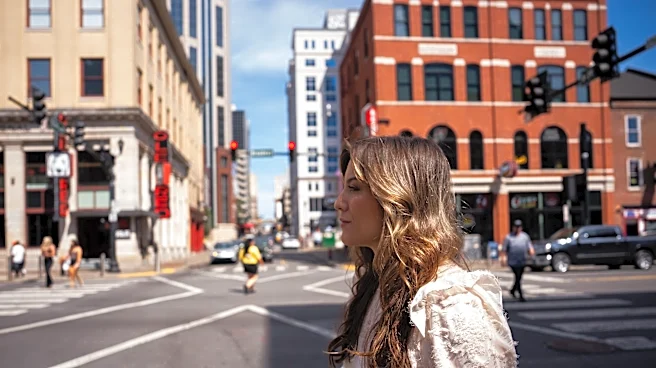






Thea Danos, a Nashville native and local jazz singer, has been performing across the city since childhood and has spent the past decade playing in downtown venues.
Raised in a family of musicians and growing up in Nashville, the 28-year-old has witnessed firsthand how the city's growth and increasingly strict parking regulations have affected local artists and the live music scene.
According to Danos, audiences were once more likely to attend and support shows before stricter parking policies were implemented. As parking became more restrictive and less convenient for concertgoers, ticket sales declined, she said.
"It's really unfortunate," she told The Tennessean July 2.
The challenges Danos faces, however, are not unique to musicians.

As parking
costs climb across Nashville, workers and residents say the added expense is creating challenges, fueling concerns about affordability and accessibility throughout the city.
Camille Mayle, an East Nashville resident who lives in the home her husband's grandparents bought in 1963, said parking issues have influenced how her family navigates the city, sometimes deterring them from visiting certain areas because of the lack of affordable and convenient parking.
"I feel like it's at the expense of what is celebrated as economic growth,” Mayle told The Tennessean June 3. "But it feels like the quality of life for residents continues to go down."
"It feels very disempowering to be a resident of Nashville, honestly."
And while city leaders have launched initiatives aimed at improving transportation and reducing traffic congestion, includingMayor Freddie O'Connell's "Choose How You Move" plan, some residents worry Nashville is becoming less accessible to locals as parking costs rise.

The concerns come as Nashville continues to expand its reputation as a national hub for entertainment, tourism and business, attracting new residents, visitors and investmentwhile increasing pressure on the city's transportation and parking infrastructure.
As parking prices climb, Nashvillians feel the impact
Parking costs can significantly reduce musicians' earnings, especially for tip-based gigs, Danos added. With parking fees ranging from $10 to $40 a night, she said artists often have to factor those expenses into their pay.

Additionally, finding affordable parking can also create safety concerns, Danos said, particularly for women walking alone at night to and from performances while carrying cash and equipment. "It brings up more of an issue than just a financial one, as a woman alone in the city, walking in dress clothes from a far spot to try to get cheaper parking," she said.
"I'm carrying cash," she added. "I'm dressed kind of like a sore thumb. It brings up some safety concerns about how far you need to walk to try to make money on your gig."
And while some parts of the city can be more challenging for workers to navigate, other areas have emerged as more accessible options, particularly East Nashville, though that accessibility often comes at the expense of nearby residential streets.
Mayle, 37, whose family lives on Dozier Place, said her narrow street often becomes bottlenecked by traffic from nearby bars, particularly when they host special events. Furthermore, the street is frequently used by drivers as a cut-through to avoid the traffic light at Trinity Lane and Gallatin Pike.
"The only entrances onto our street are from main thoroughfares. There's no other outlet to another side street,” she said.
"And so our street's tiny and it doesn't have sidewalks and it gets this extra traffic. So anytime there's cars parking on the street as well, it's just a perfect storm."
How parking costs are changing the way Nashvillians spend their money

The reluctance to visit parts of Nashville due to parking costs was a common theme among residents interviewed by The Tennessean.
During a Mother's Day outing in 2025, Middle Tennessee native Margot Fosnes, 68, paid $50 for 90 minutes of parking downtown — about the cost of one of her family’s meals, she told The Tennessean July 24.
Given the cost of eating out, Fosnes said, parking can account for a significant share of a restaurant's bill. As a result, she views downtown as increasingly geared toward visitors rather than local workers and residents.
Locals have long joked that Nashvillians avoid downtown. But for some residents, rising parking costs have turned the punchline into reality, making trips to the city's core harder to justify.
Dina Kraus, 56, has lived in Nashville since 1983 and remembers when finding free street parking in the city was routine. Now, she said, even a brief stop for lunch in Midtown, for example, can come with a hefty price tag as paid parking has become the norm.
"I miss kind of the old Nashville. I mean, Nashville's changed a lot and change is a good thing," she told The Tennessean July 28. "And I get that, but I feel like the average person is having to pay to go to a restaurant, to go to a bar, and now they're paying exorbitant fees for parking."
"It's all over."
Growth fuels new questions about parking and public space

Nashville's traffic challenges have not gone unnoticed by city leaders.
The city's $3.1 billion Choose How You Move transportation improvement program isn’t intended to be a parking solution, however. Instead, the projects that are part of the program’s 15-year timeline are more focused on infrastructure like sidewalks, traffic signals and roadways.
For example, the plan’s flagship “All-Access Corridors” aims to upgrade longer stretches of major corridors with high-frequency bus service, modernized signals and integrated transit signal priority designed to give buses higher priority as they move through traffic.
That doesn’t mean Choose How You Move won’t add any new parking spots to Nashville’s portfolio. The plan will add a dozen new bus stations across the city by 2032, bringing with them up to 3,780 new transit center-adjacent parking spaces.
Parking challenges in Nashville's popular 12 South neighborhood came to the forefront during aMay 11 Metro Parking and Traffic Commission meeting, where residents and business owners weighed in on a proposal to add two-hour parking limits and designate rideshare and delivery zones along 12th Avenue South.

While residents expressed concerns about blocked driveways and parking shortages, business owners said the proposal fails to address a key issue: where employees will park. The commission initially deferred a vote on the proposal for 60 days. The item was postponed again at its July meetingafter residents raised significant concerns about the project.
"As Nashville continues to grow, we’re seeing growing demand for various right-of-way needs, including parking," said Nashville Department of Transportation Assistant Director Cortnye Stone in an email to The Tennessean Aug. 26. "NDOT manages the city’s public on-street parking program and we’re always evaluating right-of-way use throughout the county. We’re committed to balancing everyone’s concerns to ensure quality of life is maintained."
According to Stone, the department will be kicking off a comprehensive parking study of 12 South in the next few weeks.

"That study will include robust coordination and engagement with residents, business owners, tenants, and more. We’re bringing on a consultant team with national and international experience to help guide the process," said Stone. "We will be providing an update to Traffic & Parking Commission on the 12 South project kick-off at the September meeting."
Major curbside changes, including the addition or removal of paid parking and the creation of residential permit parking zones, are all considered by the Traffic & Parking Commission, Stone added. The next meeting is scheduled for Sept. 14.
The department did not respond when asked if other areas of the city are being considered for parking changes similar to those proposed in 12 South.
For some locals, parking has become a quality-of-life issue
The Tennessean solicited feedback from residents across the city and interviewed several Nashvillians, including many longtime locals.
While their experiences differed, many shared a similar concern: Parking has become so costly and difficult to navigate that living in Nashville is becoming increasingly unsustainable.
Mayle, who lives in her home with her husband and 3-year-old son, said overflow parking and increased traffic on the narrow residential street have affected her family's daily life. The volume of vehicles, she said, means her son cannot safely play outside without supervision.
For many, the issue goes beyond parking. She said many native Nashvillians feel they are bearing the burdens of growth while having little say in how their neighborhoods are changing.
"When new transplants move here and then complain about the parking or the traffic situation, they're told 'Oh, you should have done your research better before you moved here,'" she said. "But I mean, for us … for all intents and purposes, we are locals, natives whom the city has built up around."

“I think greed, unfortunately, kind of runs the city at this point. It's very difficult as a native to see so much turned towards just financial gain,” said Danos. “I hope that we can preserve what makes Music City special. If we take away the thing that draws people here, we won't have anything, you know?”
“I think people have been drawn to the smallness, the sweetness, the accessibility [of Nashville]. And if we erase that, we won't have what made it alluring in the first place.”
Contributing: Austin Hornbostel
Diana Leyva covers trending news and service journalism for The Tennessean. Contact her at Dleyva@gannett.com.
This article originally appeared on Nashville Tennessean: Nashville's parking problem is driving residents away from their own city