


On Friday nights across Tennessee, thousands of fans pack stadiums under blinding lights to cheer on student-athletes who have poured sweat into weight rooms and summer practices. Yet behind the roaring crowds and marching bands lies a broken, archaic system that treats competitive excellence as an administrative problem.
Instead of fostering true championship grit, the Tennessee Secondary School Athletic Association (TSSAA) relies on outdated rules and artificial divisions to engineer equal outcomes. It is time to tear down this antiquated model and rebuild a system where the best actually compete against the best.

TSSAA chose separation over competition
To see how we got here, look back to 1996.
Driven by public school complaints that private institutions were monopolizing state titles,
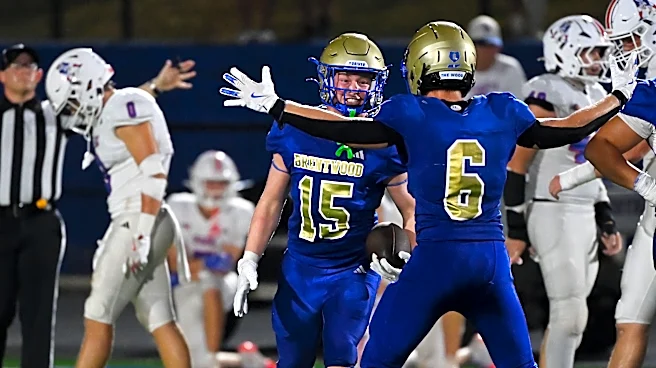
the TSSAA Legislative Council voted to split schools into Division I (public) and Division II (private schools offering financial aid). I was at Brentwood Academy when that split came down. My freshman year, we went undefeated on our way to a state championship – a year after thumping Riverdale in the Clinic Bowl. But rather than encouraging public programs to elevate their game, the TSSAA chose to insulate them from tougher competition.
To stack the deck further, the TSSAA relies on a ridiculous "enrollment multiplier." By multiplying a private school's student headcount by 1.8, the association forces smaller private schools to play against much larger public student bodies.
It is a punitive formula designed to penalize private schools for perceived financial advantages rather than fostering genuine fairness. The divide between public and private schools quickly sparked a legal quagmire, culminating in a federal battle where the U.S. Supreme Court ruled inBrentwood Academy v. TSSAA that the association's heavy-handed enforcement constituted state action under the Constitution.

Schools are voting with their feet
Now, the cracks in the TSSAA’s bureaucratic mess are widening into full-blown canyons.
Recently, Christ Presbyterian Academy and Father Ryan announced they are opting out of TSSAA region play to run independent schedules. CPA cited mission accountability, competitive integrity and student safety. Father Ryan pointed to bad opponent alignment and fit. Reading between the lines, both schools recognized a blunt reality: They could not reasonably compete against mega-programs at the top of Division II-AAA under the current broken setup.
The answer is to fix the setup – not force respected programs to play independent schedules with zero shot at a state title.
Those departures sent TSSAA officials into immediate damage control. The TSSAA Board of Control scrambled to convenean emergency meeting because losing those two schools left Division II-AAA below its required 12-team minimum. This panic exposes the association's total inability to understand or measure true competitive balance. Instead of shoehorning schools into arbitrary buckets based on headcount tricks or filling arbitrary minimums, Tennessee needs transparent, real-world metrics for athletic strength.
Public schools already have advantages
The core logic behind splitting public and private schools rests on pure hypocrisy. Critics claim tuition-charging private schools enjoy an unfair edge through donor money, conveniently ignoring the single biggest advantage public schools hold: Tuition is free. Because public schools cost nothing to attend, they command a massive, built-in structural advantage in attracting local talent without straining family finances.
Public doesn't mean poor. At any given time, roughly half of the top high school football programs in America are public powerhouses. Elite programs like Allen (TX), Galena Park North Shore (TX), Buford (GA) and Folsom (CA) dominate by leveraging large student bodies, multimillion-dollar municipal bonds for world-class stadiums and booster networks that monetize naming rights and premium seating.
Fueled by passionate communities and flexible enrollment policies, these public schools operate as powerhouse brands that routinely secure national media deals and major apparel sponsorships.
The blueprint exists for public schools to be as competitive as they want to be.
If a public district chooses to invest in top-tier facilities, good for them. We shouldn't mandate mediocrity in public facilities just to make every school feel equal. By the same token, private schools should be free to offer athletic and merit scholarships without facing state penalties. Leveling the playing field means empowering every institution to build the best program possible – not capping success at the lowest common denominator.
Let excellence compete openly
The TSSAA has spent decades fumbling through rules that shortchange student-athletes.
Thankfully, state leaders stepped in. Gov. Bill Leesigned Senate Bill 16 into law, granting student-athletes a one-time free transfer without losing athletic eligibility.
Lawmakers rightly prioritized student freedom over bureaucratic control. Which brings us to the real question: Why shouldn't schools and communities freely compete for top athletic talent?
In every other area of education, from STEM academies to fine arts magnet schools, we celebrate institutions that recruit and develop top talent. Restricting athletic competition under the guise of an artificial "level playing field" only punishes excellence and limits young athletes looking to reach their full potential.
We need to stop pretending that forcing public and private powerhouses into occasional non-region exhibition games is enough. Private and public schools should play games that count toward the postseason. Right now, playoff brackets create soft, uneven paths to theTSSAA BlueCross Bowl rather than testing every team in the exact same fire.

Let the best compete against the best
Imagine Tennessee's finest programs facing off across our three grand divisions. In West Tennessee, public powerhouse Westview should test itself against Briarcrest Christian.
In Middle Tennessee,juggernauts like Oakland ought to go toe-to-toe with titans like Montgomery Bell Academy.
In East Tennessee, Maryville and Alcoa should trade blows with Baylor and McCallie.
True champions are forged only against the toughest competition available. Real competitors don't whine about the matchup. They figure out how to win. Every school deserves that opportunity.
It is time to abandon a defensive mindset that treats elite competition as a threat. Communities across Tennessee should be free to invest in their youth, and athletic associations should simply get out of the way.
When we focus on what happens on the field, our student-athletes win. Our schools thrive when we let the best compete against the best.
USA TODAY Network Tennessee columnist Cameron Smith is a Memphis-born, Brentwood-raised recovering political attorney raising four boys in Nolensville with his particularly patient wife, Justine. Send outrage or agreement to smith.david.cameron@gmail.com or @DCameronSmith on X. Agree or disagree? Send a letter to the editor at letters@tennessean.com.
This article originally appeared on Nashville Tennessean: Why TSSAA should end its public-private football divide | Opinion