




Vanderbilt University's billion-dollar nationwide expansion across four cities started small.
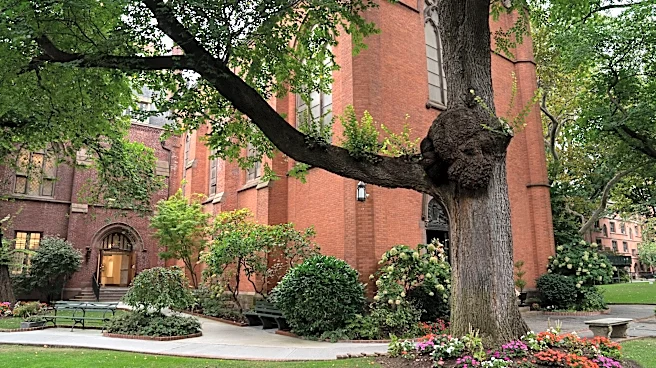
In the summer of 2024, a New York-based alum of the Nashville school heard rumblings that the 207-year-old General Theological Seminary campus taking up an entire block in the heart of the Chelsea neighborhood could soon go up for sale. One thought came to mind, "What if my alma mater moved in?"
After a few emails and a meeting or two, Chancellor Daniel Diermeier greenlit the idea, and by the end of September 2024, Vanderbilt entered into a 99-year lease valued at $44 million in one of the country's largest centers of business and culture. Just one month later, the school finalized plans for another satellite campus in West Palm Beach, Florida, a burgeoning
hub for technology development and business growth. In December 2025 came the Quantum Innovation Center in Chattanooga where scientific research is forging ahead, and the next month, Vanderbilt said it would also open aSan Francisco, California, campus focused on engineering and entrepreneurship.
"We've been on a tear," Diermeier said. "We want to do something world class that would be difficult to do, at least in the short run, in Nashville. Each particular location has world class assets that, if we come and bring our faculty and our talent there, we can create something really interesting."
What began as an idea for a one-off satellite location that students could call home during semester-long internships away from Nashville snowballed into four new campuses concurrently being built and renovated, each with their own academic specialty and the capacity to bring in thousands more students combined. It's a feat no other American university has yet accomplished at this scale. In total, Vanderbilt's nationwide expansion will cost at least $1 billion, calculated from leases, property values, renovation estimates and publicly available fundraising efforts, but the university stands to potentially gain much more.
"We still have this image that universities are these cloistered spaces in ivory towers and behind walls, but that's really outdated," Diermeier said. "Universities are an enormous part of the innovation ecosystem where they are located."

Billionaire donors support Vanderbilt's expansion
Diermeier wants Vanderbilt to be the dominating higher education force across all career paths. The way to do that, he said, is to be where the innovation is happening, which means venturing outside of Nashville.
"Ask yourself, if you want to build a great film school, whether it's a good idea to be in a rural location or whether you want to be in New York or Los Angeles?" Diermeier said. "Location matters for strategic success of a university."
The locations that Vanderbilt selected for its first round of satellite campuses include two markets with the most Fortune 500 headquarters nationwide, one that's drawing major banking forces like Wells Fargo to Florida and another poised to become the nation's hub for quantum advancements.
Chattanooga aside, an added benefit is that some of the nation's richest people are based in these areas, and so are their philanthropic efforts. New York, the Bay Area and South Florida are all among the top 10 U.S. metros for billionaire counts, according to Forbes.
Vanderbilt already received sizable donations from business leaders like Nvidia founder and CEO Jensen Huang; philanthropist and famed financier Katie Paige, who is Charles Schwab's daughter; her husband, a private investment firm director, Matt Paige; Miami Dolphins owner Stephen Ross and billionaire real estate developer Jeff Greene, who is one of President Donald Trump's neighbors in Florida.
Vanderbilt officials said these are all donors who wouldn't otherwise support the Nashville campus.
"The resources we got from the city, or the county, or Jeff Greene or Steve Ross wouldn't have flown to Nashville because they have no connection with us," Diermeier said. "They're not alums. They're not parents. They are there because they see the benefit of having us in the local community."
Opening in New York is like 'coming home,' Vanderbilt official says
The first satellite campus to welcome students is in New York with around 100 students moving in on Aug. 23, just over two years after an alum first had the idea to flag the property for Vanderbilt. During that time, the university invested at least $50 million, according to Diermeier, to renovate neglected interiors, bring them up to modern accessibility standards and spruce up the facades.
"The Metro New York area is one of our fastest growing markets of students coming to Nashville outside of Tennessee, and I believe it's one of our top markets where our students want to move when they graduate from Nashville to start their careers," Vanderbilt University Vice Chancellor for Strategic Initiatives James Kellerhouse said. "Those were all indicators of why this New York City presence was important for us."

Kellerhouse, a 25-year veteran of higher education institutions, is the top Vanderbilt official running the New York campus.
"There's a coming-home moment here, too, that just ties it all together," he said. "Cornelius Vanderbilt was from New York City. He wasn't from Nashville, and he made a gift to found the university, but he never actually saw it built."
Vanderbilt, nicknamed "the Commodore" for his steamship business, became one of the richest men in the 19th century building a railroad and shipping empire. He died in his Manhattan home eight months before Vanderbilt University welcomed its first students.

Moreover, Kellerhouse said three generations of Vanderbilts previously served on the board of the General Theological Seminary that has become Vanderbilt University in New York.
"The campus feels like Vanderbilt in Nashville, but is actually in New York City with gothic architecture, a canopy of trees, bluestone walkways," Kellerhouse said.
Vanderbilt's academic programs authorized by the New York State Education Department include a one-year Master’s of Science in Business and Technology and semester-long undergraduate programs for arts, science, engineering and human and organizational development. Plus, internship opportunities at institutions like The Whitney Museum of American Art, the High Line, Uber and numerous investment banking firms.
Vanderbilt took over after potential University of Florida deal fell apart
If the New York campus is the quickest turnaround so far, the West Palm Beach campus is the biggest undertaking.
Rather than taking over existing buildings like it's doing in New York and California, Vanderbilt is building its $520 million West Palm Beach location from the ground up. Renderings show modern structures with lots of windows, outdoor spaces that look like they belong on a luxury resort and palm trees and other flora growing inside.
The city, the county and local billionaire businessman Jeff Greene donated parcels of land that will make up an eight-acre campus. The land donations alone were valued at $138.8 million.
"We only go to communities where we are welcome and where people love to have us," Diermeier said.
West Palm Beach Mayor Keith James said that when he heard Vanderbilt was considering moving further south in 2024, he was pinching himself to make sure he wasn't dreaming.
The year before, the city was in talks to bring a University of Florida campus to town. They made it far enough into the planning process to identify a parcel of land downtown before the deal fell through.
Then, Vanderbilt rode in and offered to build the elite graduate research university of their dreams in exchange for real estate in a community with a growing reputation as "Wall Street South."
"It was fortuitous," James said. "But some things are just meant to be."
West Palm Beach has attracted 21 significant corporate headquarters and executive offices across financial services, technology, life sciences, manufacturing and logistics in just six years, including Dycom Industries, Wells Fargo, Goldman Sachs and BlackRock.
Once the campus opens in fall 2029, Vanderbilt will contribute directly to their potential workforce pool with about 1,000 graduate students on campus each year.
"Companies will no longer have to worry about convincing workers to join them here," James said. "There will be a talent pipeline that they can tap into year after year. Students who are coming to to the to the graduate campus of Vanderbilt should not have a problem finding jobs while they're here. It's an ecosystem that just keeps turning."
San Francisco connects Vanderbilt with leading AI executives
Diermeier said he expects the San Francisco campus to find a similar place in the Bay Area, aiding the talent pipeline and connecting Vanderbilt students with some of the biggest tech and finance companies in the world. The school itself will be named after the founder of Nvidia, the tech manufacturer responsible for keeping roughly 80% of artificial intelligence in the world running.
It's called the Jen-Hsun and Lori Huang College of Art, Architecture and Design.
Meanwhile, the dean of the school's official title will be the Katie and Matt Paige Dean’s Chair, named for the daughter of billionaire Charles Schwab, a philanthropist in her own right, and her husband who is in private investment.
"San Francisco is still very early," Diermeier said. "It's the capital of technology innovation now, particularly with A.I., but it also has a vibrant arts community, and so we love the idea of exploring what we can do at that intersection."
Since Vanderbilt is taking over an existing campus, it's planning the most ambitious opening timeline of all of its satellites. The California College of the Arts will close to students at the end of the 2026-27 school year, and Vanderbilt officials think they can turn it around and open to their own students in the fall of 2027.
Vanderbilt's rising reputation across the United States
What Diermeier is building at Vanderbilt is unlike what any American university has ever attempted to accomplish at this scale. He's taking an already renowned school, establishing its presence in the country's top business hubs and bringing in more students, all while increasing exclusivity.
"You may have seen there was a piece in Forbes recently that said it's harder to get into Vanderbilt than it is into Yale now," Diermeier said in a March 2026 interview. "We're seeing applications for early decision and across the board that are unprecedented in our history."
He said around 4.7% applicants got into Vanderbilt during the most recent admissions cycle, and growth rates for applications were up 20% for early decision undergraduate applicants in the 2025-26 school year.
Diermeier attributes that to a few successful initiatives in recent years: increased investment in athletics that led to the school's first ever Heisman finalist, the creation of Vanderbilt's first new college in 40 years with the Institute for National Security and a narrow focus on advancing the university's reputation.
The increased interest isn't because of the satellite opportunities in New York, West Palm Beach, San Francisco and Chattanooga yet. But in a few years, Diermeier believes it will be.
Hadley Hitson covers business news for The Tennessean. She can be reached at hhitson@gannett.com. To support her work,subscribe to The Tennessean.
This article originally appeared on Nashville Tennessean: Is Vanderbilt outgrowing Tennessee? Inside the national expansion plan