




When Coopertown let license plate readers into their small Robertson County town, they did so with altruistic intent, officials said.
"This was intended to help keep all of us safer as our police department works diligently for us," Coopertown Mayor Jeff Smith said in a Facebook post Sept. 18.
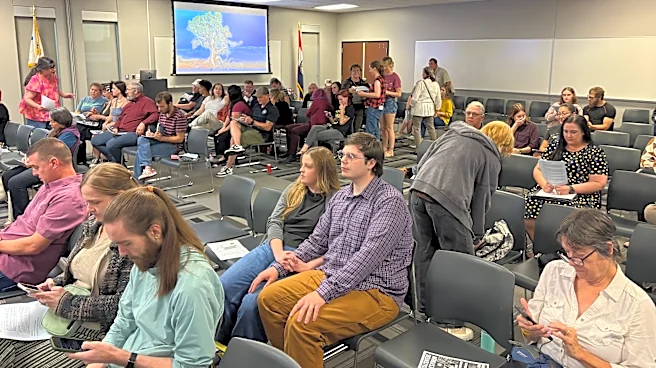
But much like many municipalities across the state and country, officials now are reconciling with the potential data privacy concerns. While some governments are pulling their support, others are doubling down.
"Chief Haley and I have come to an agreement that the Flock LPR system in Coopertown will terminate and be removed to ease the citizens' concern," Smith said. "After consideration of emails, public and private comments both in favor of and against,
we feel this is the best move for the community to support what the majority of citizens want."
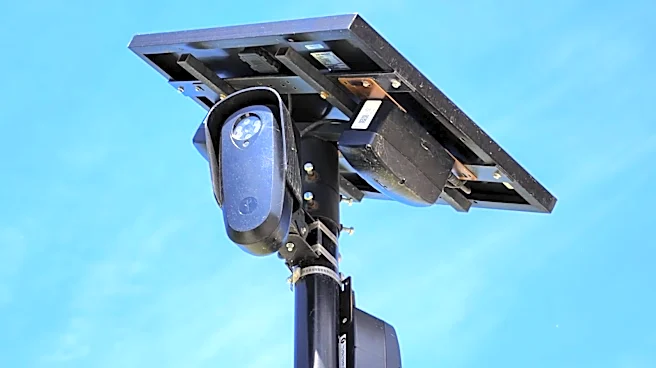
Designed to aid law enforcement, the data gathered by the cameras can alert officers when and where a car has left from and where it's going, creating a detailed report for investigating stolen vehicles, missing persons and other criminal cases.
But it's what happens to that data after that has critics concerned.
The American Civil Liberties Union calls the surveillance network "unprecedented spying." Crowd-sourced platforms like DeFlock, Eyes on Flock, FlockHopperand Atlas of Surveillancetrack where these cameras are placed, while the website Have I Been Flocked? offers a way for people to know if their own license plates have been noted by Flock.
Sullivan County Commissioner Joe Carr went so far as to call for the public execution of the Flock CEO during a work session in August when a representative of the company did not provide satisfactory answers to his questions.
“I believe that Flock right now is one of the most hated companies in America,” Carr told a regional sales director for Flock during a Sullivan County Commission meeting. “They are one of the most corrupt companies in America. And, quite frankly, sir, I don’t think we can make America great again without hanging your CEO publicly for treason.”
Cameras come down across Tennessee
Coopertown isn't the first local government to take action.
The Knox County Commission voted in Augustto ban the cameras and ordered the company to take them down by Sept. 16 after a series of contentious commission meetings.
The Knox County Sheriff's Office began using Flock license plate readers in 2020 under a five-year agreement, Knox News reported. Through the contract, the agency was allowed to make purchases in small increments, keeping the price under the threshold requiring commission approval.
When Flock said they wouldn't be able to meet that September deadline to remove the hardware, County Mayor Betsy Henderson announced that the Public Works department would cover them up. As of Sept. 17, 10 of its 143 cameras have been taken down.
In Hamilton County, the Sheriff's Office used 70 cameras between Flock and a contract with Motorola.
"As your elected Sheriff, I truly believe in LPR technology and its ability to combat criminal activity in Hamilton County and those criminals who are here to cause harm and turmoil," Sheriff Austin Garrett said in a social media post Aug. 31.
But Garrett made the decision to pause the department's programs.
"This directive, being weighed over several weeks, encompasses multiple factors that have contributed to this decision," he said. "The primary factor is the tremendous concern regarding public data and potential misuse of what is captured."
Earlier this month Coffee County culled its cameras.
“When I got to asking questions and hearing things from across the country, my antennas went up,” Sheriff Chad Partin said during a law enforcement committee meeting.
Partin is an advocate for the cameras. They'd been helpful in solving a recent missing persons case, he said.
“But what bothers me to this day is I cannot hear anything from Flock Corporation or nor can any other law enforcement official from across the country from Flock of what happens to the data,” Partin said.
Coopertown is taking it a step further, the mayor said.
"There will be no searches, and while the cameras may continue to temporarily appear active until fully removed or covered, they will not be used," Smith said. "We will terminate the agreement with Flock, coordinate with them to have the system removed and will remove Coopertown’s access from their system, including the ability to utilize other municipal LPR systems in working on a crime or missing person case within our town."
Where they're working, officials say
As the Hamilton County Sheriff's Office paused its programs, the Chattanooga Police Department was called on to answer questions.
During a City Council meeting Sept. 15, which was streamed, Chief John Chambers gave a presentation about how license plate reader cameras are being used. None of the cameras in use there are owned by Flock, the department said, but rather Motorola.
"That is an actual picture-taking camera. It is not a video camera," Chambers explained. "It is not a constant feed. Police cannot log in and view that camera. License plate readers are strictly for investigative purposes only, and they cannot be used as the only piece of evidence by which to take law enforcement action, or as probable cause to make an arrest of some kind.”
Chattanooga currently has 41 Motorola cameras, Chambers said touting the ways in which they've helped in an investigation.
"This piece of technology, if it is used responsibly, with the proper governance, and in conjunction with what we have already established with our public safety cameras, it only will be a force multiplier," he said. "It helps us keep our community safe."
In Clarksville, which also uses Motorola cameras, Police chief Ty Burdine backed the technology during a city Finance Committee meeting, comparing its impact in crime reduction to that of what Ring doorbell cameras did for residential burglary rates.
"If you want to know one of the most impactful tools that we’ve had to leverage being so short-staffed and keeping crime low, it’s been the LPR technology,” Burdine said. “My job is not only to keep the city as safe as it can be, but my job is also to bring justice to families, victims."
Nashville and Flock cameras
Nashville has a sticky history with police surveillance technology.
Metro Council narrowly passed a six-month pilot program in 2022 after more than a year of intense deliberation and concerns the license plate reader program would be used to target diverse communities. The program did not progress beyond the pilot.
In March, the Metro Nashville Council and Metro Nashville Public Schools rejected a recommendation by the police department to put readers on school campuses.
Metro Nashville Council has also rejected contracts for Fusus cameras, which would allow the department to pull footage from partnering businesses, and funds for the replacement of existing video cameras installed downtown.
And when Nashville Police Departmentlaunched a pilot program using drones, officials again faced pushback. That program operated within a 2-mile radius of the Madison police precinct for about two months earlier this summer. The initiative, launched without council approval, drew scrutiny from council members and community advocates.
Metro Council on Sept. 1 passed an ordinance restricting the use of first responder drones.
But while the city of Nashville rejects the technology, communities surrounding the city and county embrace them. Mt. Juliet Police posted on X that one of their license plate readers flagged a car, driving from Nashville, associated with a wanted person.
"We are grateful for the strong efforts of our officers, the support of our community, and the technology that continues to work together to help protect Mt. Juliet," the department said.
This article originally appeared on Nashville Tennessean: TN departments wrestle with Flock cameras, data privacy concerns