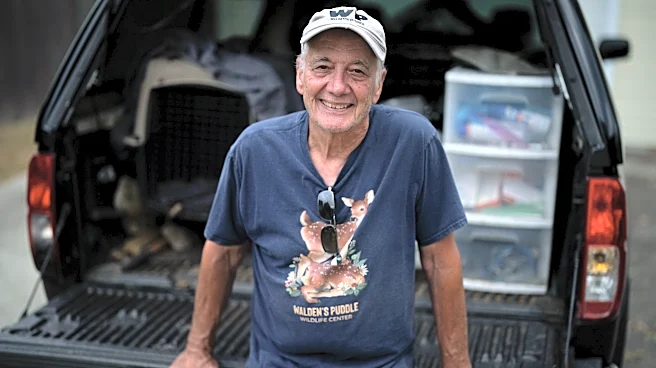









In a wooded backyard in Hermitage, Jerry Vandiver gave the side of a cage a few soft taps.
For a moment, the red fox inside didn't move.
He then shot through the open door and into the brush, disappearing like a flash. His bushy tail flicked behind him.
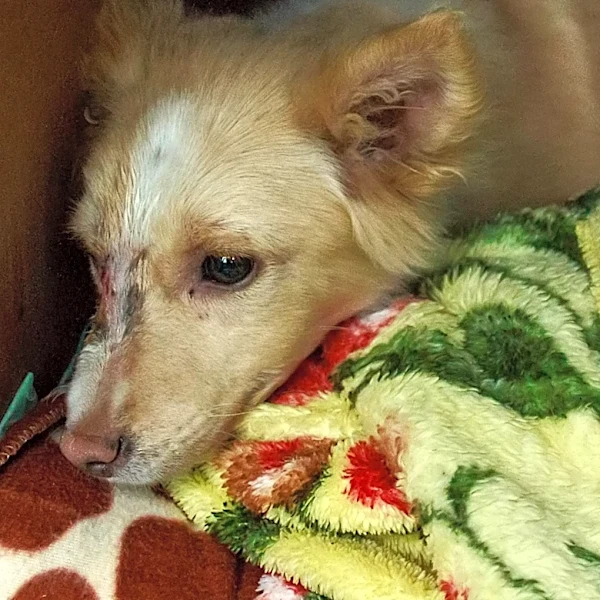
Nearly three months ago the fox had been in terrible shape. Mange had stripped away most of his fur, leaving his skin covered in sores and infection. Vandiver trapped him after a resident spotted the sick animal in his backyard and called for help.
The fox was in such bad condition that rescuers at Walden's Puddle Wildlife Center of Greater Nashville weren't sure he would survive.
Now his coat had grown back. His wounds had healed. And he was home.
Somewhere nearby, Vandiver hoped, was a female fox
believed to be his mate. She, too, had been trapped, treated for mange and released earlier.
That's one thing Vandiver loves about foxes.
“They're a family unit,” he said. “Most of the time, they mate for life. They don't travel in packs, they travel as families.”

Nashville is experiencing a terrible mange epidemic in its red fox population, with a record number being treated this year at Walden’s Puddle, a nonprofit wildlife rehabilitation center in Joelton.
Vandiver, a singer/songwriter who lives in East Nashville, has long volunteered for the organization helping to trap and release foxes. And at 78, he’s become something of a fox first responder across Middle Tennessee.
Residents call day and night. They message him on Facebook. They send pictures of emaciated foxes wandering through backyards with missing patches of fur.
Even when he’s exhausted, Vandiver has a hard time saying no.
“Mange is treatable,” he said. “If we can catch them, they can have a healthy, happy life. I know how to do that. I can't walk away from them when I see those pictures.”
The trapping can require days or weeks of work. Vandiver sets cameras, studies the foxes' movements, baits traps and waits.
In August alone, he said, he logged 234 volunteer hours.

A record year for sick foxes
Vandiver has been volunteering at Walden's Puddle for more than seven years, but he has never seen a year like this.
He and other volunteers trapped a record 44 foxes in 2025. They’ve already captured more than 60 this year, as of early September.
“I don't like to have that record,” Vandiver said. “I wish there weren't that many to trap, but they're out there.”
The work has increasingly consumed his time.
He monitors trail cameras connected to his phone. When a fox finally steps into a trap, it doesn't matter much what hour it is.

Joanna Johnson, animal care manager at Walden's Puddle, has awakened to messages from Vandiver sent at 2 a.m.: He caught another fox. He's bringing it in.
“He is working constantly, nonstop,” Johnson said. “He always puts foxes ahead of himself.”
Vandiver doesn't like leaving a frightened animal in a trap until morning. Foxes can panic and injure themselves against the wire, he said.
So he gets out of bed.
He covers the trap with a sheet to calm the animal, drives it to Walden's Puddle and transfers it into a crate with water, food and bedding until the medical staff arrives.
“I don't even know when he sleeps,” Johnson said.
The trapping is primarily Vandiver's domain, although several other volunteers help when they can. But he credits the team that treats the animals at Walden’s Puddle.
“I'm not the hero,” he said. “I'm just the ambulance driver.”

From Music Row to fox rescues
Long before Middle Tennesseans knew Vandiver as the man to call about a sick fox, he was known around town for something else: writing songs.
Vandiver moved from his hometown of Kansas City, Missouri, to Nashville in the 1980s and built a career as a songwriter, with his work recorded by major country artists including Tim McGraw, Phil Vassar and Barbara Mandrell. He still writes, and regularly performs at the Bluebird Cafe.
Music even found its way into his fox rescues.
Vandiver and co-writer Caitlin Evanson wrote “Free Once Again,” a song inspired by releasing rehabilitated wildlife back into the wild.
And the Facebook page Vandiver originally created to promote his music has taken on a second life.
He once had about 325 followers. Then he began posting before-and-after videos of the foxes he helped rescue.
Now he has roughly 5,000 followers.
Once, while his wife, Gracie, was playing mahjong with friends, Vandiver texted to say he'd caught a fox and was headed to Walden's Puddle.
“My husband just caught a fox,” she told the group.
One woman asked his name.
Jerry Vandiver.
“You're married to Jerry Vandiver?!”

A growing strain on rescuers
The foxes Vandiver delivers to Walden's Puddle can need weeks or months of rehabilitation.
Mange is caused by microscopic mites that burrow into the skin, causing intense itching, pain and hair loss. Many foxes arrive emaciated and suffering from sores and secondary infections. Some need special liquid diets and extra calories as they recover.
The growing caseload is expensive for the nonprofit, which treats about 100 species. Walden's Puddle spends about $3,000 a month on rats and mice to feed all the foxes in its care, Johnson said, while medications cost at least another $1,000 a month.
Johnson said the organization believes several factors are contributing to the number of foxes arriving with mange, including habitat loss and exposure to rodenticides.
Development can push foxes into smaller patches of habitat, often alongside neighborhoods and busy roads. Mange can spread through direct contact and through contaminated environments, particularly when animals are concentrated in the same areas.
Johnson said one of the most important things residents can do to help is stop using rat poison. Foxes can be exposed to rodenticides when they eat poisoned rats and mice, weakening their immune systems and making it harder for them to fight off disease.

She also discourages residents from leaving food outside for wildlife. While often well-intentioned, feeding can draw multiple animals to the same place and increase opportunities for mange and other diseases to spread.
Whatever is driving the growing caseload, Vandiver sees the consequences daily. And he has no plans to stop.
“I guess till my body says you can't do it anymore,” Vandiver said. “The demand is there. The need is there.”
Back in the Hermitage backyard, the red fox didn't linger.
After months of treatment and recovery, his return to the wild took only seconds.
“This is my favorite part,” Vandiver said, as the fox sped off.
Sometimes, he said, they race from the cage, then stop and look back.
He knows there may be a simple explanation. After being trapped once, perhaps they're just making sure no one is coming after them again.
But Vandiver prefers to believe something else.
“I like to think they're saying, ‘Thank you.’”
For more information, visit waldenspuddle.org.
This article originally appeared on Nashville Tennessean: The fox whisperer? Meet the man saving Nashville’s sick foxes