


The Aug. 6 primary election is now in the rearview.
Tennesseans learned who will be facing off to replace the outgoing Gov. Bill Lee, who’s term-limited, as well as the field of candidates vying to represent voters across the state under the new congressional map approved by Republican lawmakers following a contentious special legislative session earlier this year.
But voters won’t have much time to rest on their laurels — general election day’s already right around the corner.
As the dust settles, here’s what comes next for the candidates who won their primary election races and how to cast your vote on Tuesday, Nov. 3.
Who will be on the ballot this November?
The final field of candidates for the
Nov. 3 state and federal general election is set.
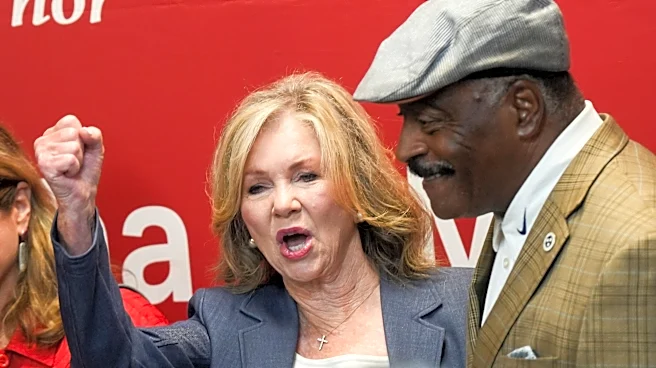
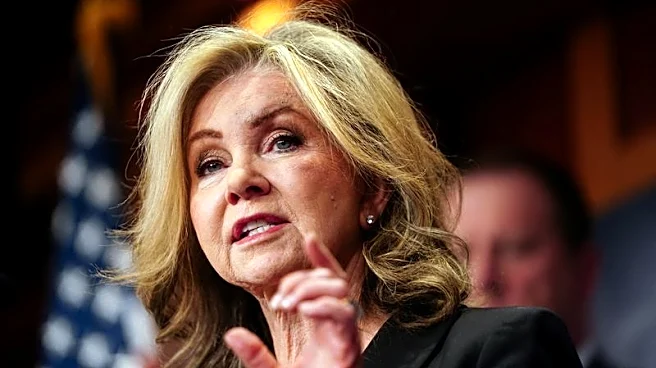
U.S. Sen. Marsha Blackburn cruised to victory in the high-profile race to select Tennessee’s next governor, according to unofficial vote counts from the Tennessee secretary of state’s office.
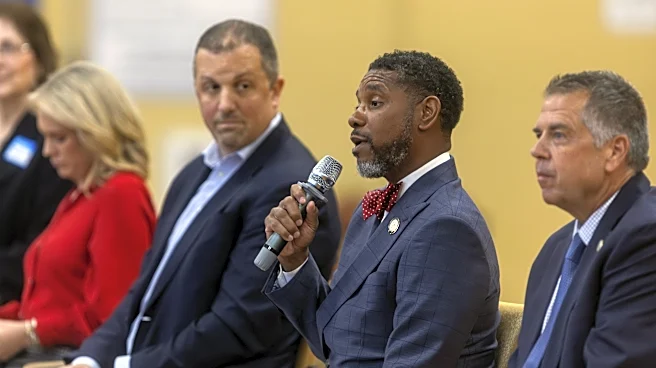
On the other side of the ticket, Memphis city councilwoman Jerri Green comfortably won the Democratic party nomination.
It’s the first time in state history that two women have faced each other in a gubernatorial general election, and whoever wins will become Tennessee’s first-ever female governor.
At 74, Blackburn would also be the oldest person Tennesseans have ever elected to the role, were she to win election.

Neither party nominee was necessarily a surprise, as both were the presumed frontrunners entering election day. But there was at least one curveball result among the other races on the ballot.
Trump-endorsed incumbent U.S. Rep. Andy Ogles lost his reelection bid in the Republican primary for Tennessee’s 5th Congressional District to former Tennessee Agriculture Commissioner Charlie Hatcher, who earned a rare eleventh-hour endorsement from Lee. Hatcher will face Columbia Mayor Chaz Molder on the other side of the ticket.
Nashvillians will be particularly interested in the races for the new 4th, 6th and 7th congressional districts, all of which cross through some portion of Davidson County as part of the state’s new voting maps.
In the 4th Congressional District, Republican incumbent U.S. Rep. Scott DesJarlais will face Democratic nominee Victoria Broderick, who defeated Metro Nashville Council member Mike Cortese to win the nomination. DesJarlais and Broderick have faced off in a general election before back in 2024, when DesJarlais won his seat handily.
In the 6th Congressional District, former Tennessee Republican House Whip Johnny Garrett will face off against Democrat Mike Croley, a nonprofit founder, in the heavily-Republican district.
And in the 7th Congressional District, Republican incumbent U.S. Rep. Matt Van Epps will face Nashville businessman Darden Copeland, who emerged from a crowded Democratic field including state Rep. Vincent Dixie and former Metro Nashville Council member Saletta Holloway. Van Epps was unopposed in the primary and will defend the seat he won by single digits last year in a competitive special election.
All 99 Tennessee state House seats were also on the Aug. 6 primary election ballot, as well as odd-numbered state Senate seats.
When do I have to register to vote?
In Tennessee, qualified voters must be properly registered no later than 30 days before an election in order to participate.
That means if you’re looking to vote in the Nov. 3 state and federal general election, the voter registration deadline is Oct. 5.
Voters can register online in Tennessee on the Secretary of State’s online voter registration system, available at govotetn.gov. To register to vote in Davidson County, you must be a U.S. citizen, a county resident and at least 18 years old on or before the next election.
Paper voter registration applications may be printed and mailed to P.O. Box 650, Nashville, TN 37202. They can also be hand-delivered to the Davidson County Election Commission’s office at 1281 Murfreesboro Pike.
No matter how they’re submitted, new registrations must be postmarked or hand-delivered at least 30 days prior to the next election.
When can I cast a ballot?
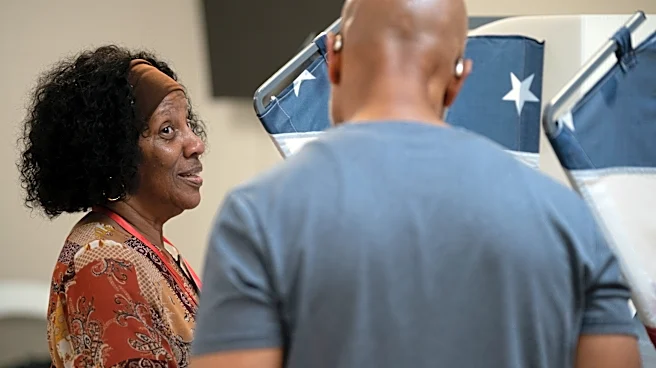
You won’t have to wait until election day on Nov. 3 to cast your vote.
The early voting period opens 20 days before an election and typically ends five days before election day. In Davidson County, early voting sites are open during the day, on some evenings and on Saturday.
There are no polling place assignments during the early voting period. Rather, voters can visit any one of more than a dozen early voting locations throughout Davidson County.
Nearly 51,000 Nashvillians cast an early vote in the Aug. 6 primary, about 12.5% of the 403,484 active voters registered in Davidson County.
Austin Hornbostel is the Metro reporter for The Tennessean. Have a question about local government you want an answer to? Reach him with questions, tips and story ideas at ahornbostel@tennessean.com.
This article originally appeared on Nashville Tennessean: Who's on the Nov. 3 general election ballot? What to expect and how to vote