





This June, around 20 education professionals gathered to discuss artificial intelligence in education. I had the opportunity to sit in this room and observe as attendees asked Erin Defossé questions about what the future of education will look like in a world being rapidly changed by AI. The conversation is especially relevant now, as students around Nashville head back to school and as Defossé’s newest project, a bilingual school, opens.
During the discussion, Defossé argued that we need to change the way we think about the classroom. As a current high school student, I agree with Defossé: The world of education needs to prepare for change as AI becomes more relevant. Unlike Defossé, though, I think that change will occur within classrooms on its
own.
A school built for what's next
Defossé founded Magellan International School in 2009 in Austin, Texas, to create an environment where children can “achieve their life dreams and help society solve the challenges it is facing in the 21st century.” By 2024, Magellan had expanded to include a middle and high school. In 2025, Defossé brought his vision to Nashville with Stellaris International School, a pre-K3 through kindergarten school with a bilingual, inquiry-based approach.
While I understand Defossé’s goals in engineering a curriculum like the one at Stellaris, I doubt whether the approach would work within the public school system, especially in a system like Nashville’s, serving kids with diverse backgrounds and needs.
When I heard Defossé speak in June, he shared a few problems he sees with the current education system: Teachers talk for the majority of class time and the classroom is designed to maintain order, hampering the curiosity of young children.
With the rise of AI, Defossé doubts whether a college education will be relevant in 50 years. Historically, technological revolutions have led to bigger and stronger workforces, but Defossé is one of many thinkers who believe the current AI revolution could have the opposite impact. That’s why he wants to prepare children for what adulthood may look like 20 or more years down the line.
Rethinking how students learn
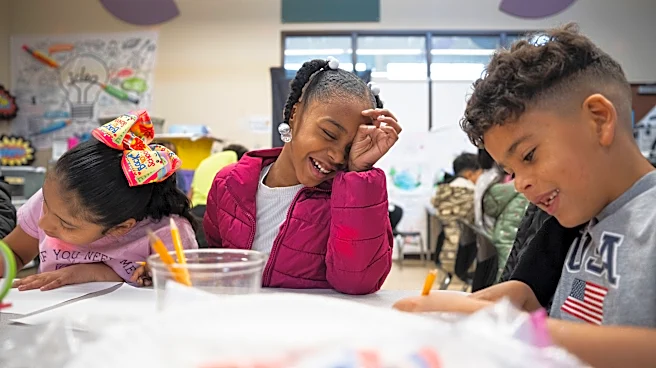
First and foremost, Stellaris is an international school that will teach its young students Spanish. Benefits of bilingualism include improved concentration, memory, creativity and academic performance. What sets Stellaris apart from Nashville’s existing bilingual schools is the additional “inquiry-based” aspect, which encourages children to ask questions and lead classroom discussions. Defossé believes this allows their curiosity to grow and better prepares them for a world shaped by AI.
As I listened to the individuals at the meeting, I had mixed feelings about the perspectives they shared. There was truth in their ideas, but their proposed solutions didn’t seem to account for every background.
When classrooms put the teacher in charge, every student is on the same page. While this setup may impede the curiosity or speed of learning for some students, I believe that it also allows for a larger number of students to succeed.
Public schools face different realities
It is widely known that U.S. public schools are segregated along socioeconomic lines. But even within diverse public schools, students are often put into classrooms with other students from similar economic backgrounds. This matters because classrooms with the most low-achieving, minority and poor students are more likely to have novice teachers.
This impacts how classrooms operate: As newer teachers focus on rigid survival, they often conduct the classroom in a manner where they are strictly in charge. The typical path for more experienced teachers is from poorly funded schools where students have higher needs to better-funded public or private schools, where students have fewer academic and emotional needs. Additionally, more experienced teachers tend to practice more flexible teaching methods, including more student-led discussions rather than adhering to a strict one-size-fits-all lesson plan.

Could innovation widen the gap?
Stellaris is a private school which will likely, as intended, have positive impacts on the curiosity and overall intelligence of its students. Students at Stellaris will likely go on to elementary, middle, and high schools with children of similar educational backgrounds and likely continue this trajectory.
However, if all classrooms were, as Defossé suggests, student-led, I believe that the knowledge gap would increase. This increased knowledge gap could lead to decreased classroom success rates, which would trickle into the workforce and result in a greater wealth gap.
Given this, I think we should let classrooms evolve on their own, without intentionally changing the setup of schools that are meant to serve children of all backgrounds. That is not to say the current school system is perfect, but rather that the general classroom blueprint we have used for generations optimizes for teachers and students alike.
Ultimately, the workforce will change regardless of whether the classroom does. As Defossé proposed, we need solutions to prepare children for what adulthood could look like in the coming decades.
The challenging aspect will be accounting for all current economic and ideological backgrounds – and all who play a role in childhood education – when discussing possible changes.

Selah Dowell is a sophomore at Harpeth Hall. She participates in Youth in Government and plays varsity soccer and track. Her favorite thing about Nashville is Tomato Art Fest.
The Nashville SUNN (NashvilleSUNN.com) is the first citywide student-led newspaper in the U.S. and a publication of the Students United News Network.
This article originally appeared on Nashville Tennessean: As AI reshapes education, should classrooms change too? | Opinion