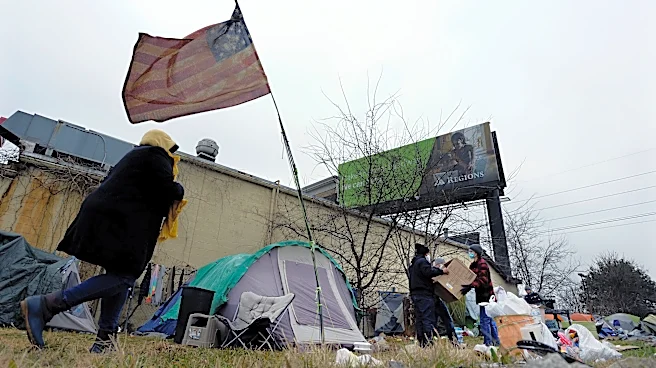








Joseph Williams, 49, has long lived in South Inglewood Park within sight of the public housing complex where he grew up. In June, Nashville police charged him with two felony counts of camping on public property. According to National Public Radio, he spent nine days in jail before the felony counts were dropped as part of a plea to a lesser charge. Then he went back to the park.
That too often is the story of enforcement. It includes a stint in jail, a new criminal record and a person sleeping exactly where he was before and all at taxpayer expense. Worse, the person returns to the street with a record that makes it harder to rent an apartment or get hired, increasing the likelihood of continued homelessness and continued reliance on taxpayer funds.
This can be repaired and tax money can be saved. Cities and states that have funded outreach, temporary shelter and pathways to “supportive housing” have seen homelessness fall in ways arrests alone never have. Supportive housing combines an affordable, stable place to live with the health care, mental health treatment and other services for people with disabilities. Two decades of research has shown the approach to be both effective and cost-effective.
Outreach is the first step toward lasting housing
This starts with outreach.
Reaching someone with a disability who has lived outdoors for years and often has good reason not to trust the system approaching him can take months of repeated contact. Williams turned down a shelter bed, NPR reported, because he didn’t trust the organizations offering it. A single offer of a shelter cot was never going to be enough to move him or others with mental and physical health issues, and that shouldn’t have been the goal. Outreach that ends at a bed for the night still leaves someone unhoused. The offer should be connected to a housing placement and the services that keep it.

Proven outreach models already exist
Nashville has models it can follow. General street outreach designed to connect individuals experiencing unsheltered homelessness to emergency shelter provides immediate, lifesaving interventions. Clinical street outreach adds health, mental health and substance-use expertise. Multidisciplinary street outreach combines both and brings together peer support workers, behavioral health specialists and physical health practitioners skilled at building trust.
For people with severe disabilities like mental illness and substance use disorders, the strongest model is an Assertive Community Treatment team, which includes nurse practitioners, a psychiatrist, social workers, peer support specialists and staff trained in substance abuse, wellness and employment. The more effective version identifies people with the most severe needs while they are still on the street, moving them into housing and then staying with that same person after they are housed.
States are showing how street-to-home strategies can work
Tennessee lawmakers don’t have to build this combination from scratch. Georgia Gov. Brian Kemp asked his legislature for a homelessness response grant built around outreach, shelter and services. Lawmakers approved $45 million for the state’s Housing Trust Fund for the Homeless on top of $5 million more for outreach to veterans experiencing homelessness.
. Other states are implementing similar street-to-home models, and Tennessee should consider doing the same.
Outreach alone isn't enough without supportive housing
But outreach dollars only address the front end of the system. An outreach worker who spends months building trust with someone like Williams, and finally gets him to say yes, has nowhere to send him if there is no supportive housing at the end. Funding outreach without also funding housing is building a front door onto a house that isn’t there.
In addition, state mandates that require local police departments to enforce camping bans hand local agencies a new obligation with no new funding for solutions that work. They also override the judgment of local officials who know their own communities’ needs better than a state capital does. A city council that wants to invest in outreach and shelter instead of jail time should have the authority to make that choice.
Most state Medicaid programs do not cover the range of care that supportive housing residents need, including Tennessee. That leaves states paying for case management and clinical support out of their own budgets.
Tennessee needs a way to fund supportive services
A small number of states have solved this with what is called a Supportive Services Transformation Fund, a temporary state appropriation that bridges the gap until Medicaid coverage expands to meet it. Tennessee should consider such a fund.
Lawmakers do not have to abandon their sense of urgency to get this right. An immediate response and a durable one are not in competition. What separates the states making progress from the ones simply moving the problem around is whether they are willing to fund outreach and housing at the same time, and to keep funding both long enough for them to work. The tools already exist.
Williams, and the taxpaying citizens who live alongside him, will benefit when lawmakers find the will to shift taxpayer resources to approaches that work at the scale the problem requires.
Leah Werner is director of CSH's work in Ohio, Kentucky and Tennessee.
This article originally appeared on Nashville Tennessean: TN needs housing, not handcuffs, to reduce homelessness | Opinion