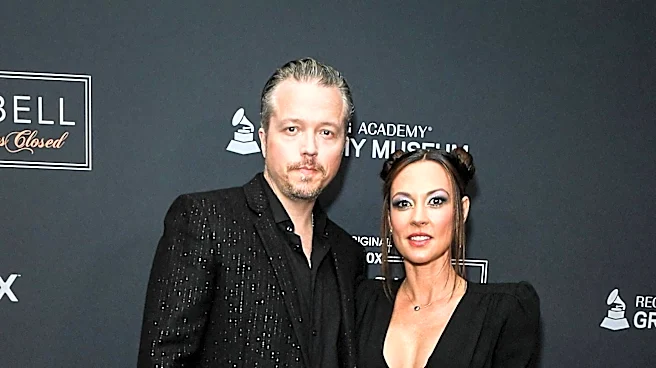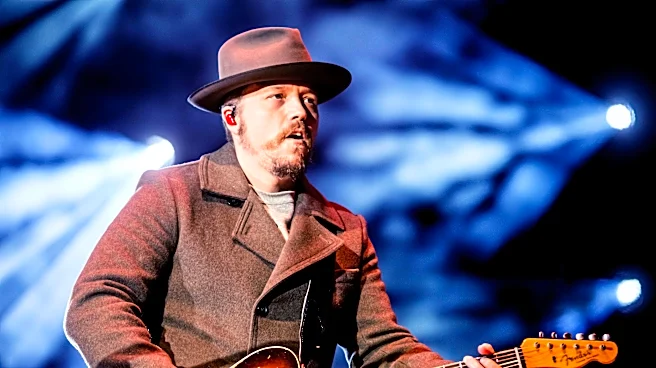







Grammy Award-winning singer-songwriter Jason Isbell is among a group of musicians suing AI music platform Suno, alleging the company used artists' identities without permission to generate and market AI-created music.
The lawsuit, filed Aug. 31 in U.S. District Court in Massachusetts, seeks class-action status. Plaintiffs include David Lowery, frontman of Cracker and Camper Van Beethoven; Texas blues musician Guy Forsyth; and Florida-based saxophonist Eduardo Calle.
The artists allege Suno built a system that allows users to invoke musicians by name and profit from those identities without consent.

"Suno knows the commercial value of a machine that can conjure up a beloved musician's identity simply by invoking their name," states the lawsuit.
"The company thus encourages its paid marketing partners to advertise this capability, without the consent of the musicians it invoked, while doing only enough to give Suno plausible deniability."
Sunois an AI music generator that allows users to create songs from text prompts describing musical styles, instruments or other characteristics. Here's what else to know.
What does the lawsuit state? Why Jason Isbell and other musicians are suing Suno
The complaint opens with an extended comparison to the Borg, the cybernetic villains from Star Trek known for assimilating entire civilizations into a collective hive mind.
"Autonomy is consumed and repurposed in the service of a cold machine intelligence that feels nothing for what it has taken," reads the lawsuit.
"In one memorable scene, the beloved Captain Jean-Luc Picard is captured by the Borg and remade as a machine version of himself — the recognizable, but also wrong, Captain Picard was deployed to the Borg's purpose."
In the complaint, the musicians allege Suno built and trained its AI music platform using information tied to real artists and then commercially exploited those artists' identities by allowing users to invoke musicians by name to generate songs, descriptions and other content associated with them.
The plaintiffs argue Suno profits from the commercial value of artists' reputations, personas and identities without obtaining consent or providing compensation, and are seeking damages as well as an order blocking the company from continuing the alleged practice.
Who is mentioned in the lawsuit?
The lawsuit was filed by four named plaintiffs: Isbell, Lowery, Forsyth and Calle.
The lawsuit also references numerous other musicians to illustrate the value of artists' identities and careers. Among those mentioned are Aretha Franklin, Wilson Pickett, and The Rolling Stones in a section describing Isbell's roots in the Muscle Shoals music scene.
What is a class action lawsuit?
A class-action lawsuit is a case in which one or a few people sue on behalf of a much larger group of people who have similar legal claims, according to Classaction.org.
Instead of thousands of people filing separate lawsuits, the court can allow them to proceed as one case if they were allegedly harmed in a similar way.
For example, in the Suno lawsuit, Isbell and the other named musicians are seeking to represent a broader class of artists whose identities they claim were used without permission.
What is Suno?
Suno is an artificial intelligence music platform that allows users to generate original songs from text prompts.
The company offers free and paid tiers, enabling users to create music by describing elements such as genre, mood, lyrics or musical style, with AI generating vocals, instrumentation and complete tracks.
Diana Leyva covers trending news and service journalism for The Tennessean. Contact her at Dleyva@gannett.com.
This article originally appeared on Nashville Tennessean: Jason Isbell, other musicians sue Suno, alleging unauthorized use of their identities