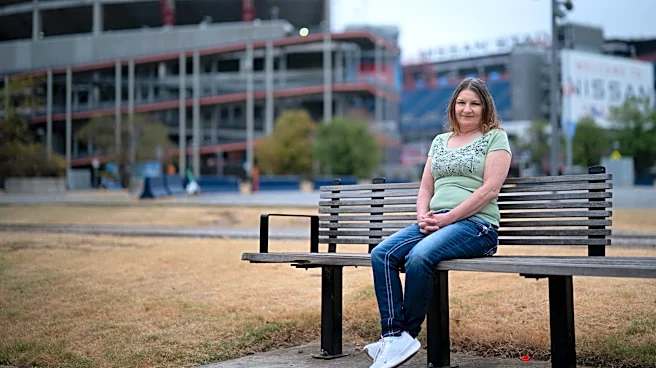







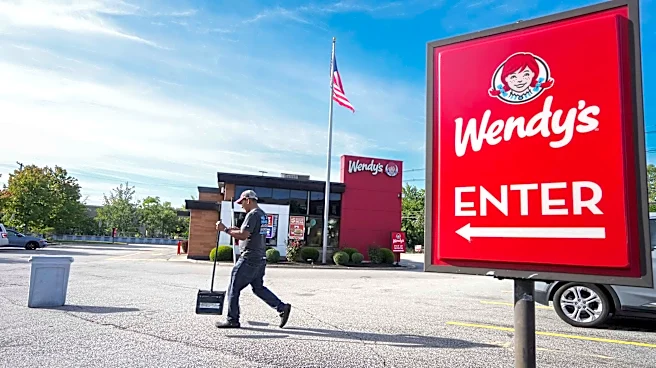

William Hedges, 31, and Shanna Urton, 52, have a lot in common.
They were strangers when they both arrived in Nashville a few years ago, each having spent the little money they had on bus tickets. They were at one of the lowest points in their lives — alone, homeless and struggling to fight off addiction.
Today, their paths have converged. They’re now neighbors, gainfully employed and living in the same sober living community, and both credit the aid of the Nashville Downtown Partnership’s outreach team for getting them there.
Outreach specialists with the nonprofit make daily rounds to connect with the unhoused population in Nashville’s downtown core. So far this year, the group has helped 37 people enter housing, connected 97 with rehab or detox
programs, connected 27 with sober living supports and assisted 41 with pursuing employment. And the nonprofit says it's launching a new initiative, funded under a public safety grant contract with the state, aimed at expanding mental health crisis response services downtown.
The Nashville Downtown Partnership's work has nevertheless been the subject of scrutiny over the past several years. The yearslong debate over homelessness in Nashville's downtown core has, at times, centered on the nonprofit's previous ties to private security company Solaren, which last year was ordered to pay $64,000 in penalties after unlawfully identifying some of its security guards as police officers and which some critics say targeted the downtown homeless population.
People like Urton and Hedges, however, say the nonprofit's outreach team changed their lives for the better.
“It’s like a vicious cycle that’s just never-ending, and it’s like you’re never going to get out of the world you’re in,” Urton said. “These people lifting me up gave me a second chance at life. They saved my life, they really did save my life.”

Shanna’s path: ‘There’s another way’
Three years ago, Shanna Urton lost everything in the blink of an eye.
She was married, living in a home in Baytown, Texas. Urton was the kind of partner who, when her husband woke up at 3 a.m. in the mood for some ice cream, would hop in the car to go rustle something up. She set out to do just that on Nov. 17, 2023.
In the dark early morning, Urton returned home to her life engulfed in flames.
The house, inexplicably, had caught fire. Both her husband and their dog died in the blaze. She’d been gone for all of five minutes.
The fallout came just as quickly.
Urton didn’t have insurance or a place to live. She didn’t have a job and now, she couldn’t even get one if she tried; all her documents had just burned to ash. She tried staying with her parents for a bit, but that didn’t work out.
Suddenly, Urton was homeless and in a cycle she couldn’t break.
“For two years, I just went around in circles,” Urton said. “Out on the streets, there’s drugs. I got into drugs. It just got really bad there.”
Urton’s son already lived here in Nashville. Though their relationship was rocky, she found a side job with a friend, earned enough to save up $200 for a bus ticket and made her way here in April 2025.
Urton ended up in the middle of downtown, sleeping on benches outside Nissan Stadium. That’s where she met Isaiah Henderson, the nonprofit’s outreach operations supervisor, who told her about the treatment centers and other resources available to her.
It wasn’t long before Urton was convinced to make a change. She spent one more night out on the street, then threw away her meth pipe and quit cold turkey.
“It just got to a point where I just couldn’t take anymore,” Urton said. “I have nowhere to go, I’m tired of sleeping out here on the park benches. Cold weather freezing to death, hot weather burning up, just year after year not knowing what I was going to do. Just wanting to die, literally. But these guys really stepped up and said, ‘There’s another way.’”
William’s path: Coming back from rock bottom
For Hedges, it all started in 2022 when he took a job in Gulfport, Mississippi.
He was living in Florida at the time, but his new employer told him and a friend that their housing would be paid for if they made the move. That changed after they arrived. Hedges said the pair soon learned they’d be on the hook for their housing costs.
Not long after, Hedges woke in the night to his roommate grabbing the last of his things and leaving. He was left to find his way alone.

Hedges relapsed into drug and alcohol addiction. At one point, he said, he was drinking a half gallon of liquor every two or three days. He lost his job and had to find another.
But then he ran into another issue. At his new job, Hedges was only making enough money to either pay for groceries or rent. He chose rent, surviving off whatever he could find to eat.
“Eventually, I came to the point where I was like, ‘Man, I’m going to be homeless,’” Hedges said. “I’m going to be homeless in this state, in this city, that I don’t even know. I know nobody at all around.”
His aunt and cousins came calling. They were homeless, too, but they’d just made their way to Nashville and told Hedges about the resources they had access to. That’s when he spent his last paycheck on a Greyhound ticket.
Still, he struggled. Now in Nashville, Hedges went back and forth between sleeping on the streets and in hotel rooms, avoiding staying at the homeless shelter so he could use drugs and alcohol.
Hedges recalled one winter night when he didn’t make it to the shelter in time to stay overnight, while the temperature outside was in the negatives. He wasn’t able to scrounge up enough money for a hotel room, so he resorted to huddling up inside a downtown parking garage, seven levels underground.
Hedges tried to be sober. He put himself in detox several times, but it never stuck. Once, he saved up the money to get into housing with Henderson’s help, but relapsed when he decided to celebrate just a week before he was scheduled to move in.
The outreach team nevertheless helped him get into rehab once again.
“Putting yourself through all that, that really just goes to show, to me, how serious a disease addiction is,” Hedges said. “Because for me, that kind of led to all this rock bottom of a hole that I dug myself into back then. And then I started digging myself out of it.”
What life’s like today
Life’s a lot rosier for Urton and Hedges now.
Urton, for her part, found a good job at Kroger. She graduated from her rehab program in September and now has a comfortable cushion of savings to support herself. She’s making plans to find her own place and buy her own car for the first time since 2015.
Looking further ahead, Urton’s hoping to rebuild her relationship with her son, hold onto her job and settle into her own place.
“Just not going backwards,” Urton said. “I don’t want to go backwards.”
Hedges, meanwhile, bounced around jobs for a while before getting hired by the Nashville Downtown Partnership’s clean team. If that’s not full circle enough, he now dreams of joining the outreach team and being on the other side of the work that helped pull him out of the cycle of homelessness.
He'd be a good fit. Everyone on the team, including Henderson, is either a recovering addict, formerly homeless, previously incarcerated or some combination of all three. Henderson said that background helps him build stronger connections with the 30 to 40 people he interacts with on his daily rounds through the neighborhood.
Like Urton, Hedges said he’s looking forward to mending relationships with his family and locking down his own place and car.
“I’ve said this to people before, sometimes God puts you through everything and you survive it so that you are now able to help others that are in the same situation,” Hedges said. “Because now you know how to get out of it, and you can help them get out of it, too. I’ll tell you what, that is what the outreach team does, and it is a blessing.”
Austin Hornbostel is the Metro reporter for The Tennessean. Have a question about local government you want an answer to? Reach him at ahornbostel@tennessean.com.
Get Davidson County news delivered to your inbox every Wednesday.
This article originally appeared on Nashville Tennessean: They came to Nashville homeless. An outreach team changed their lives