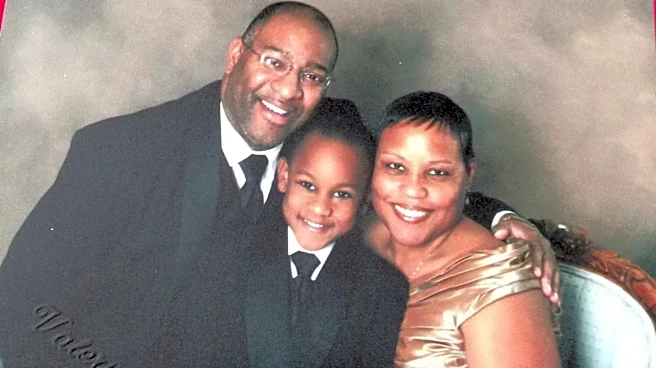






Golf has always been more than just a game for my family; it has been a source of comfort, connection and escape. When my husband, Len, was diagnosed with Stage IV colorectal cancer at just 47, the golf course became our refuge amid the uncertainty of treatments, doctor's appointments, and difficult conversations. Our son, Davis, had been taking lessons, and the Saturday mornings together continued to give us something we desperately needed: moments of normalcy.
Len only lived for nine months after diagnosis. Once we were settled, and as life continued, Davis and I wanted to honor Len’s memory in a way that could help other families avoid the heartbreak we experienced. We turned
to the game that had carried us through our darkest days and in 2020 created the Len Atkins Memorial Golf Tournament to raise awareness about CRC and the lifesaving importance of screening.

A second chance we never expected
I wish I could say my family's story with CRC ended the day we lost Len, but it didn't. Knowing what this disease had already taken from us, I was determined to do everything possible to protect my son. Because of our family history and other issues, Davis had his first screening at 13 and was told his next one would be at age 36, 10 years before the age his dad was diagnosed. However, earlier this year, Davis saw a little blood in his stool, and he didn't ignore it. It could have truly been hemorrhoids, but he asked for a colonoscopy.
A small precancerous polyp was found. At just 25, he was spared the diagnosis that forever changed our lives because that polyp was found before it became cancer. Now he will have a colonoscopy every three years.

Too many Tennesseans are missing lifesaving screenings
The more I learn about this disease, the more shocked I am that screening is not discussed more. CRC cases are on the rise, and CRC is now the leading cause of cancer deaths for those under 50.
Still, about 57% of Tennesseans ages 45 to 75 reported receiving one or more of the recommended CRC screening tests, despite the American Cancer Society now recommending that people at average risk begin screening at age 45.
These statistics are particularly alarming, but they don't have to be. When CRC is detected early, the five-year survival rate is approximately 91%. Once it reaches a later stage, however, that survival rate drops to just 13%.
Len was diagnosed too late to benefit from early detection. Davis, on the other hand, was screened early because of his increased risk, and for those at average risk, staying up to date with recommended screenings can be the difference between catching cancer early, when it is most treatable, and facing a much more difficult diagnosis.
More screening options mean fewer barriers
Thankfully, for those at average risk for this disease, screening is becoming more accessible as new, quick and easy options are developed and made available. One of those options is Guardant Health’s Shield test, the first FDA-approved blood test for primary colorectal cancer screening in adults 45 and older who are at average risk for CRC. Shield is also the only blood-based screening test included in theACS and National Comprehensive Cancer Network colorectal cancer screening guidelines.
Today, getting screened can be as easy as a quick blood draw during your next routine doctor's visit. Although colonoscopy remains the gold standard for CRC screening, having more screening options for those at average risk for CRC means more people can take that critical first step.
The best screening test is the one that gets done. I wouldn't wish the pain of losing a husband before his 50th birthday on anyone. If innovations like this test encourage even one more Tennessean to get screened, have an important conversation with their doctor or detect cancer before it's too late, they have the potential to save lives and spare families from the heartbreak mine has endured.

Turning loss into action
Davis and I will again return to the Hermitage Golf Course in June 2027, not only to honor Len’s memory, but to ensure his story inspires others to take action. My hope is that the next person who steps onto the course does so not in memory of a loved one lost too soon, but because they took the time to get screened and were given the chance to keep making memories with the people they love.

Yvette Davis-Atkins is the founder of The Len Atkins Project, based in Williamson County.
This article originally appeared on Nashville Tennessean: This colorectal cancer story shows why screening matters | Opinion