





On Dec. 20, 2024, the governor of Tennessee signed my full pardon.
It was not a formality. That signature ended a legal argument that had followed me for more than a decade and opened doors that had been bolted shut. I am grateful for it every day, and anyone still waiting on one should know it is worth the wait.
But a pardon does exactly what it was designed to do, and not one thing more. It settles the state’s account with you. It was never built to settle anything else – and we have quietly assumed for years that it would.
That assumption is where people fall.

Where a pardon fails
I have worked all three sides of this system. I walked into a long-term restoration program as a client, with addiction and a record behind me. Later I sat across the desk as the counselor.
Eventually I became the director, making capacity decisions for a significant number of participants over several years while leading a staff team and numerous volunteers. Same building, three different chairs – and from each one I watched the same thing happen to people just handed their lives back on paper.
A cleared record does not restore a marriage, a professional license, a landlord’s willingness to rent to you, an employer’s willingness to interview you or a bank’s willingness to see you as something other than risk.
And it does not restore the thing that fails first: a person’s own belief that he is worth the trouble.
That last one is not sentiment. It is the mechanism. I have watched men with housing, a job and 90 days clean walk away from all of it – not because the system failed them that week, but because they could not carry the distance between who the paperwork said they were and who they still believed themselves to be.

Reentry should be measured by restoration
We also measure reentry by the wrong things. We count beds, program completions and days since release. Those are inputs. The outcome that matters is whether a person has been restored to something: a family, a trade, a congregation, a job where someone notices if he doesn’t show up.
Tennessee runs this arithmetic continuously. People come home every week – to Nashville and Memphis, Knoxville and Chattanooga, and to small counties with no reentry program within an hour’s drive. The question was never whether they would come home. It is what is waiting when they do.
Three changes that would make restoration real
Three things would change that, and none of them requires a new agency.
Treat the collateral consequences as the real sentence. Occupational licensing boards, housing policy and background-check practice do more to determine who succeeds than anything that happens inside a facility.
A pardon that leaves all of it intact is a document, not a restoration.
Put the work in the hands of people who have made the trip. The most effective person in any reentry program is usually someone who has been through it – and we still treat that person as a testimony rather than a professional. Hire them. Credential them. Pay them.
Stop asking only whether someone is sober and employed. Ask about the rest of a life: health, relationships, purpose, faith. What finally takes a person down is almost never the one gauge everybody was watching.
The state can end an argument. It cannot end a shame. That work belongs to the rest of us – employers who take the call, landlords who take the chance, congregations that make room.
In Tennessee, cultivating a community that restores lives
I know what that looks like, because people did it for me. When I pursued expungement, the Knox County District Attorney’s Office and the Knox County Public Defender’s Office were under no obligation to help. Nothing required either office to look past a file. They chose to see a man instead of an inmate number – someone with purpose still ahead of him, and something to offer people still waiting on their own door. On paper it cost them nothing. It changed everything that came after.
That is what I am asking Tennessee for. Not leniency. Attention.
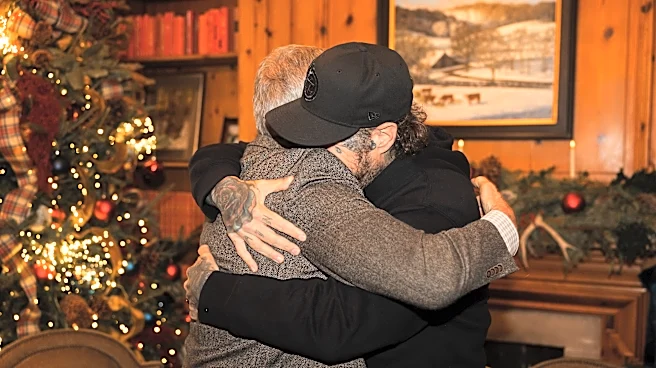
A governor gave me back my record. A supportive community gave me back my life.
Tennessee has that community – in its churches and courthouses, its small businesses and small towns. The open question is whether we are willing to be that.

Jeffrey T. Crick is the founder of ReDefined Mission in Knoxville, where he has written more than a dozen books and resources for people in recovery and for leaders worn thin by spiritual, emotional and professional fatigue. He holds four undergraduate degrees, a master’s in Human Service Counseling and a postgraduate certification in pastoral counseling, and teaches ministry, chaplaincy and Christian addictions counseling at the university level.
This article originally appeared on Nashville Tennessean: A pardon clears a record. A community restores a life | Opinion