






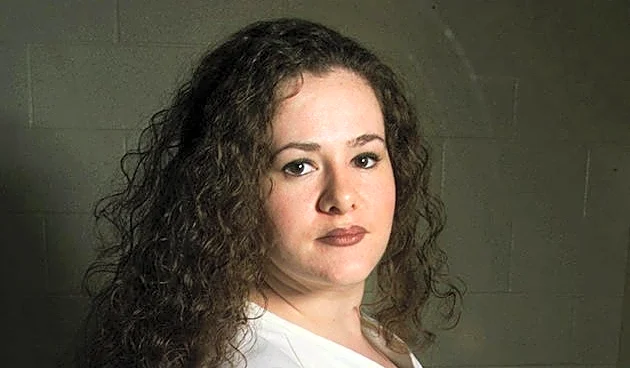
Christa Pike’s case has again forced Tennessee to confront the death penalty. Her crime was horrific, and opposing her execution does not diminish the life of Colleen Slemmer or the suffering of her family. Pike should spend the rest of her life in prison.
But the larger question is not about Christa Pike. It is about us: What powers should we permit the state of Tennessee to exercise in our name?
The death penalty is different from every other criminal punishment in one fundamental way: It cannot be corrected. Courts make mistakes. Prosecutors make mistakes. Witnesses, juries and governors make mistakes. A prison sentence can, at least in part, be remedied when the system gets something wrong. An execution cannot.
Life imprisonment can protect
society, impose severe punishment and ensure that a dangerous person never again has the opportunity to harm the public.
If those goals can be accomplished without an execution, I do not believe the state needs the additional power to deliberately take a prisoner’s life.

If execution isn't necessary, why allow it?
For me, this is fundamentally a limited-government question: If the state can protect society completely through permanent incarceration, government should not exercise an additional irreversible power merely because it can.
There is also a question of accountability.
If Tennessee retains the death penalty, the governor should be required to witness any execution that proceeds after declining to grant clemency.
That is not punishment. It is responsibility.
Correctional officers, prison employees, witnesses, the condemned prisoner’s family and the victim’s family cannot distance themselves from what happens in the execution chamber. The official entrusted with Tennessee’s ultimate clemency authority should not have the greatest distance of all.
Requiring the governor to attend may not change a single decision. But it would ensure that the power to take a human life is never exercised as an abstraction.

Responsibility should accompany the power
I understand the strongest argument for capital punishment: Some crimes are so cruel that execution seems the only punishment proportionate to what was taken. Reasonable people can reach that conclusion.
I have reached a different one.
Justice does not require execution. Tennessee can permanently incarcerate its most dangerous offenders, protect the public and impose severe punishment without giving the government an irreversible power it does not need.
The General Assembly should begin the process of ending capital punishment in Tennessee.
Until then, responsibility for an execution should extend all the way to the top.
The power to take a life should never be exercised from a comfortable distance.

J. Miles Jorgensen is a member of the Signal Mountain Town Council and a longtime resident of Hamilton County. He holds a master's degree in environmental science.
This article originally appeared on Nashville Tennessean: Tennessee can have justice without the death penalty | Opinion