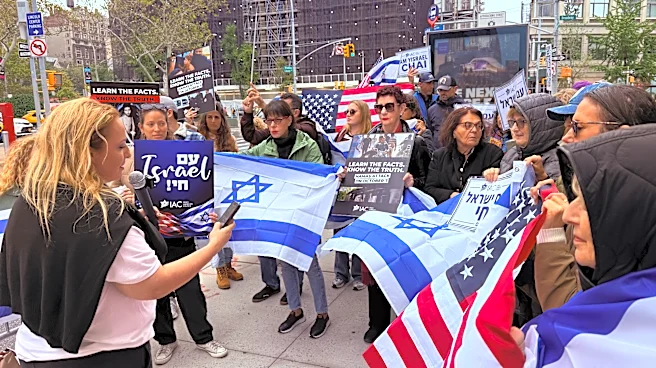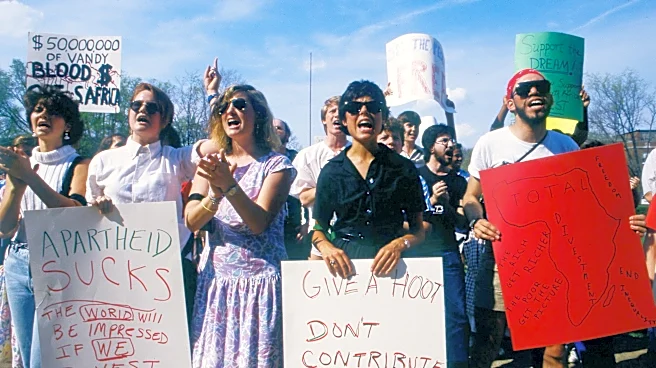



Can universities defend students’ freedom to protest Israel’s war in Gaza while protecting Jewish students from harassment and/or being treated like proxies for the Israeli government? And can universities confront antisemitism without turning it into a pretext for silencing protest?
On Oct. 2, I will take up these questions at the Global Free Speech Summit, hosted by Vanderbilt University and The Future of Free Speech. During the summit I will speak about antisemitism, censorship and free speech on college campuses.
The answer to my previous questions depends partly on recognizing what the phrase "civil disobedience" already tells us: Civility is not politeness, and sometimes civility, as the duty of citizenship, requires citizens to dissent
and protest.
Civility isn't politeness
The essential distinction between civility and politeness is missing from a growing debate on American campuses. The Uncivil Collective, a group of university professors, positions itself against what it calls the Civility Industrial Complex: the expanding network of programs devoted to dialogue, viewpoint diversity and civil discourse.
Uncivil argues that while they claim to promote free speech, respect for different views and pluralism, these programs – many supported by conservative foundations and wealthy donors – actually suppress dissent, protest and collective organizing.
The Uncivil Collective's Funder Analysis Report on The Civil Industrial Complexgroups together 185 organizations and initiatives, including 128 university-based programs, and traces approximately $425 million in private grants to 77 of them since 2020.
While I do not know enough about the organizations in the Uncivil report to speak to each one, the debate between Uncivil and the initiatives it condemns captures two dominant attitudes toward civility in modern life. One longs for civility as a panacea. The other condemns it as an instrument of injustice. Civility is either the cure for what ails us or the devil itself.

Civility requires respect, not agreement
The first camp believes that we have lost civility and politeness, and that democracy depends on bringing it back. Its members hearken back to a golden age of gentility, chivalry, good manners and comity. If only we could recover this lost and forgotten virtue, they suggest, our universities would flourish and democracy might be saved.
The second camp believes that civility and politeness are the problem. In this view, politeness and civility are tools of the oppressor and the patriarchy, used by the powerful to keep everyone else powerless. Calls for civility suppress righteous anger and blunt protest, while discouraging collective action and preserving the status quo. Justice and progress therefore require less civility in public life, not more.
Both camps fail to understand the essential distinction between civility and politeness.
Politeness concerns manners, etiquette and external behavior. It comes from the Latin polire, to polish. Politeness polishes the rough edges of social life. It smooths interactions, papers over differences and sweeps disagreement under the rug.
Civility is etymologically linked to the Latin civitas and belongs to the same family of words as city, civic and civilization. Civility concerns the duties of citizenship. Those duties include debate, disagreement, dissent and, at times, protest.
Civility is deeper and richer than politeness. It is an internal disposition of the heart that recognizes the humanity and inherent dignity of every person. It treats others as our moral equals, worthy of respect. It does not require agreement. In fact, it requires disagreement. It requires respecting others enough to tell them hard truths and respecting ourselves enough to voice our opinions.

What MLK can teach us about civility
Martin Luther King, Jr., offers a model of civility properly understood. King did not avoid conflict. He organized marches, boycotts, sit-ins and acts of civil disobedience. He and his fellow protesters disrupted ordinary life and created the tension necessary to force Americans to confront injustices they preferred to ignore.
But King’s account of protest also included self-purification. Protesters prepared themselves to endure insult, arrest and violence without retaliating. King’s broader philosophy of nonviolence asked protesters to cultivate love, affection and respect for the dignity and humanity of the people they were protesting, which compelled them to protest in the first place.
In effect, the marchers were saying to their fellow citizens: You have a fundamentally inaccurate view of the world, and I respect you enough to show you that. I also respect myself enough not to tolerate a society that denies me my full rights and humanity. Civility did not suppress their dissent. It informed it – even required it as a duty of citizenship.
If campus dialogue programs confuse civility with manners, decorum or temperate conversation, they misunderstand civility. But if Uncivil concludes that civility is therefore the enemy of dissent, protest and collective action, it also misunderstands.
This confusion helps produce the chilling effect on college campuses.

The beauty in hard conversations
Politeness chills speech by encouraging people to paper over differences, soften hard truths and avoid the subjects most likely to disturb the peace. Hostility chills speech by using contempt, intimidation and social punishment to wedge people into submission and silence.
The evidence of that chill is substantial. In the Foundation for Individual Rights and Expression's 2026 College Free Speech Rankings, 53% of the 68,510 students surveyed said the Israeli-Palestinian conflict was difficult to discuss openly and honestly on campus. The organization gave 166 of the 257 institutions an F for their speech climate.
But Israel and Palestine should not be easy to discuss. They should be possible to discuss. The conflict involves war, terrorism, occupation, displacement, ancient hatreds, national identity and profound grief. The problem is not that students experience discomfort when discussing it. The problem is that they do not trust their campus communities to sustain honest disagreement.
The distinction between civility and politeness helps explain why. When administrators tack toward politeness, they try to preserve calm by preventing difficult conversations from happening at all. They confuse the absence of controversy with the presence of peace. When campus culture gives way to hostility, students silence one another instead. They shout down, shame, bludgeon and ostracize those who dissent. In both cases, speech may remain free in theory while becoming prohibitively costly in practice.
What all campuses need
John Stuart Mill worried about precisely this distinction in On Liberty. The threat to freedom comes not only from laws and authorities, but also from social tyranny – the capacity of prevailing opinion to make dissent unbearable. A university cannot flourish under either extreme. It needs sufficient peace for thought and sufficient debate and agitation for the collective pursuit of truth.
Civility is the alternative to both administrative suppression and social coercion. It respects others enough to tell them hard truths and respects ourselves enough to speak our minds, while never losing sight of the humanity and dignity of those with whom we disagree.
Politeness sacrifices truth to tranquility. Hostility sacrifices thought to combat. One sweeps disagreement under the rug. The other tries to overpower it. Civility makes disagreement possible because it begins with the humanity and inherent dignity of the people who disagree.
Without that distinction, we will continue to swing between the two extremes that dominate modern public life: a thin politeness that asks us to keep the peace and a corrosive hostility that tries to force others into silence.
We do not need more politeness on campus. We do not need more hostility. We need civility, properly understood.
Alexandra Hudson is the author of "The Soul of Civility: Timeless Principles to Heal Society and Ourselves." She’s also a member of the board of advisors for the Prohuman Foundation.
This article originally appeared on Nashville Tennessean: Why citizenship demands civil disagreement | Opinion