






Months before the DriveTN consortium submitted a bid to be considered for Tennessee’s $9.2 billion I-24 Choice Lanes project, a top Tennessee transportation official left state government to lead commercial development at Ferovial Cintra — the lynchpin company picked for the deal through an atypical procurement process.
Last week, Tennessee’s Transportation Modernization Board unanimously picked DriveTN – a coalition of six companies including Ferrovial Cintra – for a 50-year partnership to build and manage elevated, tolled “Choice Lanes” along I-24 southeast of Nashville.
DriveTN will build new lanes of traffic along I-24 between Nashville and Murfreesboro, which drivers can pay a fee to use. The project is expected to cost $9.2 billion, all
of which will be privately funded. DriveTN has also agreed to pay the state an unprecedented $24.8 billion in concessions over 50 years, establishing a new dedicated funding stream for roads — which could be transformational for Tennessee’s massive backlog of unfunded road projects.
Months before bids were due to the state, Tennessee Department of Transportation Chief of Staff Steve Townsend left the agency to take a job leading commercial development for Ferrovial Cintra.
Days after his departure from state government, global infrastructure giant Ferrovial – now a key partner in the state’s I-24 project – announced Townsend would lead its Highways division, Cintra, “to support highway portfolio growth in the U.S.”
At the time, the company’s business development director, Alberto Gonzalez, said Townsend’s “public sector insights will strengthen our relationships with clients and partners.”
Ferrovial led the DriveTN consortium’s TDOT bid.

Townsend had been hired at TDOT in 2022, months before the budget process during which Tennessee's Transportation Modernization Act was formed. That bill authorized an atypical procurement process for the I-24 project.
As chief of staff at TDOT, Townsend had overseen “a statewide effort to deliver essential infrastructure to communities… through public-private partnerships,” according to his Ferrovial Cintra biography.
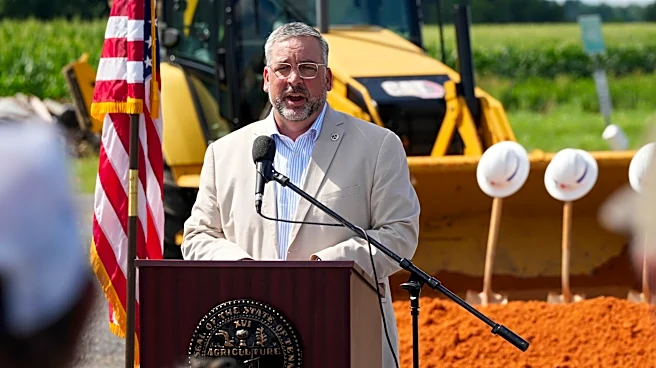
Asked what role Townsend played in the state’s procurement process for the $9.5 billion project, TDOT said DriveTN had “screening procedures and communication protocols” that barred Townsend from engaging in the I-24 project procurement.
“This disclosure was made to TDOT by DriveTN in accordance with the organizational conflict-of-interest provisions contained in the procurement documents,” a TDOT spokesperson told The Tennessean. “TDOT reviewed the disclosure and remains committed to ensuring the procurement is conducted in accordance with all applicable requirements, with appropriate safeguards in place to protect the integrity of the process.”
TDOT Commissioner Will Reid told reporters that the agency did not identify any red flags around any of the finalist companies during the procurement process.
"We would not have shortlisted them had we found red flags," Reid told reporters after the announcement.
Ferrovial/Cintra did not respond to a request for comment.
An atypical procurement process
Tennessee’s Department of Transportation did not follow its typical competitive bidding process for the I-24 Choice Lanes project – the agency didn’t have to.
That’s because the Transportation Modernization Act, approved by lawmakers in 2023 with Townsend’s oversight, allowed TDOT to do environmental reviews, design, public engagement and procurement for the project simultaneously.
“The Transportation Modernization Act changed the game,” TDOT Major Projects Bureau Chief Bryan Ledford said during the board’s meeting on Aug. 19. “It gave TDOT new tools to confront urban congestion, attract private capital and innovation, and deliver major infrastructure differently.”
Bidders submitted proposals for the project on July 14, roughly 10 months after Townsend left TDOT for Cintra.
TDOT selected the “best value” proposer on Aug. 19, according to the agency. Commercial close for the project is scheduled for later this year and finance close is expected in early 2027.
"What gets a lot of the attention are the dollar figures. They're eye popping," Reid said. "But what is really critical about their proposal was it was also the best technically."
Ledford said the procurement included four “nationally competitive teams” who brought “their strongest technical ideas, financing capabilities, and overall value.” TDOT held 111 meetings with developer teams, and the process was “exhaustive, competitive, and market-driven.”
“This is a best value procurement, not a low bid selection, and not a decision based on financial value alone," Ledford said. "Every proposal had first to pass a strict responsiveness review."
Concerns arise over past financial struggles
Since the board vote, Democrats have raised concerns over financial struggles of some of the DriveTN partner companies, including Cintra. In response to concerns, TDOT defended its thorough vetting process.
Ferrovial operates toll lanes in the Dallas-Fort Worth area, Charlotte, North Carolina, and on Virginia's I-66 express corridor.
Cintra and a partner took over the Indiana Toll Roadin 2006, and immediately doubled rates. The company filed for Chapter 11 bankruptcy in 2014, with $5.8 billion in debt. Cintra's Texas State Highway 130 projectfiled for bankruptcy in 2016, after being backed by $430 million in federal loans. Cintra also leased rights to toll part of the Chicago Skyway in 2005, but sold the lease in 2016 amid concerns it would default on loan payments.
TDOT spokesperson Beth Emmons said the agency is not concerned about Ferrovial SE/Cintra’s history of bankruptcies and financial instability.
“Every proposing team underwent rigorous financial, technical and readiness reviews designed to validate its capacity to finance, deliver, operate and maintain the project over the life of the agreement,” Emmons said.
It's unclear what toll lanes may cost drivers once built, though press statements claim the pricing will be "dynamic," based on demand, and managed by the DriveTN companies. Public information available about the project indicates there is no ceiling or cap on the amount DriveTN will be able to charge drivers.
Emmons said the deal with DriveTN remains in "active procurement," so the agency is unable to offer further information.
Vivian Jones covers state government and politics for The Tennessean. Reach her at vjones@tennessean.com.
This article originally appeared on Nashville Tennessean: What I-24 $9.2B toll lane deal says about government's revolving door