

While it remains likely Marsha Blackburn will be Tennessee's next governor, for the first time in decades, there may be a path to victory outside the GOP.
U.S. Sen. Marsha Blackburn did not earn the majority of votes in her primary. More Republicans voted against her than voted for her.
Now right-wing independent David Hatley is polling as high as 19%. With Tennessee's roughly 60%-40% ratio of Republicans to Democrats, failure by Blackburn to coalesce support within her own party could create a pathway for Democratic nominee Jerri Green.
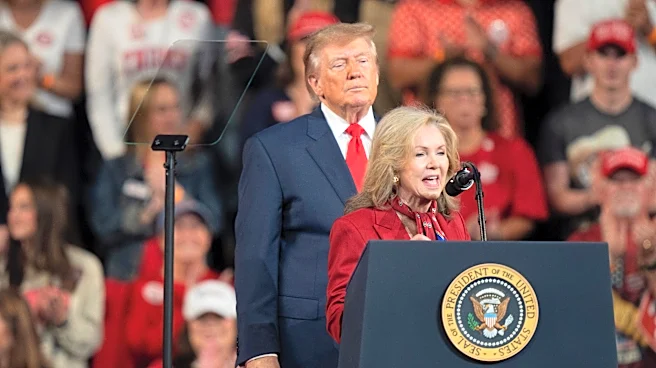
Blackburn has had a decades-long career in Washington, and since the beginning of her bid she's framed her candidacy around her allegiance to President Donald Trump. As Trump's popularity has eroded and Americans'
dissatisfaction with incumbents grows, will that come back to bite her?
"The energy in America right now is disapproval of the establishment. There’s lots of reasons for that, but it’s probably the single dominant movement in American politics right now," said Kent Syler, professor of politics at Middle Tennessee State University.

Polls still show Blackburn ahead, but her lead has narrowed from 59% percentage points in August 2025 to between 12 and 2 percentage points, the latter number from a poll released this week by the Green campaign.
Tennessee operates on a plurality vote system and has no runoff, so all a candidate needs to win is more votes than anyone else.
“Midterm elections are essentially a referendum on the president’s performance. That’s just the way it is," Syler said. "We generally see the president’s party nationally lose seats during the midterms.”
Hatley grows to be a right-wing alternative to Blackburn
Many Republican voters looking for a right-wing alternative to Blackburn are supporting independent David Hatley. Hatley holds most Republican viewpoints without the baggage of a party line or allegiance to an unpopular president.
In six weeks, Hatley has risen from 10% to 19% in polls. A September poll commissioned by the Progress Fund, which supports progressive candidates, found 10% of respondents supported Hatley. His support grew to 19% in a phone-based poll of 873 voters by Political Intelligence Polling, released by the Green campaign this week. Hatley has also poured about $12 million of his personal wealth into his campaign.
“If I were running the Blackburn campaign, the thing that would keep me up at night would be the impact of David Hatley’s campaign,” Syler said. “Is he going to be pulling votes from her that could allow the Democrat to win with 40% of the vote?”
Syler isn't certain Hatley will be a spoiler for Green, drawing enough votes from Blackburn to give Green a path to victory.
“The problem with being a third-party candidate is you have to convince voters that you have a chance to win. I don’t know that he’s accomplished that,” Syler said. “But the other most likely thing a third-party candidate does is act as a spoiler. We’ll have to see about that.”
If Republicans in office don’t support Blackburn, the party's nominee, they risk their good standing with the Tennessee Republican Party, whose rules require officials to endorse within the party, or not at all.

Tennessee’s Deputy Senate Speaker Janice Bowling, R-Tullahoma, has endorsed Hatley anyway.
“I got to meet him tonight and his wife, and to get to talk with them personally and privately, and I’m very pleased to say that I know who I’m now voting for,” Bowling said in a video widely shared by the Hatley campaign.
House candidates quietly distance themselves from Trump
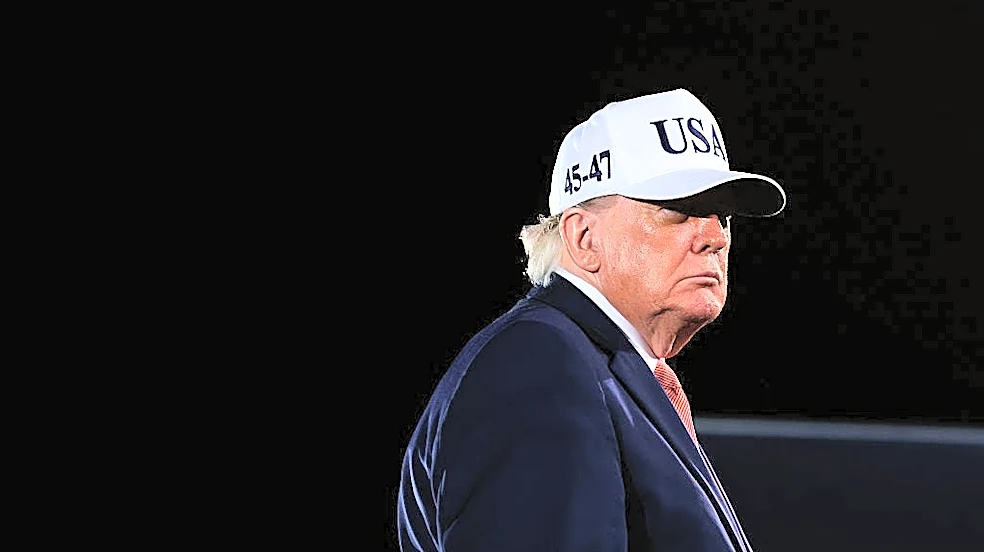
As Trump’s approval rating sinks to an all-time low, multiple GOP nominees for U.S. House have subtly distanced themselves from him.
In District 5, Republican nominee Charlie Hatcher quietly removed a mention of Donald Trump from his campaign slogan, the Washington Examiner first reported.

More recently, District 9 GOP nominee Brent Taylor removed a pop-up window on his campaign website touting Trump’s endorsement. And after mentioning or praising the president in nearly every social media post throughout the primary, Taylor had not mentioned Trump in posts on X for more than a month before Trump visited Clarksville this month.
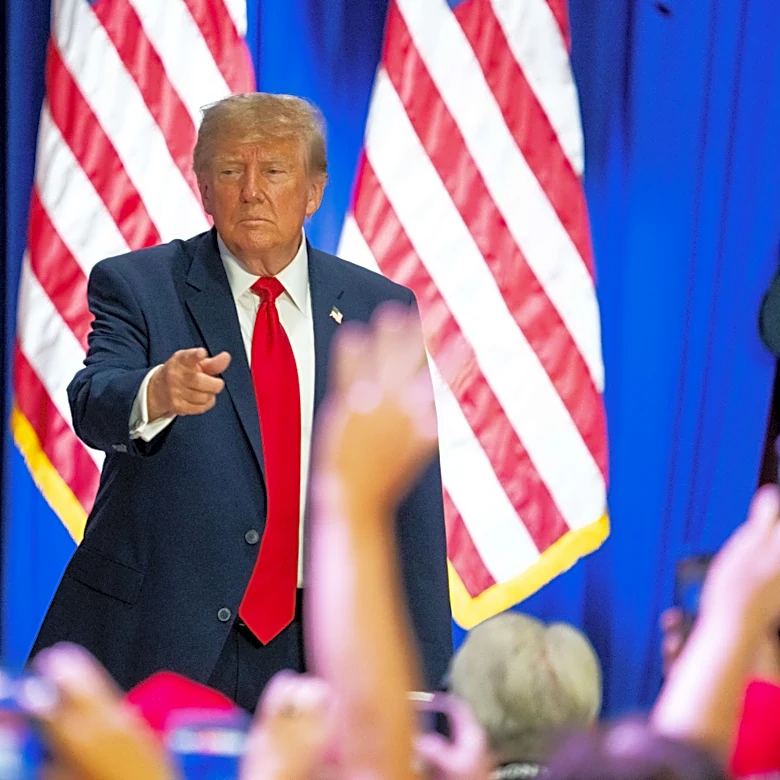
It's not uncommon for candidates to tweak their messaging to broaden their appeal to voters in a general election. Of course, both appeared alongside the president when he visited the state to stump for candidates he's endorsed.
Rachel Campbell, who leads the Tennessee Democratic Party, said Republicans are “hiding their relationship with Trump” because “they are afraid of being accountable for their support of Trump’s disastrous and costly agenda.”
GOP nominees in less competitive districts — Johnny Garrett in District 6 and incumbent Matt Van Epps in District 7 — continue to lean into their loyalty to the president.
What would a blue wave look like in Tennessee?
Republican redistricting in May left all of Tennessee’s nine congressional districts favoring the GOP.
If Democrats manage to eke out even one congressional seat this cycle, it would deal a blow to lawmakers’ efforts and the president’s redistricting agenda. It would also render moot the $3.1 million Tennessee taxpayers spent to implement new district maps.
In District 5, Democratic nominee Chaz Molder told attendees at a recent fundraiser that he is confident that “we can win this race.”
Trump won the redrawn 5th District by more than 23 points. But as of this month, Molder said, his internal polling showed the race in the low single-digits.

“This is a close race. We know that because we feel it on the ground,” Molder said. “This is a single-digit race, and it’s improving on a daily basis.”
While the Democratic Party in Tennessee has been largely trampled by a Republican supermajority over the last 20 years, Syler said “it’s starting to have a pulse again.”
If Democrats keep at least one seat in Congress, Syler said that would be “a huge win for them.”
But as for a “blue wave” like the one that’s predicted nationwide?
“I’ll know what a blue wave looks like in Tennessee when I finally see one,” Syler said.
Could Trump's redistricting strategy hurt Tennessee Republicans?
Will Republicans’ efforts to redraw congressional maps backfire? Maybe not. But at least one GOP insider has some concerns.
House Speaker Cameron Sexton, R-Crossville, who was a driving force behind the new maps, recently told The Tennessean that he feels “pretty good” about Republicans' prospects in the midterms to send nine Republicans to the U.S. House.
U.S. Rep. Tim Burchett presented a more nuanced view.
“We should have just let Cohen stay there,” said U.S. Rep. Tim Burchett about outgoing Democratic Congressman Steve Cohen, who represents District 9. Burchett said that the GOP “has a good shot” at winning all nine races if candidates stay on message and that Trump’s visit would help “shore up the base” of Republican voters.

Typically, congressional races in Tennessee's largely safe Republican districts don't draw many national political figures to campaign for Republicans, as their time is needed elsewhere. But so far this month Tennessee Republicans have had fundraisers and "get out the vote" rallies with U.S. Rep. Jim Jordan of Ohio and House Majority Leader Steve Scalise — in addition to Trump's visit. House Majority Whip Tom Emmer is scheduled to visit Franklin to rally with Hatcher and Taylor next week.
Syler said that while districts still favor Republicans, they have “far less margin of error” than before.
“There’s absolutely no doubt,” Syler said. “The Republican legislature, through this very, very aggressive gerrymandering, definitely made some districts far more competitive than they were.”
Vivian Jones covers state government and politics for The Tennessean. Reach her at vjones@tennessean.com.
This article originally appeared on Nashville Tennessean: Could Trump's redistricting, low approval hurt GOP allies in Tennessee?