




You brush your teeth and your hair. Now, a Metro Nashville Public Health Department manager said you should add fruits and vegetables to the list to help protect against Cyclospora and other foodborne illnesses.
Metro Nashville Health Manager Ivone Rodriguez said the recent spotlight on food safety due to the national outbreak of Cyclospora, which can cause explosive diarrhea, underscores the importance of taking precautions at home.
The U.S. Centers for Disease Control and Prevention (CDC) confirmed the first known Tennessee case of cyclosporiasis, the illness caused by the Cyclospora parasite, on July 1. As of July 18, the most recent provisional data available, Tennessee had 79 probable or confirmed cases of the illness that causes watery diarrhea
with frequent and sometimes explosive bowel movements, according to state health department data.
The Nashville-Davidson County region reported nine cases, health records show. The Jackson-Madison County region had the most with 22 cases, followed by 17 in the Mid-Cumberland region and 11 in the West Tennessee region, which doesn't include Memphis-Shelby County, where there were four cases.
The national outbreak has been driven by a few heavily impacted states, such as Michigan, West Virginia, and Ohio. But officials said that the actual number of cases may be higher as impacted individuals go without reporting their sickness.
Is salmonella currently a problem in Tennessee?
While attention is centered on the outbreak of cyclosporiasis, salmonella infection remains the No. 1 foodborne illness throughout the U.S. and a common problem in Tennessee.
While there have been 79 cases of Cyclospora infection in the Volunteer State this year, there have been 576 cases of salmonella, according to state health data.
Each year, there are about 1.35 million infections, called salmonellosis, in the U.S. that are mostly caused by contaminated food, according to the CDC.
This year, there have been 45 cases in Davidson County, state data shows.
The CDC estimated that only 1 in every 30 cases is reported. That's because most sufferers don't seek medical treatment to enable testing and confirmation of the illness.
Some victims are asymptomatic but most will have diarrhea possibly with some blood, fever and abdominal cramps within eight to 72 hours after exposure.
Symptoms typically last a few days or a week, but diarrhea may last up to 10 days and it may take several months before bowel movements normalize, according to the CDC.
When should you go to the doctor?
Most victims of Samonella, Cyclospora or other causes of food poisoning will get better without seeking medical attention. But medical intervention may be needed if the person affected is an infant, young child, older adult or someone with a weakened immune system.
Rodriguez cautioned to watch for signs of dehydration. That can include urinating less often than normal or observing dark-colored urine as well as having a dry mouth and tongue.
If the illness lasts more than a few days or brings a high fever or bloody stools, the CDC recommended seeking evaluation and treatment from a doctor.
How does cyclosporiasis spread?
Cyclosporiasis spreads when people eat food or drink water that was contaminated with feces. According to the CDC, the illness typically spreads via unwashed produce that came in contact with untreated water.
Direct person-to-person transmission is rare because the parasite that causes cyclosporiasis must spend one to two weeks outside the body after being shed in feces before it can infect someone else.
The time between becoming infected and experiencing symptoms is typically around a week but can range from two days to two or more weeks.
How does salmonella spread?
Salmonella live in the intestines of people and animals. The CDC estimated that most people become infected through contaminated food, but other ways include drinking contaminated water or touching animals, animal poop or the places animals live and roam.
Why is salmonella called a summer disease?
While you can become sick from salmonella any time of the year, the CDC warns that warmer weather and unrefrigerated foods, common during summer picnics and gatherings, create ideal conditions for salmonella to grow.
What can I do to stay safe? Wash produce
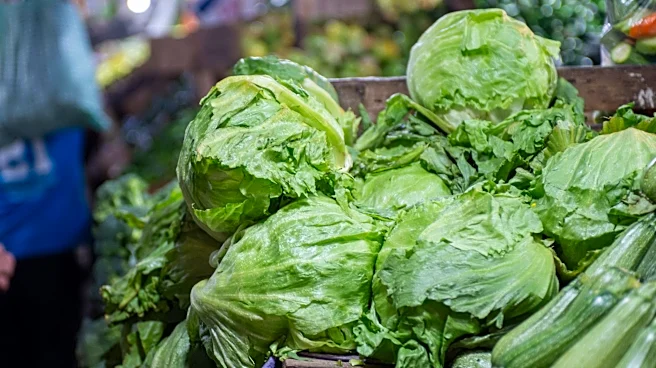
Rodriguez recommends carefully washing all fresh produce under running water, even if it is labeled “prewashed.”
She also suggested using a scrub brush even on peels and skins, since germs can spread to the inside of the fruit or vegetables when slicing with a knife.
Rodriguez also recommends cutting away any damaged or bruised areas on fruits and vegetables before preparing and eating and refrigerating any cut or cooked vegetables as soon as possible.
The CDC suggested protecting yourself from salmonella by promptly refrigerating or freezing foods that are likely to spoil quickly as well as prepared food and leftovers.The health department offers tips on preventing food-borne illness through a "Safe at Home" tutorialon its website, www.nashville.gov by typing in "Safe at Home" in the search field.
Beth Warren covers health care and can be reached at bwarren@tennessean.com or on X at @BethWarrenCJ.
This article originally appeared on Nashville Tennessean: Cyclospora infections are rising in Tennessee. What a Nashville food safety expert says