







Metro Nashville Public Schools has faced a flurry of public scrutiny in recent months, along with an impending audit by Nashville's government and increasing calls for a state forensic audit.
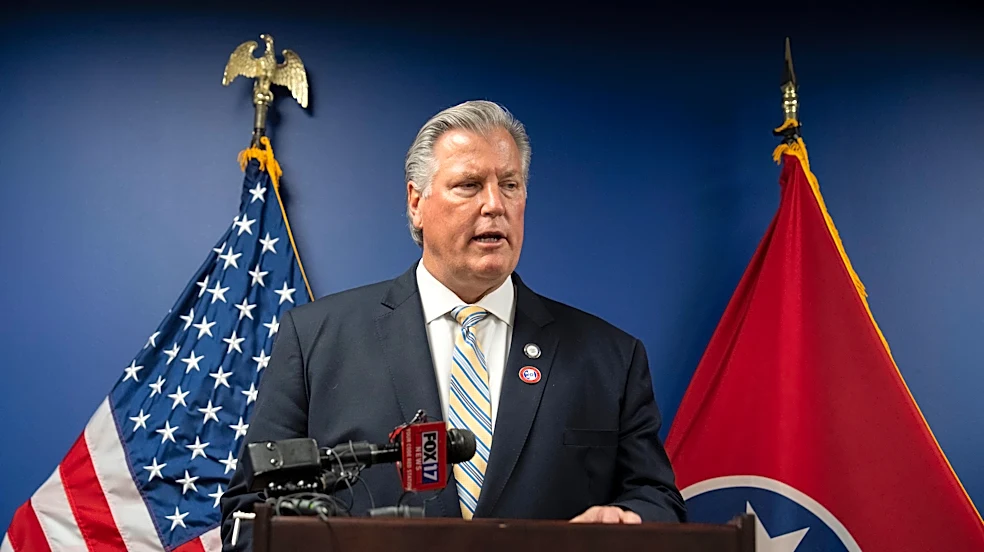
While the local performance and operations audit is already in the works, a state audit would require approval and funding from the state legislature. State Rep. Scott Cepicky, R-Culleoka, said he asked House Speaker Cameron Sexton to pursue a forensic audit of MNPS during an interview with conservative talk radio host Scott Mandis on SuperTalk 99.7 WTN.
Mandis posted a clip of the interview on his Facebook account on Oct. 15, where the two talked about improving Tennessee's overall academic performance. Cepicky said that the state had already "gone after"
Memphis and that "Nashville's next." The state passed a law last year allowing it to take over districts that meet a set of criteria tied to low academic performance, high leadership turnover or certain management and financial issues. That opened the door for it to audit Memphis Shelby-County Schools, then install an oversight board to take control of the district. As of Oct. 21, that takeover was stalled amid legal challenges, according to Chalkbeat.
Cepicky went on to level criticism at MNPS Director Adrienne Battle, whom he said he met with recently, and low academic performance in Memphis and Nashville, which are the state's two largest districts.

"My task is to get us to be the best public educational system in the country," Cepicky said. "It is a statistical impossibility … unless Nashville and Memphis are at the highest level."
A spokesperson for Cepicky did not return multiple requests for comment or answer questions. The Tennessean also reached out to Sexton to ask whether there were plans to commission an MNPS audit when lawmakers return for their regular session in January.
"We are currently exploring all possible options and as of now nothing is off the table," Connor Grady, Sexton's spokesperson, said in an Oct. 16 email.
While state audit plans are unclear, MNPS school board chair Berthena Nabaa-McKinney and vice chair Erin O'Hara Block said they are focused on the local audit at hand. It was commissioned by the Metro Nashville Council in June. Both Nabaa-McKinney and Block are in their second terms as board members and were appointed to their leadership roles in September after a unanimous board vote. They agreed that the local audit, which will cover performance and operations for the whole district, should take precedence before the state considers its own measures.
As calls for MNPS accountability continue, here's a closer look at how similar forensic state audits have played out, recent accusations against the district and what Nabaa-McKinney and Block had to say about it all.

State audits of schools include TSU, Memphis
A state forensic audit of MNPS would be an unusual move. In fact, similar audits have only happened twice in state history, according to John Dunn, the director of communications for the Tennessee Comptroller of the Treasury. The first was in 2023 when lawmakers commissioned a $2 million forensic audit of Tennessee State University. The second was in 2025, when lawmakers green lit an audit of Memphis-Shelby County Schools, which is the state's largest school district. That audit cost the state $7.7 million.
The TSU audit ultimately led to state lawmakers ousting the entire board of the historically Black, public university. The Memphis schools audit led to the state takeover of the district. Block said the law that allowed the state to install an oversight board in Memphis leaves the door open for the same thing to happen at MNPS, but not without an audit.
When asked whether the state had approached MNPS leaders about a forensic audit or whether the district had comment on recent calls for one, district spokesperson Sean Braisted offered the following statement in an Oct. 14 email.
"Metro Nashville Public Schools has experienced record levels of academic growth, achievement and graduation under the leadership of Dr. Battle and this Board of Education," the statement read. "We are incredibly proud of the work our students, families, teachers and staff have put into making those results a reality. We remain focused on the core work of the district: improving the conditions for teaching and learning and ensuring every student is known."
What we know about the MNPS performance audit
Audits are a routine part of doing business for MNPS, which is the state's second largest district that encompasses around 80,000 students and more than 11,000 employees. However, the last full MNPS system audit was in 2015. Commissioned by the city government, the operational audit made more than 100 recommendations for ways the district could save money and improve its operations.
The new performance and operation audit will be carried out by the city's Office of Internal Audit. Metropolitan Auditor Lauren Riley told The Tennessean that as of Oct. 21, the process is still in its early stages. The office hired Nashville-based accounting firm Frazier & Deeter.
"With such a large audit, planning will likely last a very long time," Riley said.
Riley said that she could not provide an end date for the audit and that timelines can vary. Due to the size of the audit, it's expected to wrap up in 10-12 months. The scope of the audit will not be set until the planning phase is complete. But even then, state law requires those details to be kept confidential.
"It will only be communicated to stakeholders working within the audit," Riley said.
She said the Council's initial request for the audit asked that it cover major operational areas. That includes, but is not limited to, the following things:
- District organization and management
- Education service delivery
- Human capital
- Financial management
- Facilities management
- Food services
- Transportation
- Safety and security
- Technology management
Once the audit is completed, a final report will be posted for the public to see on the Metro Office of Internal Audit website.

Block said she hopes the audit will shed light on ways the district can improve its operations and, most importantly, the way it serves and educates students. She referred to an oft-repeated mantra around MNPS: "Know where you are but don't stay there." She said MNPS leaders are aware of the need to improve academic achievement at MNPS, but also pointed to the district's record-setting academic growth in recent years and its academic recovery after the COVID-19 pandemic.
She said both MNPS and lawmakers are focused on how to continue to improve and accelerate student performance at MNPS.
"I think we're all in alignment," Block said. "I think the question becomes: Who's leading that process? I think it should be us."
Nabaa-McKinney echoed Block and also referred to the district's year-over-year growth for the last four years.
"Two things can be true," Nabaa-McKinney said. "We're doing great things in Nashville ... and yet there's still more work to do."
She said the district has made those strides while working with a decreasing amount of state funding each year. She also said pressure from growing inflation, the financial impact of school vouchers and charter schools and other rising costs have made for "tougher conversations" when it comes to the city's budget for MNPS.

MNPS faces public scrutiny
The performance audit and talks of a state audit come after MNPS has faced multiple controversies over the last year or so.
In July 2025, the board voted to settle a lawsuit against the district for a historic $6.5 million. The money was split evenly between five people who said they were unfairly fired or demoted by director Battle. The settlement drew criticism from city leaders and the public, much of which was directed at how Battle handled the terminations and demotions.
Earlier this year, the Council approved $800,000 for the performance and operations audit with the expectation that the district would cover $550,000 of that amount. That ask came at the very end of the budget process and caught board members off guard. Board discussions over how to account for that money grew tense at times, but it ultimately voted to halt the opening of a pre-K program at Phyllis E. Phillips Early Learning Center to absorb the cost.

In August, former MNPS teacher Samira Hardcastle's statements at a board meeting went viral. An award-winning teacher, she said she planned to quit education for good. In her resignation letter, she said that district leaders asked her to fabricate a grade to pacify an irate parent and that she was concerned about everything from teacher pay to students' lack of basic literacy and the related behavioral issues that stem from their learning struggles.
Hardcastle has continued to press for accountability from MNPS. More teachers and former educators came forward in the weeks that followed, accusing MNPS of things like wrongful termination to a lack of support in student discipline issues, among others.
"We take every accusation seriously," Nabaa-McKinney said, explaining that there are policies and procedures in place to investigate claims and take corrective action, when needed. "I would caution us to be careful in discerning between an accusation and what is true."
In September, The Tennessean wrote about a whistleblower report that triggered a state civil rights investigation into MNPS. Former Stratford STEM High School counselor Constance Wade in the report said the district was awarding academic credits needed for graduation to students who had not earned them. Since the credit recoveries in question affected primarily Black students, it met the threshold to trigger a Tennessee Office of Civil Rights investigation. The investigation is ongoing. Braisted said the district is fully cooperating with the investigation and declined to respond to specific allegations as it unfolds.
Rachel Wegner covers education and children's issues for The Tennessean. Got a story you think she should hear? Reach her via email at RAwegner@tennessean.com. You can also find her on X or Bluesky under the handle RachelAnnWegner.
This article originally appeared on Nashville Tennessean: Nashville schools leaders discuss scrutiny, calls for state audit