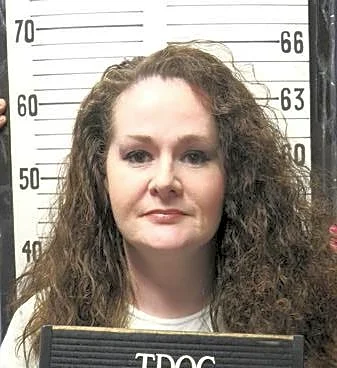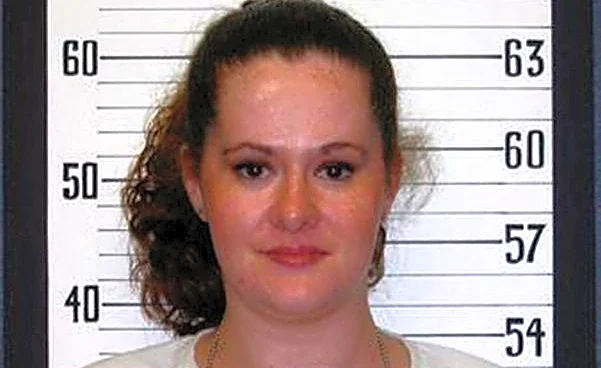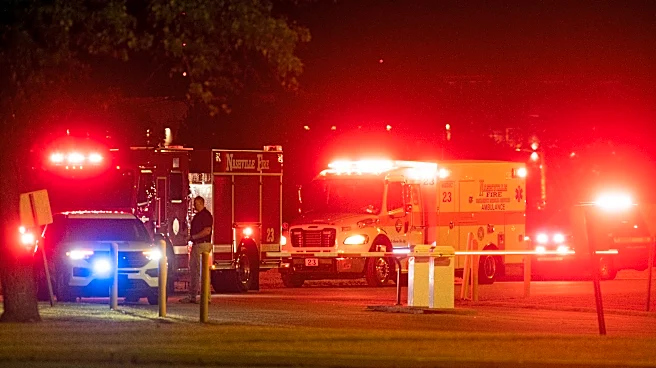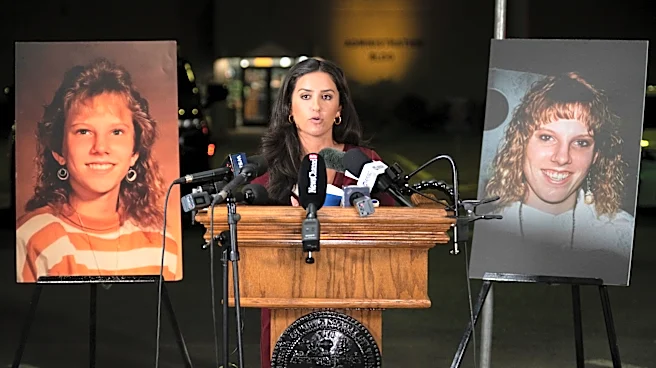







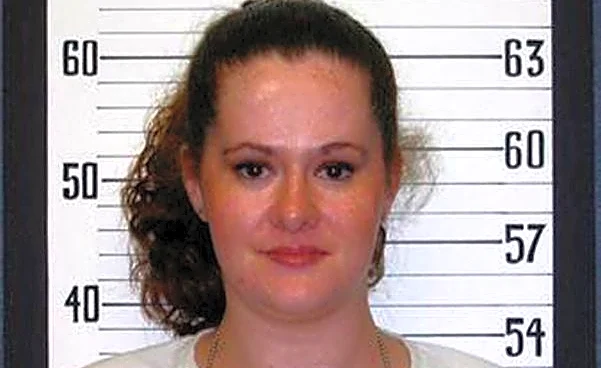

Exactly how Christa Pike survived Tennessee's attempt to execute her remains unclear.
But what happened Sept. 30 appears unprecedented in the modern history of the U.S. death penalty and is bringing new scrutiny to Tennessee's secretive process for obtaining, testing and storing lethal injection drugs.
The Tennessee Department of Correction said that it followed every step of its execution protocol, which calls for administering the drug pentobarbital, and that no additional procedures were permitted after officials carried out the protocol.
Pike remained alive and was taken to an off-site medical facility. Her lawyers on Oct. 1 said she was in critical condition and receiving lifesaving care.
"We have never seen someone survive the administration
of lethal doses of drugs as Ms. Pike has survived," said Robin Maher, executive director of the Death Penalty Information Center. "So this is a very unique event, unprecedented."
Pike was already a rarity on death row. Just 18 women have been executed nationwide since executions resumed in 1977, according to the Death Penalty Information Center.
Surviving an execution attempt is rarer still. The center has identified seven prisoners who survived attempted lethal injections because execution teams could not establish IV access, including Tennessee death row prisoner Tony Carruthers in May. In those cases, the lethal drugs were never administered.
Pike's case presents a different question: Why did she remain alive after Tennessee says it carried out the procedures required by its lethal injection protocol?
Medical experts weigh in
Two medical experts said the most likely explanation is not that the pentobarbital failed, but that not enough of it entered Pike's bloodstream as intended.
Dr. David Lubarsky, author of a landmark study examining problems with lethal injection, said the IV may have been improperly placed or pressure from the injection could have caused a blood vessel to rupture.
Dr. Joel Zivot, an anesthesiology professor at Emory University, agreed that this was the most likely explanation.
“If there’s a pocket of pentobarbital under the skin” rather than in a vein, “that’s not really going to do anything except burn the skin,” said Zivot, who testified about the risks of executing Pike in August.
Lubarsky said IVs need to be checked at placement and again prior to injection. They also need to be “monitored during injection for such a critical pathway of a critical drug.”
Pike's attorneys warned a judge before the execution that her small veins could complicate IV access. They asked executioners to use a smaller needle, but that request was denied.
During the execution, Pike said, "My arm feels like it's about to bust. One spot is really throbbing." Zivot said this aligns with the explanation that the drugs were missing her vein.

Other possible failures
Lubarsky said other problems could potentially explain why someone survived a single-drug lethal injection.
Among the possibilities:
- The drug may have been mixed incorrectly.
- The dose may have been miscalculated.
- An IV stopcock may have been turned the wrong direction, sending the drug back into the IV bag.
- IV connections may have leaked, reducing the amount of pentobarbital delivered.
Lubarsky also pointed to acute tolerance and redistribution as possible factors.
Acute tolerance occurs when a drug's effect decreases over a short period relative to the amount in the bloodstream. Redistribution occurs when a drug moves into other tissues and "is no longer working on the brain," Zivot said.
Lubarsky said more information is needed to know exactly what led Pike to survive.
However, he said, "everything I have said and written in the past about the inadequacy of the process was sadly evident."
Tennessee's secretive drug supply faces renewed scrutiny
Pike's survival is also drawing new scrutiny to the pentobarbital used in her attempted execution.
Tennessee does not publicly disclose where it obtains the drug, whether it is commercially manufactured or compounded, or detailed information about testing of the supply used in executions.
As major pharmaceutical manufacturers have restricted their drugs from being used in executions, Tennessee and other states have increasingly had to seek alternative sources, including compounding pharmacies.
Compounded drugs do not undergo FDA premarket approval, meaning the agency does not verify their safety, effectiveness or quality before they are marketed. Improperly compounded injectable drugs can have problems involving potency, contamination or sterility.
There is no evidence that compounded pentobarbital caused the failure, and TDOC has not publicly disclosed whether the drug used Wednesday was compounded.

But Tennessee has previously faced problems with testing its execution drugs.
Gov. Bill Lee halted executions in 2022 after an independent investigation found TDOC repeatedly failed to perform testing required under its own protocol. Tennessee subsequently adopted its current single-drug protocol, which states that pentobarbital is subject to "quality assurance and quality control testing" but provides few public details about that process.
The Tennessean previously reported that Tennessee paid nearly $600,000 for lethal injection drugs between 2017 and 2025, including one $525,000 payment. Records released by TDOC did not reveal what was purchased, when it was purchased or where it came from.
Federal public defender Kelley Henry previously told The Tennessean that the size of that payment raised questions about whether Tennessee obtained drugs through what she described as the "gray market."
"With no transparency, we can't know where the drugs are coming from, but $500,000 to me is an indication that they came from a gray market source," Henry said.
Maher said information about the source, storage and testing of Tennessee's pentobarbital could be critical to determining what happened to Pike.
"Those details are really critical to the efficacy of the drug and may have also had something to do with what went wrong last night," Maher said. "We'll know better when we have an independent investigation that can really dig into these details.
"The people of Tennessee deserve to know what went wrong and why."
This article originally appeared on Nashville Tennessean: Christa Pike survived lethal injection. Experts cite possible IV issue