







Kids across Tennessee are back to school, and some are returning home with COVID-19 as the virus continues to spread across the state, said Vanderbilt University Medical Center infectious disease expert Dr. William Schaffner.
Officials said cases have continued to increase during the past two weeks, but the numbers are still relatively small.
Schaffner cautioned that this is the first and smaller bump in the annual "two-humped camel" season of coronavirus and influenza spikes. The bigger surge is anticipated in the winter.
Should you rush to get your family vaccinated for the virus and the flu now? Does it matter when you had your last vaccine?
Schaffner, one of the nation's top public health experts on vaccines and communicable diseases, and guidance
from the American Academy of Pediatrics helped separate scientific fact from social media fiction.
What's the ideal time to get flu and COVID-19 vaccines?
Some Nashville pharmacies are already posting signs offering flu shots and also have an updated COVID-19 vaccine, but Schaffner suggested waiting another month.
The vaccines should provide protection for six months, he said. During the past couple of seasons, Nashville saw flu and coronavirus cases in November, December and January with spikes in February and March.
Getting vaccinated in October should extend protection through March, the doctor said.
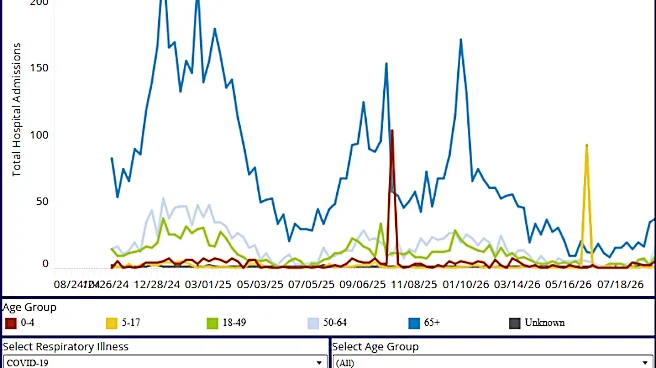
Tennessee Department of Health data tracks pan-respiratory hospitalizations, meaning COVID-19, influenza and RSV combined. A look at the past 21 months revealed hospital admissions for different age groups spiking at different times.
During the week ending Aug. 29, 68 child and adult patients across the state were hospitalized for respiratory illnesses, according to the most recent state health records. Of those, 37 were ages 65 and older; 16 were ages 50-64; 9 were ages 18-49; one was in the 5-17 age group and 5 were birth through age 4.
The most vulnerable are residents age 65 and older, who consistently had the most hospitalizations during the past 21 months except for two weeks. State data indicates they are more at risk during the fall and winter months.
During the past 21 months, the state's highest respiratory hospitalizations were the week ending Jan. 4, 2025, when 228 seniors were admitted for treatment. Similarly, the most recent significant peak sent 171 seniors to the hospital during the week ending January 3, 2026.
Children ages 5-17 led the state in hospitalizations for respiratory illnesses for the week ending June 6, when 90 teens and kids were admitted for treatment.
Newborns and children age 4 and younger had more respiratory illnesses than any other age group during the week ending Oct. 11, 2025, when there were 103 hospitalizations.
Residents ages 50-64 were hospitalized less often than senior citizens consistently during the past 21 months. This age group suffered the most hospitalizations in the winter of 2024-2025, when 188 men and women were admitted for treatment from Dec. 21, 2024, through March 1, 2025, state data shows.

Why do some people get sick despite getting vaccinated?
Vaccines won't always prevent a person from getting sick, but it reduces the likelihood their case will worsen and lead to hospitalization, Schaffner said.
Largest organization of U.S. pediatricians weighs in on vaccines
The American Academy of Pediatrics, a 95-year-old organization recommends COVID-19 vaccines for infants and children.
About 45% of all children hospitalized for coronavirus were ages 6-23 months old, according to data by the American Academy of Pediatrics.
Less than 5% were up to date on their COVID-19 vaccines.
Vaccines prevented an estimated 56% of coronavirus-related emergency room and urgent care visits for children ages 5-17 years old, according to the organization.
Could the COVID vaccine cause or exacerbate autism?
"We can say with absolute certainty that so many studies have been done to address this question and they all come up with a secure answer, vaccines do not cause or exacerbate autism," Schaffner said.
The Autism Science Foundation urges skeptics to"read the science,"stating on its website that "vaccines work and do not cause autism."
OB-GYNs offer guidance to protect moms and newborns
The American College of Obstetricians & Gynecologists, the nation's leading membership organization for Ob-Gyns, recommends the COVID-19, flu and RSV vaccines for expectant mothers.
"Vaccines help keep pregnant patients and their growing families healthy," according to its website. "More than a dozen medical organizations endorse ACOG's guidelines forvaccines during pregnancy."
More information for parents
The American Academy of Pediatrics has posted its updated 2026-2027 guidance for prevention of COVID-19on its website and offers a summary of evidence it used to form its recommendations. It offers "AAPImmunization Facts for Families: COVID-19" in English and a vaccine guide in Spanish.
The academy recommends COVID-19 vaccines for all infants and children ages 6-23 months old because "they are at high risk for severe COVID illness and hospitalization," it noted. An exception applies if the child's pediatrician has noted a contraindication, meaning a medical condition that renders the vaccine unsafe.
All children ages 2-18 who are at increased risk of severe COVID-19 should get the updated version of the vaccine regardless of prior vaccine status, according to the pediatric organization's policy statement. This includes children and teens with health conditions that increase the risk of severe COVID; those who live in long-term care or group settings or in a household with someone at high risk of severe coronavirus and children and teens who have never been vaccinated.
Children and teens who aren't considered at increased risk and "whose parent or guardian desires their protection from COVID-19" should get an updated vaccine.
The pediatric association noted that most children have no side effects from the COVID vaccine and those that do usually have mild and short-lived symptoms, such as pain or swelling at the injection site, headache, chills or a low fever.
Beth Warren covers health care and can be reached at bwarren@tennessean.com or on X at @BethWarrenCJ.
This article originally appeared on Nashville Tennessean: Is COVID resurging in Tennessee? Should you get another vaccine?