
Now in its 101st year, the Grand Ole Opry is known around the world as a piece of living history. Emphasis on "living."
Today’s Opry still uses a highly selective membership model, which is an outlier in modern entertainment. Its evolving cast is asked to make a number of career sacrifices, including time for consistent performances at lower rates than the star may otherwise attract, in the name of joining an old-school radio-based variety show. Yet even in the age of social media, global streaming and stadium tours, the Opry has more members than ever, 77 in total, and it's still growing.
That larger roster is also putting on more shows with more creative diversity, according to Opry SVP and Executive Producer Dan Rogers.
"I think that we've opened
our arms to a greater variety of artists who are potential Opry members," he said, adding the organization is "recognizing that artistry goes beyond just having a No. 1 hit on the charts in the past five years."
Through exclusive interviews with the Opry’s biggest stars, newest invitee, executive leadership and more, The Tennessean found why such a wide variety of performers consider Opry membership to be a cornerstone of their careers, from comedian Henry Cho, the first Asian American to become an Opry member, to the Americana group Old Crow Medicine Show. However, country music remains the heart and focus of the organization.
"For me, being an Opry member is the pinnacle of success in country music," said Opry member Carrie Underwood. "It is the professional achievement I am most proud of."
Why does the Opry have members?
The history of Grand Ole Opry membership begins with its first broadcast on November 28, 1925. Known as the WSM Barn Dance, its first performer became the first member, fiddler Uncle Jimmy Thompson.
At the time, many programs like Chicago’s National Barn Dance and the Wheeling Jamboree had a regular cast, which made it easier to plan shows. Today, very few programs use the membership model. But you might recognize one.
“‘Saturday Night Live’ is the best comparison I've ever been able to think of,” said Rogers, who began his tenure with the show as an intern in the late ‘90s. “It helps people realize, ‘OK, so you have people who are on [the show] more often and you count on seeing.’”
Artists from any genre can perform at the Opry without being a member, as have James Brown, Boyz II Men and Sabrina Carpenter. Diverse artists often drop by because performing on the venue's stage is itself still seen as a mark of credibility, especially for an artist intent on etching their name on the history of American music. Making an Opry debut is regarded as an honor itself, while Rogers describes membership in the cast as something different. A “special relationship” between the show and artists, but also between the artists themselves. Many see it as a family.

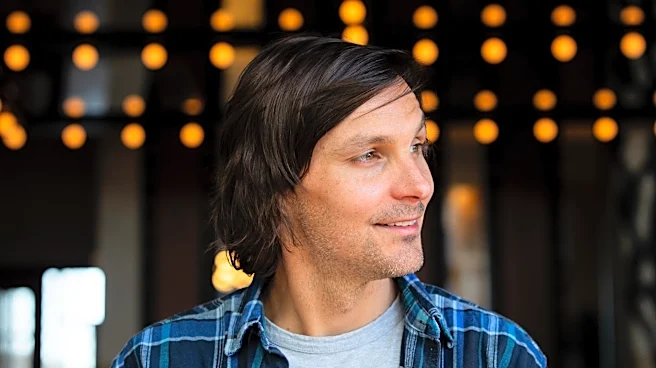
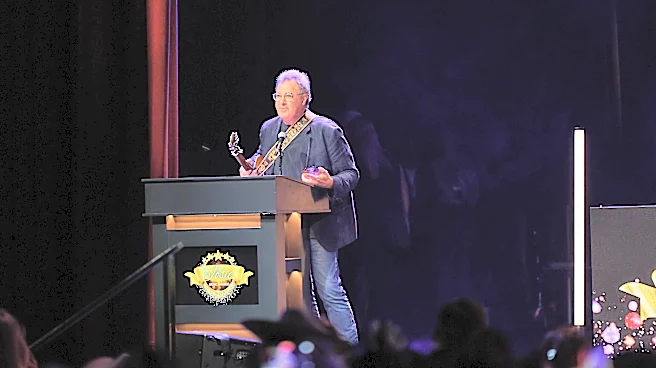
Country singer-songwriter and CMA award-winning guitarist Charlie Worsham is soon to become the newest member of that family. Worsham grew up idolizing Opry stars and first appeared on the Opry stage at 12 years old, before he was invited to join the cast in August. Worsham was playing guitar for his mentor Vince Gill when Gill turned around and broke the emotional news.
“There isn’t an Opry for pop. There isn’t an Opry for the blues. There isn’t an Opry for rock ‘n’ roll,” Worsham told The Tennessean about the unique role the Opry plays in roots music, adding that membership is “a lifetime thing” he will one day offer to someone else.
What does it take to become an Opry member?
Each year the Opry invites a few more entertainers to join its cast. Most are country musicians, but there are also bluegrass pickers, gospel singers, Christian artists and even comedians. Henry Cho became the first comic to join the Opry cast in 50 years back in 2023, and he points back to classic stars like Minnie Pearl and Jerry Clower to show the Opry's range of entertainers.
"Comedy has always been part of the Opry. They went away from it for many years," he said. "It is still surreal to me even though I’ve been a member for over three years."
New members are carefully selected by a committee based on whether or not that performer embodies the Opry’s tradition-in-the-present-tense spirit, and how well they would represent the Opry as an ambassador.
Country artist Ashley McBryde said she feels honor and responsibility from her membership.
"It’s not something you can buy your way into,” she said. “For me, it represents a standard I’m being held to as a musician, songwriter, entertainer and it impacts my behavior off stage.”
Underwood called her nearly 20-year membership in the Opry a “dream,” which will “always be one of the dearest things to my heart.” And for Darius Rucker, it’s a milestone “bigger than any one career.”
“I grew up listening to the Opry as a kid in South Carolina,” Rucker said, “yet even then I understood what it meant in country music.”
The Grand Ole Opry’s 77 current members include the longest serving member in history, Bill Anderson, plus Kelsea Ballerini, Garth Brooks, Luke Combs, Emmylou Harris, Alan Jackson, Martina McBride, Reba McEntire, Jon Pardi, Jelly Roll, Connie Smith, Randy Travis (who no longer performs but does participate in events), Keith Urban, Lainey Wilson, and more.
Despite the growing cast, many of country and roots music’s biggest names are not members for various reasons. Those include Brooks & Dunn, Luke Bryan, Eric Church, Faith Hill, Miranda Lambert, Tim McGraw, Willie Nelson, Chris Stapleton, George Strait, Tanya Tucker, Shania Twain and Morgan Wallen.
The requirements of Opry membership and how much members earn
Artists who accept Opry membership are asked to make time commitments to the Opry that go beyond their normal career. Membership once included a strict minimum number of appearances an artist had to make, which made it hard for top touring artists to join. Now there are still appearance requirements, but they're more flexible.
Performers do not pay to be a member, but they also don’t get paid like they normally would. Each member gets the standard union musicians rate for an Opry appearance, $240 per appearance under two hours, which is far below what they could earn from a concert or festival appearance.
Those details mean an entertainer has to really care about their Opry membership. Worsham often tours as a band member with chart-topping country artist Dierks Bentley, who is also an Opry member. Worsham uses the “What Was I Thinkin’” star as an example of this dynamic.
“For Dierks to take a Saturday night and play at the Opry where you get paid union scale versus what he could make filling up an amphitheater, I mean, that’s a sacrifice,” Worsham notes. “To do that a month out of the year is no small thing, but the Dierks of the world do it because they love the Opry.”
"It does get tricky,” McBryde agrees. “It is important to me to fulfill what it means and entails to be an Opry member. Touring schedules don't make that easy all the time.”
Why isn’t George Strait a member?
The difficulty is perhaps best seen in country legend George Strait. Strait has only made one Opry appearance in his entire illustrious career, back in 1982. He famously declined to seek membership due to his desire to live in Texas, which makes it hard for him to be in Nashville regularly. Even so, there are no hard feelings between Strait and Opry. The show maintains an open invitation for him to play if he ever wishes.
Similarly, Willie Nelson was a member early in his career, but gave up his membership when he moved to Texas in 1972. He explained in 2018 that it was only because he couldn't physically be at the Opry to meet his membership requirement at the time.
“In order to say you’re a member of the Grand Ole Opry, which is a great honor, you had to be there 26 weeks out of the year,” Nelson told The Texas Standard. “You can’t play in Texas on Friday and get back to the Grand Ole Opry on Saturday night. It just don’t work out that way.”
Those strict requirements have changed. Rogers, the Opry executive, says the Opry now works with its members to come up with a plan that fits their schedules and abilities.
Underwood, for example, played four Opry shows in two nights in August. That's the best way for her to fulfill her commitment while still touring on her own. But she doesn’t think of it as a requirement.
"My Opry shows have always been a priority for me, and my team has always known and understood that,” she said. “It means a lot to me, and I see it more as an honor than a commitment.”
What do artists get from Opry membership?
Despite all the respect for Opry tradition, the question remains: What do artists get from becoming an Opry member?
It’s hard to quantify the benefit in terms of sales or additional tickets sold. Instead, Opry artists point to intangibles which are nonetheless very real to them. Each member said they feel like part of the fabric of country music.
"Being introduced as ‘Grand Ole Opry member Ashley McBryde’ makes me walk taller every time I hear it,” said McBryde.
Perhaps most important is the sense of stability Opry membership conveys. In the volatile world of entertainment, where the highest of career peaks can be followed by the lowest moments, Underwood says having a place where you are appreciated is integral.
"Regardless of whatever else we do in our professional lives as performers, the Opry is like coming home," she explained. “For me, it’s like returning to the hometown church you grew up in every time I touch that stage.”
Worsham described his invitation as a sense of “relief.” Once you are a member, you have a place to perform even after your days of charting hits are done, he said. Any given night at the Opry might include legacy artists like John Conlee, The Whites, Charlie McCoy or others, who are treated with respect and dignity by a gracious crowd.
Worsham went on to say creativity is killed by “anxiety and fear and isolation,” but spurred on by “feeling validated and seen.”
“That's a big part of what membership means to me,” he explained. “I think for any artist that understands even a fraction of what the Opry's legacy is, they can relate to that feeling.”
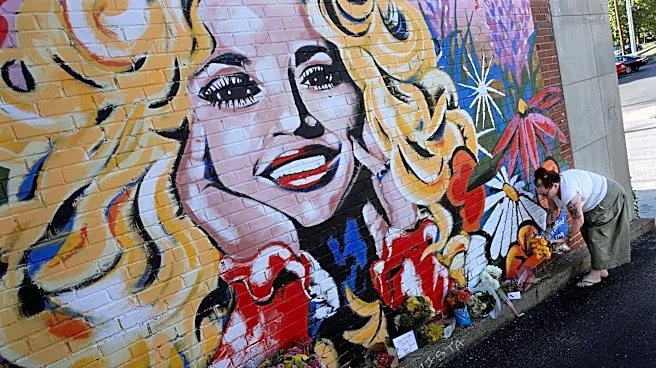
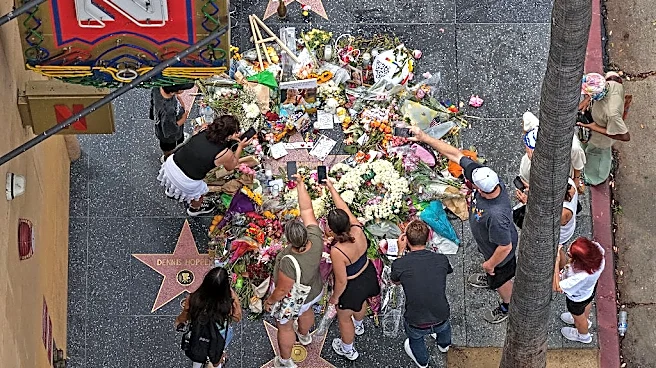
The recent passing of Dolly Parton helped illustrate the sense of belonging artists get from Opry membership. The night Parton died at 80 of cancer, Opry performers like Rhonda Vincent and Morgan Myles put together impromptu tributes. Days later, the Opry dedicated a whole show to the member of almost 60 years. It was a way for fans to say goodbye, since Parton’s burial was private. But it was also for her fellow Opry members.
“Dolly, there will never be another one like you. Not even close,” Rogers said from the stage. “We promise to never forget you and we'll think of you each step of the way.”
Is it worth it for entertainers to join the Grand Ole Opry?
Considering the time commitments, the scheduling complications and the potential hit to a primary income source, is it really worth it for artists to join the Grand Ole Opry cast?
"1,000% yes," said McBryde.
For many, becoming an Opry member is the culmination of a lifetime of dedication. In a world of increasing exclusivity, it’s also the ultimate money-can’t-buy symbol of belonging in something with historic implications. But mostly, it proves an entertainer has made a lasting impact.
“It's an artist's forever home, truly,” said Rogers, the Opry executive. “No matter what's happening in their careers through ups and downs and excitement, there's always this place where they're loved.”
To Rucker, who plans to make the Opry “a huge part of my life” for a “long, long time,” even after he’s done touring, there’s a word for that.
“It’s a place you can always come home to,” Rucker said. “That’s what makes being a member different from another award or another career milestone. You’re joining a family and becoming part of the history of country music, and that is with you. Always.”
Grand Ole Opry trivia
This article originally appeared on Nashville Tennessean: Does Opry membership still matter?