




The plan was set.
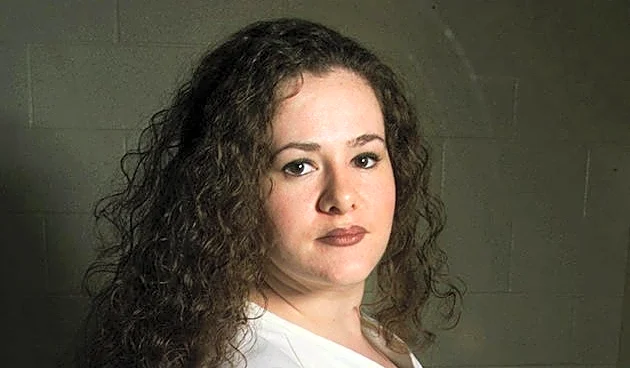
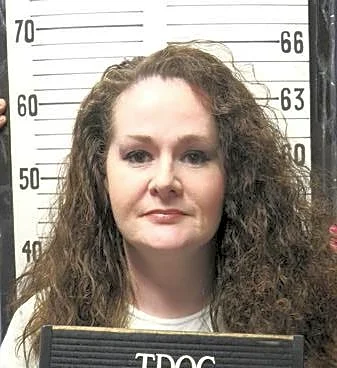
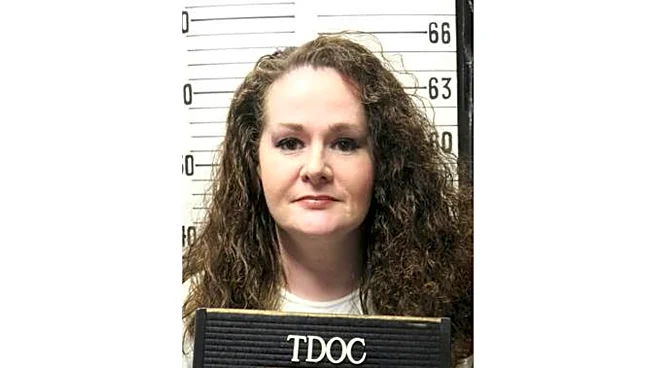
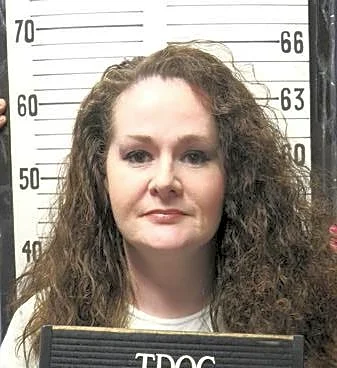
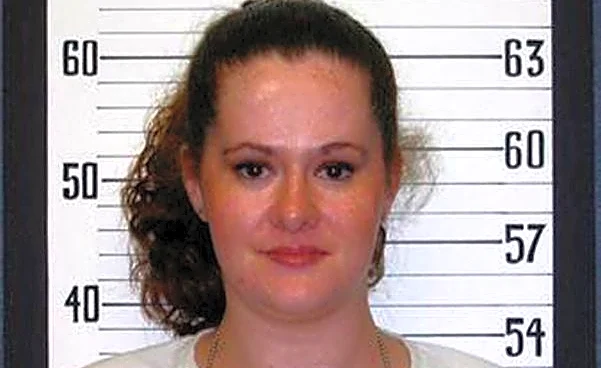
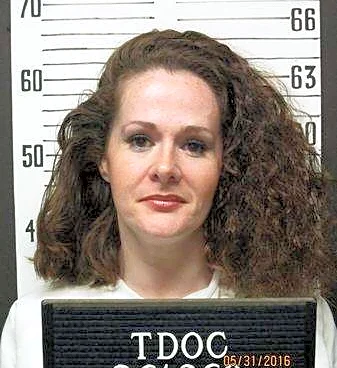
Christa Pike, Tennessee's only female death row inmate, was supposed to be the first woman executed in the state in over 200 years. A last-minute stay from the Sixth Circuit Court of Appeals bought Pike some time, but a little over an hour after it was reversed by the Supreme Court, she laid strapped to a gurney inside Riverbend Maximum Security Institution's death chamber.
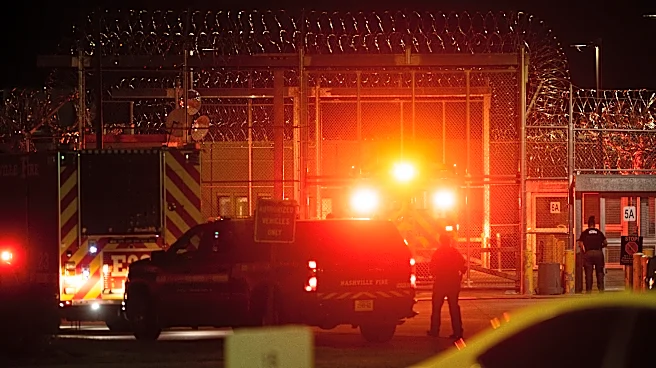
At 9:10 p.m., a group of journalists serving as witnesses walked to a podium flanked by photos of Colleen Slemmer, Pike's victim. As firetrucks and ambulances rapidly approached the prison, the witnesses confirmed what some reporters had already begun to suspect: the execution had gone wrong.
Is Christa Pike still alive?
Pike's lawyers confirmed she was alive shortly before witnesses approached
the podium. In an emergency motion to halt the execution, they reported she had "not lost consciousness" and was snoring.
Pike survived two doses of pentobarbital, an extremely strong sedative that can prove lethal in high doses. Witnesses in the room said that despite receiving the barbiturate, they could hear Pike breathing and even speaking throughout the process. Her attorneys do not currently know her condition, or even where she's located, but have said she is being treated at a nearby hospital.
According to according to a legal expert and hospital official, a hospital would take affirmative action to restore the health of a death row inmate after a failed execution attempt.
“She is a patient like any other and a hospital would have a legal obligation to treat her and (attempt) to keep her from enduring any pain and restore her to health,” Nashville attorney David Raybin said. “She was sentenced to be executed by the State of Tennessee. The hospital is not bound by that order. They can’t facilitate her death.
Why did Christa Pike's execution fail?
Tennessee Gov. Bill Lee is calling for a "comprehensive, third-party review" of Pike's execution to understand the causes behind its failure, as well as putting a pause on Gary Wayne Sutton's execution in December.
Why the execution was derailed is unknown at this time, but Pike's attorneys had previously voiced concerns about potential complications. During a hearing over a month ago, her legal team brought up thrombocytosis, a blood condition Pike has that leads to high platelet counts. Her lawyers argued the condition would make the execution more painful, adding that Pike's veins were also too difficult for medical personnel to insert an IV into. A hematologist later testified that her veins were accessible, and the argument was rejected by the state.
Tori Gessner, a journalist at WKRN who served as a witness, said she heard Pike say her arm felt like it was "about to burst open" during the execution.
"Tonight the State of Tennessee once again failed to carry out a lawful execution," Pike's attorneys said in a statement on Sept. 30. "We take no pleasure in being right, but the concerns raised by Ms. Pike proved to be true..."
The Tennessee Department of Corrections, which released a redacted version of its lethal injection protocol last year, says they followed every step. "The lethal injection chemical in the protocol has consistently been effective, and the protocol does not allow for additional procedures beyond what was carried out this evening," a department spokesperson said.
When was the last failed execution in Tennessee?
The last failed execution in Tennessee happened in May, when personnel failed repeatedly to establish a backup IV line during the execution of Tony Carruthers, who was sentenced to death following a 1994 triple murder in Memphis. His sister claimed that Carruthers suffered a stroke as a result, leaving him paralyzed on the right side of his body. Following the attempted execution, he received a yearlong reprieve from Gov. Lee.
Lethal injection, going back to its first demonstration in 1982, according to The New York Times, has been used in most modern executions following the Supreme Court's approval of the death penalty nationwide. The Death Penalty Information Center, a nonprofit that focuses on capital punishment, says there have been 1,492 executions using lethal injection in the U.S. since 1976, compared to 163 executions using the electric chair and six using the firing squad.
Tennessee's application of the needle has been plagued with problems for years, with one independent investigation finding that the Tennessee Department of Corrections failed to properly test the potency and purity of lethal injection drugs. This led the state to change its method in 2024, moving away from a three-drug cocktail to only using pentobarbital, the barbiturate used against Pike and Carruthers.
The state has paid $600,000 for lethal injection drugs in recent years, according to redacted Tennessee Department of Corrections invoices obtained by the Tennessean.
This article originally appeared on Nashville Tennessean: Is Christa Pike alive? What we know after failed execution in Tennessee