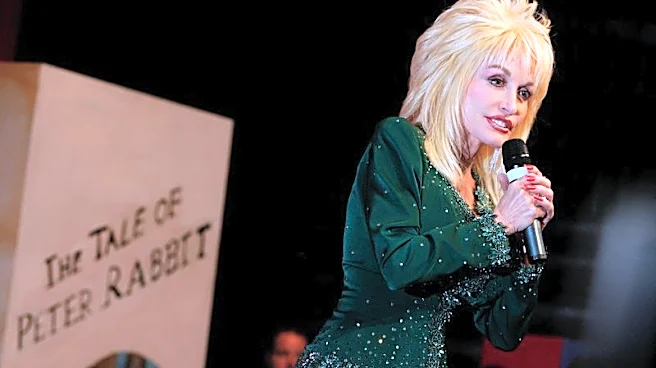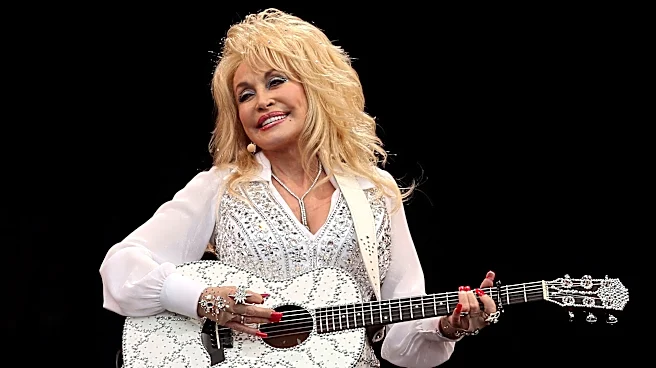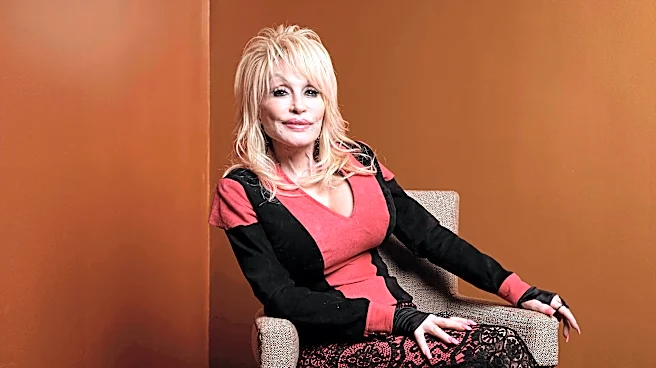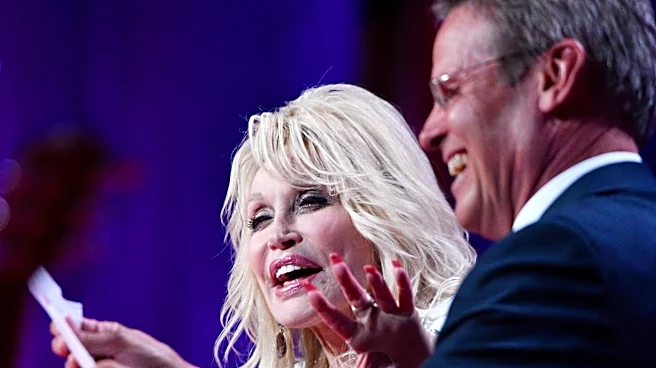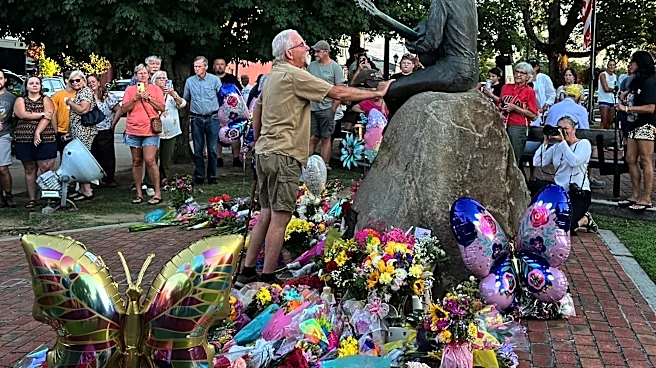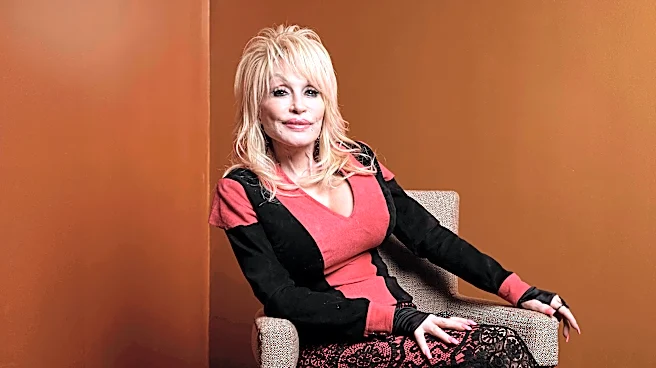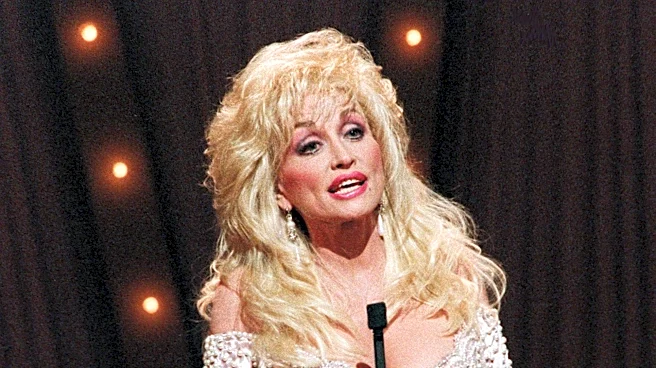


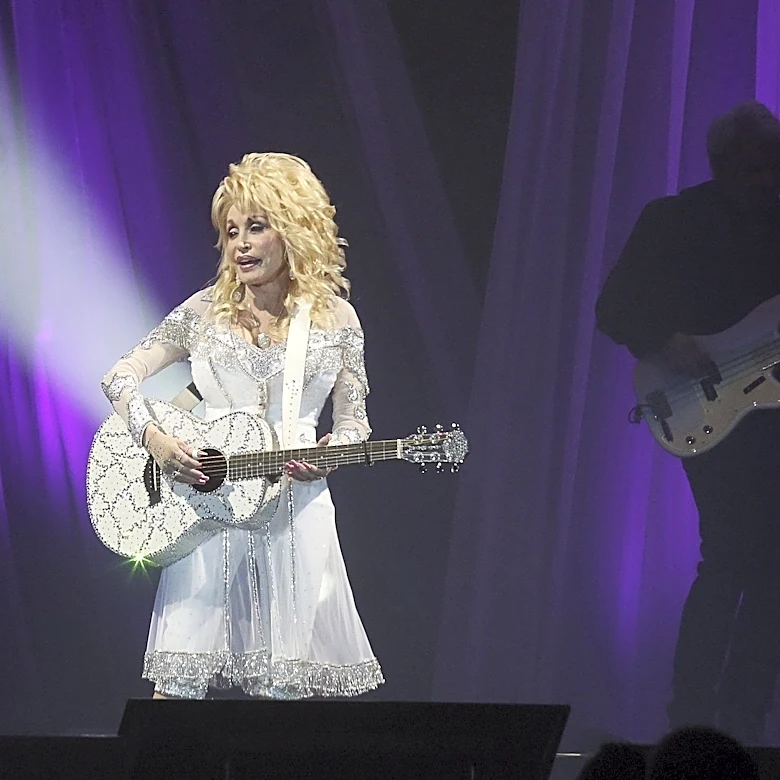

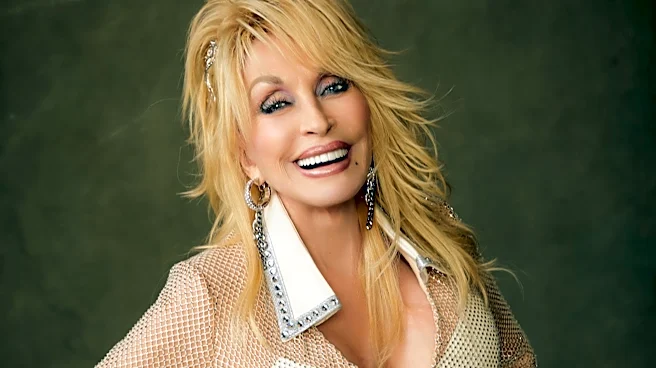
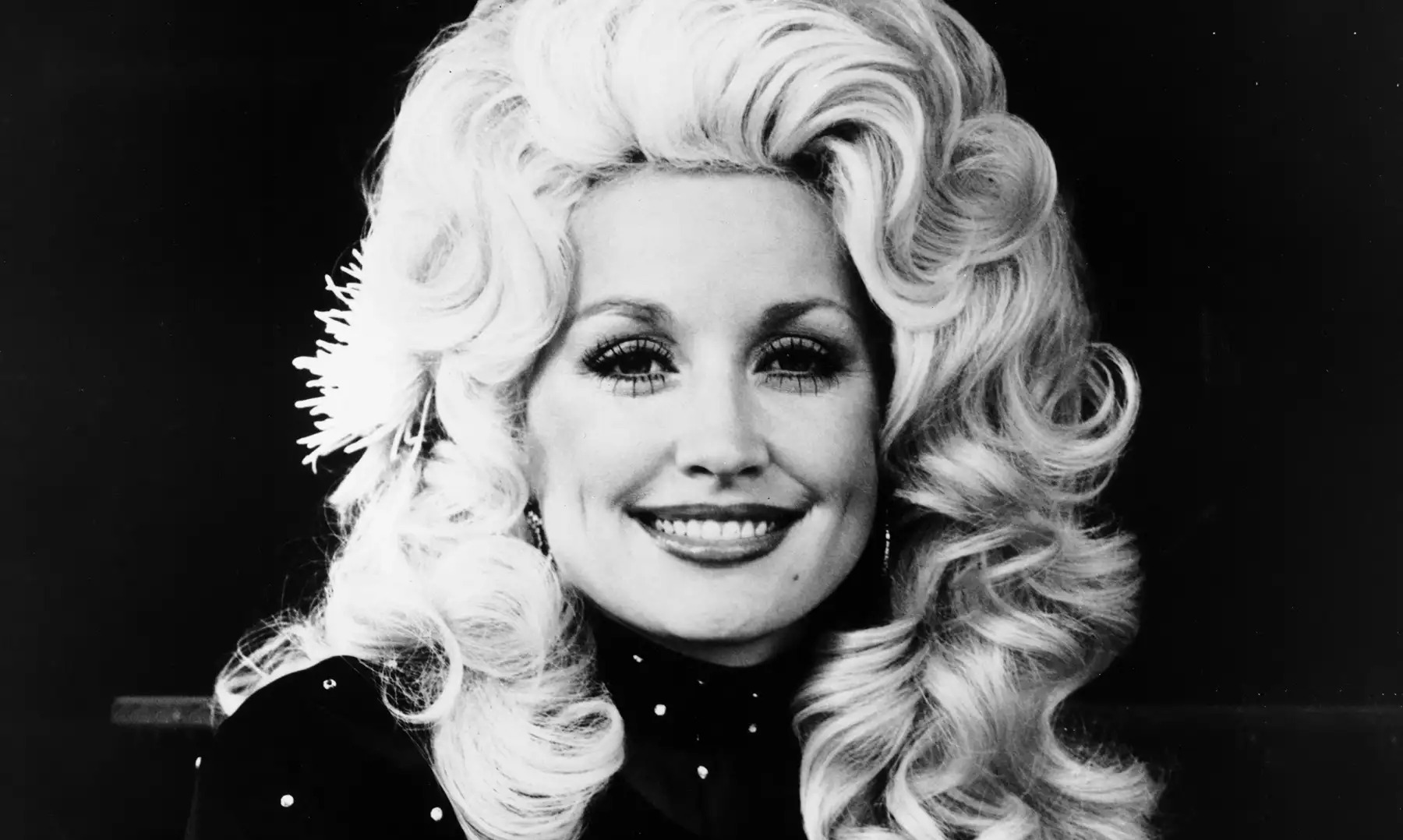
Even before her death on Aug. 25, Dolly Parton occupied a rarefied place in American society. She was the unique celebrity whose popularity crossed racial, socioeconomic and cultural divides. She was as close to a real-life hero as we’ve ever had, and the hours after her passing brought a flood of remembrances.
There were the requisite references to her music, to the songs she wrote and the innate business savvy that enabled her to maintain full financial control over them. But in a seemingly never-ending avalanche of “What Didn’t Dolly Do?” acclaim, most of the tributes focused on her charitable efforts: the millions of dollars donated to children’s hospitals and disease research, the thousands of dollars given to individual families impacted
by the 2016 East Tennessee wildfires, the scholarships for students in Sevier County, where she grew up, and all the other work of her Dollywood Foundation.
Somewhere in the flood was a post from ESPN reporter Michelle Steele, who’d pulled a quote from Robert Ebert’s “Life Itself.” The late film critic described meeting Parton for a half hour while in Dallas for the premiere of “9 to 5,” the 1980 comedy in which Parton starred as a secretary plotting with two female coworkers to seek revenge on a misogynist boss.
Ebert said he was “filled with a strange ethereal grace” while speaking with Parton. In her commentary, Steele added, “We might have lost a literal living angel.

Connecting through generosity
I remember watching “9 to 5” with my mother, years after its release. I sang along to the theme song, which Parton also wrote and performed, fully unaware that its brilliance reflected only a fraction of Parton’s. It wasn’t until moving to Nashville that her songwriting talent and business acumen came into full view. That story about her refusing to let Elvis cut “I Will Always Love You” because she was unwilling to give up half her publishing? Never gets old.
Yet even after covering the country music industry as a journalist, my deepest connection to Parton was through her literacy work. Each of my four kids received the free books distributed through her Imagination Library initiative. Part of me wants to call them miracles, those 60 books that arrived like clockwork, month after month, sometimes in Spanish, often with children of different backgrounds and races smiling on the cover.
But they were no miracle. They were the tangible manifestation of a woman who made a commitment and kept it – who, instead of simply caring about an issue, decided to do something about it.
"I'm kind of addicted to the feeling of giving," Parton told PEOPLE magazine in 2021. "Knowing that I'm doing something good for someone else."

Dolly Parton was human, just like us
In many ways, Parton represents the best of us – or, better, the best of who we could become.
In a world of narcissistic celebrity, she made central her concern for others. And in an industry like country music, cultivated in an incubator of -isms, she built a brand that refused to exclude and was, later, explicitly welcoming.
And so I get the desire, the need, to elevate Parton to otherworldliness, to cast her as saint in a world of sinners. It’s dark out there, y’all, and Parton deigned to shine a light where few others would. But to paint her god-like is to erase her humanness, and from my vantage, Parton’s humanness was her most endearing trait.
After a scathing but honest review of Parton’s Dixie Stampede dinner theater in Pigeon Forge, Parton and her team reworked the insensitive Civil War imagery that, according to Slate.com writer Aisha Harris, was presented as “the Lost Cause of the Confederacy meets Cirque du Soleil.”
“When they said ‘Dixie’ was an offensive word, I thought, ‘Well, I don’t want to offend anybody. This is a business. We’ll just call it ‘The Stampede,’” Parton told Billboard. “As soon as you realize that [something] is a problem, you should fix it. Don’t be a dumbass.”
The “Dixie” debacle reveals Parton's willingness to course correct, to evolve and cast a wider net. That's such a huge part of what made her so great, and why folks from all over the world and all walks of life have been so public in their mourning. Parton didn’t always get it right; by nature of being human, she never could.
Parton set the example we should follow
The deification of Parton, so evident in her death, erases this truth. It also mythologizes and exaggerates, making fiction out of fact. Parton didn’t take her royalties from Houston’s cover of “I Will Always Love You” and “invest in a Black community” or “support Black business.” She got a good deal on a property in a Black neighborhood – what is now the heavily gentrified 12 South – and built her corporate compound. She also constructed a wall around the property, no doubt for safety and privacy purposes.
While this reality contradicts the prevailing narrative, it doesn’t make Parton bad or wrong. It, again, makes her human. The error is in the public inclination to elevate Parton beyond her Earthly achievements. She addressed it herself in that same PEOPLE interview:
"…I don't want to be worshiped, because there's a scripture in my Bible that talks about idol worship. And I see that happening all the time with movie stars and these celebrities. People literally worship them more than they worship God. And I just — I cringe at it sometimes.
“…But if I can set an example, then that's great."
That’s the other thing about this overzealous exaltation: It draws a line of righteousness between us and her, and we are forever on the wrong side. Parton stands alone as the divine while we stare in awe and reverence. We marvel at her accomplishments, they way she touched so many lives and made it look so easy.
But we don't join the work. We don't believe that we are equally worthy. We don't see that we, too, are more than able to meet the needs of hurting people all around.
And that's not what she would've wanted at all.
Andrea Williams is an opinion columnist for The Tennessean and curator of the Black Tennessee Voices initiative. She has an extensive background covering country music, sports, race and society. Email her at adwilliams@tennessean.com or follow her on X (formerly known as Twitter) at @AndreaWillWrite and BlueSky at@andreawillwrite.bsky.social.
This article originally appeared on Nashville Tennessean: Dolly Parton would want us to mourn, not worship, her | Opinion