



Nashville is still a city where both locals and transplants can perform at local bars hoping to make a career in music. But as the city's star has risen, drawing new investment and rising rents, the spaces that nurture local talent are becoming harder to preserve.
Michael Braden and Adam Charney are two of the venue owners still offering opportunities to emerging artists, although they're not focused on country music. Braden and Charney have known each other since they were seven years old. And they both grew up loving jazz.
Although both boys hail from Nashville’s West Meade neighborhood, their respective families from other cities taught them both about longstanding jazz traditions.
Braden’s family, originally from Louisiana, had deep Creole
ties to New Orleans. Charney's family was from New York, where he spent his summers as a child and young man before moving upstate for school.
Passionate musicians, they nonetheless sidelined their love of music seeking stable income from Nashville's tech industry. That all changed in 2017.
“When the IT job we were working went south, we decided to combine our backgrounds and create a jazz club, an authentic New York and New Orleans jazz club,” Charney said. “Mike (Braden) would do the food and bar side, and I would do the music and business side.”
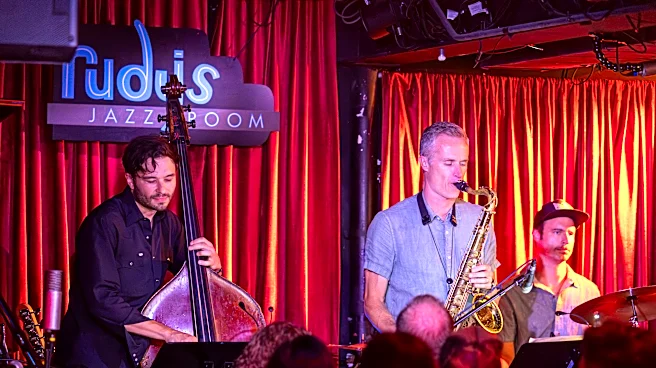
The result was Rudy’s Jazz Room, located in Nashville’s The Gulch neighborhood. While Rudy’s is not country music focused, it has become one of Music City's exemplary independent venues that consistently platform “blue-collar musicians” from across the spectrum of American music.
The musicians who depend on these venues, which typically operate on extremely narrow margins due to surging property taxes, argue that they are a vital part of Music City’s musical future.
“We need independent venues creating opportunities for local musicians and third spaces for the community to build a robust music culture,” said Jamie Kent, a local singer-songwriter and musician advocate who founded The BAM Group, a Nashville-based consulting group. “There’s a lot of private equity owned venues in Nashville, but it’s the independent venues that take more chances. They’re generally open, doing shows six or seven nights a week, and doing three or four sets a night, which is what creates opportunities for local artists.”
In the case of Rudy’s Jazz Room, opening a jazz club helped local musicians express themselves in a way that hadn’t really been available to them before, Charney said.
Jazz musicians who play in bluegrass or country bands wanted a place to explore their own preferred genre.
“I know people who moved to Nashville because of Rudy’s,” Charney said. “Having a place to play and experience this kind of music was one of the factors that made up their minds.”

Nashville's independent music venues face gentrification challenges
Independent venues in the state of Tennessee contribute $153.1 billion in economic output, serve 5 million fans, and support over 23,661 jobs, according to a 2025 study by the National Independent Venue Association. However, roughly 64% of those venues aren't profitable.
It might seem counterintuitive that even more venues continue popping up around town, given that economic challenge, but Kent said that operators are continuing to pour resources into these businesses because the Nashville music community believes in "developing local talent." Bruce Fitzpatrick, who owns and operates The End venue since 1999, agrees. Before Fitzpatrick bought the venue, it was called Elliston Square and Amy's Poolhall, a space that has been showcasing Nashville musical talent for roughly 80 years.
"Booking bands for the first time and watching them get really big and move on to sell out bigger venues," is his favorite part of the job, Fitzpatrick said. Paramore, In Color and Parrotfish are all rock bands that booked some of their earliest shows at The End. Seeing local shows in smaller venues, Fitzpatrick added, helps "build up the local indie rock scene."
Meanwhile, Nashville’s population growth over the past decade has put stress on working class neighborhoods, threatening infrastructure from public parks to roads and transportation. Independent music venues, especially those who don't cater to country music-loving tourists on Broadway, are facing the same pressures. Around 70% of music venue owners don’t own their building, Kent explained. If their lease runs out and the building owner gets an offer from private equity developers, the chance to cash in is understandably tempting.
Olive Scibelli, co-owner and founder of the community space DRKMTTR Collective, which caters to the city’s underground music scene, is no stranger to these challenges.
DRKMTTR started with house parties, moving from house to house and a variety of buildings (including a barbershop on Indiana Avenue). Rent increases and legal checks on DIY spaces made keeping the mission alive difficult.
“Then in 2018, some amazing benefactors bought a building for us to be able to have shows in. The pandemic was a really hard blow, but we’ve been able to pivot," Scibelli said. "We’ve been able to stay afloat.”
The resulting venue, which Scibelli described as being anti-capitalist and anti-corporate, puts on a wide range of underground, punk and rock shows. Many of these are intentionally open to the under-21 crowd.
“If we don’t capture the passion that young people have for art at a young age, who’s going to fill the Bridgestones of tomorrow?” Scibelli asked.
Even with devoted fans and a secure location to play in, keeping the lights on is difficult. Scibelli said that DRKMTTR clears between $300 to $600 on their biggest days, with most money coming from the bar. Rent is $3,850, according to their website.
“I don’t think it's any secret that catering to shareholders is pretty much the antithesis of art and culture,” Scibelli said.
Jazz lovers Charney and Braden agreed that their operation should ultimately prioritize both music and community. Revenue isn't the only way to measure growth. Nashville is home to more than two dozen independent venues and even newcomers to the city are becoming regular participants in music events in these community spaces.
Fitzpatrick said that, despite the economic pressures, he sees his job the same way he did more than 30 years ago.
"You take a chance on bands and see what happens," he said. "It could be punk, metal, hip-hop, indie rock, if people know the band they come."
Likewise, almost a decade after founding Rudy’s Jazz Room, Charney and Braden are planning to open another independent music venue in East Nashville.
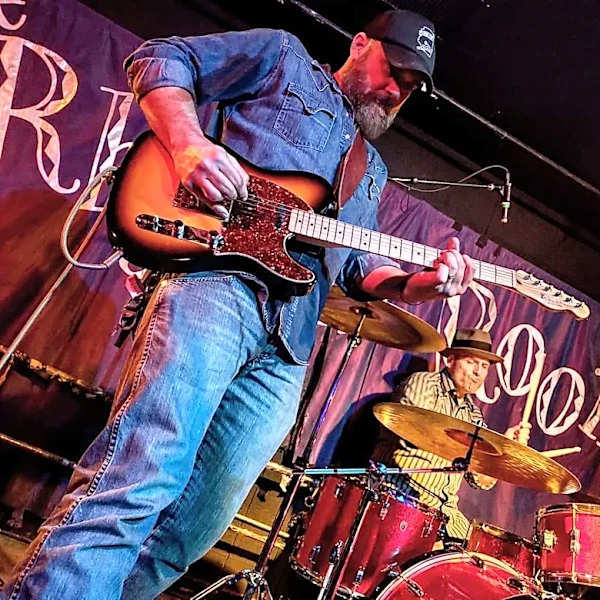
In this venture, which they will call the Amber Cat, they hope to take the concept they’ve perfected with Rudy’s — an intimate setting with unique, curated, and high-quality acts — applying the format to a broader range of musical genres. The plethora of local blues artists and their guitars will help keep Amber Cat's calendar full.
“A big challenge personally is that I get a lot of booking requests from fantastic bands, but they're not quite jazz,” Charney said. “We’ve developed a reputation at Rudy’s, where people trust us to book good acts, even if they’ve never heard of the artist before. I hope to do that again with Amber Cat, but open it up to other genres.”
It’s harder to open a venue in 2026 than it was in 2017, Charney said. Real estate regulations have changed. More red tape means that small businesses need more time and money to stay compliant.
“I believe in these different sides of the music scene,” Charney added. “They allow more artistic creation and the uniqueness that makes Nashville Music City. The city is going to keep growing, but as it does, we need to preserve that.”
This article originally appeared on Nashville Tennessean: Nashville's rock, jazz scenes are growing via independent music venues