






A large planetary alignment will soon grace the pre-dawn sky.
On Aug. 12, six planets will appear aligned from Earth's perspective, giving skywatchers a chance to spot multiple planets during a single event. While some of the planets will be visible to the naked eye, others will require binoculars or a telescope.
The celestial event arrives just days after the peak of a double meteor shower, giving astronomy enthusiasts another reason to look up this summer.
Here's everything to know and how to watch.
When is the next planetary alignment? What planets will be visible
The next planetary alignment will take place on Aug. 12 and will be visible in the morning sky before sunrise.
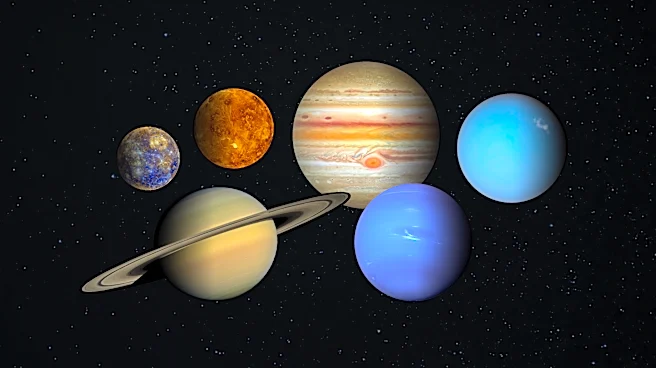
Six planets, including Jupiter, Mercury, Mars, Uranus, Saturn and Neptune, will align, though not all of them will be visible to the naked
eye.
According toStarwalk.com, Mars and Saturn will be the easiest planets to spot. Mercury will appear low on the horizon but may be visible with a clear view of the sky, while Jupiter will sit even lower.
Uranus will require binoculars, and Neptune will only be visible with a telescope.
What is the best time to view the planetary alignment?
The August event will be a morning alignment, so you'll need to head outside before sunrise for the best view. Although the ideal viewing time depends on your location, local sunrise time and how high Mercury rises before the sky begins to brighten.
In Nashville, sunrise on Aug. 12 is expected shortly after 6 a.m., making the best viewing window roughly 5:15 a.m. to 5:45 a.m. local time, according totimeanddate.com.
During that period, the sky should still be dark enough to spot most of the planets while Mercury and Jupiter remain above the eastern horizon.
Are binoculars, special equipment required to see the planetary alignment?
The easiest planets to spot without any equipment will be Mars and Saturn.
Mercury and Jupiter may also be visible, though they will be much lower on the horizon and harder to see. Uranus will require binoculars, while Neptune will only be visible through a telescope.
What will the 2026 planetary alignment look like?
Before sunrise on Aug. 12, six planets will be visible across the sky.
According to Star Walk, Saturn and Neptune will rise first, followed by Uranus and Mars. Closer to dawn, Mercury and Jupiter will emerge low above the eastern horizon, completing the lineup.
Despite the term "alignment," the planets will not appear in a perfectly straight line.
Instead, they will be spread across a wide arc of sky, giving skywatchers a chance to trace the lineup from one planet to the next. That's why these events are often referred to as a "planet parade."
The planets also won't be physically lined up in space. Each planet will be in a different position along its orbit around the sun and at a different distance from Earth.
The alignment is a matter of perspective: from our vantage point, the planets appear along the same general path across the sky, known as the ecliptic, because they all orbit the sun on roughly the same plane.
How to view the planetary alignment
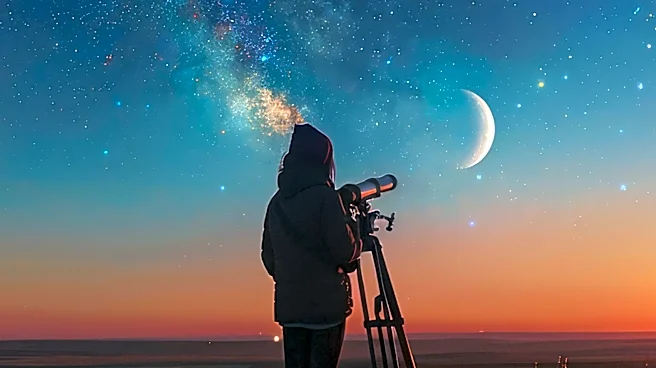
Because the planets will be spread across a large portion of the sky, it is recommended to choose a location with an unobstructed view, especially toward the eastern horizon.
Mercury and Jupiter will appear very low in the sky shortly before sunrise, and the window to see them will be brief.
Trees, buildings, hills or haze near the horizon could make the two planets difficult to spot.
Open fields, hilltops, coastlines, rooftops and balconies with clear eastern views are among the best places to watch the alignment.
Planet parade vs planetary alignment
"Planet parade" is not an official astronomical term and is often used interchangeably with "planetary alignment."
The phrase generally refers to an event in which several planets are visible in the sky at the same time, allowing sky watchers to spot multiple planets at once.
Planetary alignments are often categorized by the number of planets involved. The Aug. 12 event, which features six planets, is considered a large planetary alignment.
- Mini planetary alignment – 3 planets
- Small planetary alignment – 4 planets
- Large planetary alignment – 5 or 6 planets
- Great (full) planetary alignment – all Solar System planets (and sometimes Pluto)
Other planetary alignments in 2026
The final planetary alignment of 2026 will occur on Nov. 14, when Mercury, Venus, Mars and Jupiter appear together in the sky.
Diana Leyva covers trending news and service journalism for The Tennessean. Contact her at Dleyva@gannett.com.
This article originally appeared on Nashville Tennessean: Planetary alignment 2026: Will six planets be visible in Nashville this August?