






Drawn from “Tell the Kids I Love Them: A Memoir,” by Jeremy Redmon, published Sept. 15 by the University of South Carolina Press. Excerpted with permission.
Please take care as you read, as this excerpt explores suicide and other forms of trauma. If you need help, call or text the 988 Suicide and Crisis Lifeline. September is Suicide Prevention Awareness Month.
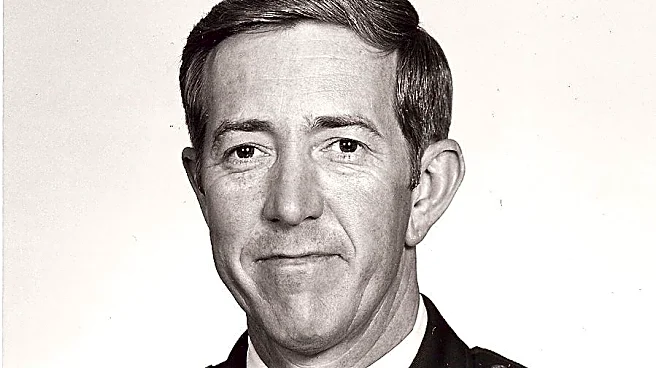
Whenever I reflect on my father, my focus inevitably shifts to our final car ride together. I was 14. Much of my memory of that September morning in 1986 is lost to time, so I must recreate parts of it in my imagination.
I can picture us sitting side by side in his gray Oldsmobile Starfire, riding through Riverside, Ohio. I can see him preparing to drop me off at Walter E. Stebbins High
School. But I cannot visualize what I should have noticed.
There must have been important clues. If he was struggling with symptoms from his multiple sclerosis, I did not notice. If he tried to send me a signal as he drove me to school, I missed it. If he patted me on the knee, as he occasionally did to show he loved me, I do not remember it. If there was something different about his expression as I stepped out of his car, it did not draw my attention.
Nothing he did stood out to me. Nothing he said was unusual. Our goodbye was unremarkable. This is probably what he intended. He could have rehearsed his impassivity so that I would not suspect anything. Beneath the surface, he could have been battling against his urges to tell me what was really going on. He could have been reminding himself to keep his mouth shut so that I would not open mine.
I climbed out of his car and headed to my classes that day, oblivious to what he had planned.
After the final bell rang, I returned home. But he did not. My mother called his office at Wright-Patterson Air Force Base. He worked there as an electrical engineer for a military field training detachment. My mother learned he had left his office at noon. Frantic, she drove around looking for him.
I wished my older brother was there to help us. Calm and sensible, he would have known what to do. But he was away, studying at a university in Northern Virginia and juggling a few jobs.
My mother ultimately called the police. A lone uniformed officer arrived at our door.
I was scared, so I locked myself in our bathroom. I stayed there for a while, not knowing what to do, feeling helpless. And then I bolted out of our drab apartment complex, away from my pregnant mother, my infant brother and that policeman.
Darting away was instinctual. The rhythm of my run and the long grass licking at my ankles kept my mind off what was happening. I didn’t know where I was headed. I just knew that I wanted to escape what was happening. But my track looped around our apartment community and kept cruelly returning me to my front door. A circle with no beginning and no ending. My path repeatedly led back to what I was trying to escape. Back to the fact of my father’s disappearance. Back to the misery and mystery of what had happened to him. I must have been warming up for the decades-long marathon ahead, the constant seeking driven by curiosity and ache.
My long run had begun.

When I finally stopped running and returned home, the cop was gone. But more grim-faced policemen showed up at our one-bedroom apartment early the next morning. They were accompanied by a priest. I could read it in their faces – they did not want to be there. I watched them swallow hard. I felt for them as they stood on our front porch and nervously peered inside our modest home. What were they about to find? How were this mother and her son going to react? Could they as officers handle what they were about to see and hear? They must have been bracing for what was about to happen and how it could echo in their own lives for years.
Electric with rage, my mother screamed when she saw the officers and the priest framed in our doorway. The cry that shot out of her was threaded with anger and grief. Haunting, the sound still reverberates in my memories today. My mother hoisted one of our dining room chairs, readying to throw it.
I retreated into my parents’ bedroom and instinctively took my brother from his crib. I held him tightly against my chest.
A stranger in a crisp white dress shirt followed me, watching me hawklike. She must have been a social worker. I could see the worry in her eyes, which made me worry. This must not have been her first time witnessing something like this. I could tell she was experienced and that she knew what was happening to my family. And what was about to happen next. And what would happen for years afterward. Perhaps she could imagine the contours of the long and winding path ahead of me. Maybe she could picture me sprinting along that circuitous route to the limits of her imagination, where I disappear into a dreamlike mist.
She took my brother from my arms and told me it was okay to cry. Initially I resisted. This was my first experience like this. Was I supposed to cry? If so, why? And in what way? Whimper? Weep? Wail? I did not want her to see me do whatever I was supposed to do, so I turned my back to her. As a teenager, I was confused and embarrassed. A moment passed before something independent of my will caused me to react. It triggered what felt like an earthquake inside me. I could sense the stranger watching as the shock pulsed through me, as seismic sobs escaped my control, as my shoulders shook.
The police had come to deliver the news that my father was dead.

Magical thinking
My memories of the days that followed are blurry and full of gaps. I imagine that this is medicinal – that my mind has fragmented these memories and has hidden others to protect me.
Still, some scenes from that time are crystal clear. I can see myself standing next to my father’s freshly dug grave at Arlington National Cemetery. In that moment, I am waiting on a grassy hill that gently rises in sight of the Pentagon, where he once worked. I can see the hearse pull up on Patton Drive. My mother and I watch as uniformed service members wearing white gloves assemble next to it. When they bring out my father’s closed casket – a bullet-colored coffin long enough to hold his six-foot-one-inch frame – I cry so hard that I struggle to breathe.
I weep again when they present me with the tightly folded United States flag that covered his casket. Meticulously shaped into a triangle, the flag feels too big and heavy in my arms.

The shots from the ceremonial riflemen startle me. They sound like exclamation points at the end of an urgent message from the universe: Your father is gone! I need to hear that message and remember it because there will be many times after my father’s funeral when I will imagine he is alive and I will one day see him walk down the street. I will trick myself into believing my father ran away and started a new life. The mind is powerful enough to fool itself in this way. In my fantasies, my father finds a new home in another state and assumes a new identity. If I can keep believing this is true, then maybe it will come true. He is somewhere out there, still alive. I just need to find him.
My heart races when I glance at crowds and spot strangers who resemble him. Men who tilt their heads like my father did when he was lost in thought. Tall men with long faces and military-style haircuts. Men wearing my father’s standard outfit: brown loafers, khaki pants and a light blue button-down dress shirt.
I often think of what I will say to my father if I am able to track him down: You are the one man who is supposed to love me the most in this world. What did I do to make you leave? How could you have hurt Mom and me so badly? What about my three brothers – your sons?
When I sleep, I have free rein to indulge in such fantasies about my father. He occasionally appears in my dreams, acting as if nothing happened. I feel relieved in those moments, as if I am finally able to take a full breath. That feeling is like the peacefulness I experience in dreams in which I am able to levitate or even fly. Gravity, physics, mortality – all such truths are untrue in my dreams.
I also experience puzzling dreams about living in spacious homes full of furnished rooms I have never visited before. Invariably, these mysterious houses feature secret passageways or basements or attics that go on forever. I vainly search them for something or someone I can never find. Sometimes, those dreams are replaced by vivid and confusing nightmares. Fistfights. Wars. Apocalypses in which massive ocean waves threaten to demolish skyscrapers.
Years after my father’s funeral, I experienced nightmares about an invisible evil being lurking behind the walls in my home. I could never see this specter. I just knew it was there somewhere, hunting me. Or waiting for me to hunt it.
Today, whenever I accomplish something important, I wonder if my father would have been proud. Whenever I make a mistake, I wonder what he had learned about the world while he was in it. Whenever I struggle with an important decision, I wonder who he was and, by extension, who I am. I dwell on the one question that still propels me. It is the question that holds the answers to many of my other questions: Why did he kill himself?

My father's last words
My father checked into a hotel so he could leave this world. He found a place just seven miles from our apartment near Dayton, Ohio. Police found him in his hotel bed with his Walkman. I wish I knew which songs he listened to as he overdosed on his medication. His autopsy shows he had antidepressants, painkillers and sedatives in his system.
He left a handwritten suicide note in his Oldsmobile. Feeling betrayed and abandoned by him, I burned the note not long after he died, so I don’t remember everything it said or the exact wording. But I know the gist of it. Addressed to my mother, it ended with this: “Tell the kids I love them.”
I recall it was written in present tense, as if he would continue to love me and my brothers after his death, as if saying he loved us meant we would carry that message for the rest of our lives because there would be no other words from him. He could not undo what he had written. It was permanent.
Tell the kids I love them. Six words. One syllable each. Simple. Concise. Final. At least, that message was final for my father. It is not final for me. I have too many questions, many of them unanswerable. I am left with too many puzzles, most of them unsolvable. I have thought of too many things I want to say to him, all of which he will never hear.

I cannot resolve the unresolvable. But I can figuratively turn it into something else. And by doing that, perhaps I can make new meaning from it for myself and others. I want something good to come from something that has been so painful.
This memoir is my way of honoring our nation’s military veterans, including my father. It is my way of honoring their families. It is my way of honoring hardworking single parents like my mother. It is my way of attempting to commiserate with anyone who has experienced the loss of loved ones diagnosed with multiple sclerosis and other debilitating diseases. It is also my way of attempting to destigmatize discussions about mental health, addiction and suicide. Above all, I want this memoir to be a source of hope for other people, especially children who have lost parents to suicide. I want them to know they are not alone.
This book is also a transformation of my father’s suicide note into a collection of tributes:
A eulogy for my father.
An homage for my mother.
Notes of admiration for my brothers.
An ode to my wife.
An expression of love for my children.
This memoir celebrates the things that saved my life, helped me heal and made me a better human being: writing, reading, poetry, journalism, lacrosse, teaching and gardening.
It is part of my long run, a marathon that features plenty of pitfalls, pratfalls and close calls. It is part of my search for meaning. It is part of my exhaustive race for reason, for discovery, for answers.
It is also a reply to my father’s suicide note. In it, I am finally writing everything I never got to say to him before he took his own life. I am telling him about what he has missed and what I have gained while he has been gone, about my hard-won lessons, about the lives of those we have lost, about the lingering costs, about fatherhood, about war, about terrorism, about heroism, about self-sacrifice, about his growing number of grandchildren, about his legacy. And, of course, I have a lot more to say about all of this than six words.
Resources
The American Foundation for Suicide Prevention is a nonprofit educational and advocacy organization that funds suicide prevention research: www.afsp.org
Suicide Awareness Voices of Education is a nonprofit educational and advocacy organization that supports those who have lost loved ones to suicide: www.save.org
- If you have ever thought about taking your own life, make a safety plan.
- Survivors who have experienced suicidal thoughts shared their coping techniques with USA TODAY.
- Here is what suicide prevention experts recommend for helping people who are suicidal.
- This is what actually happens when you call the Suicide & Crisis Lifeline.
- When people die by suicide, this is how their close friends and family grieve.
Stories of Hope
- Stepping back from the ledge
- Suicide never entered his mind. Then 9/11 happened.
- She worked in suicide prevention. Then one day she had to save herself.
This excerpt features reporting and writing from the following essay by the author, "Tell the Kids I Love Them,” Oxford American, 2022.
© 2026 Jeremy Redmon. Published by University of South Carolina Press.
Order copies of “Tell the Kids I Love Them: A Memoir” here.
Jeremy Redmon is the nation enterprise editor for USA TODAY. He also teaches for the University of Missouri School of Journalism.

This article originally appeared on Nashville Tennessean: My father was missing. That's when my odyssey began.