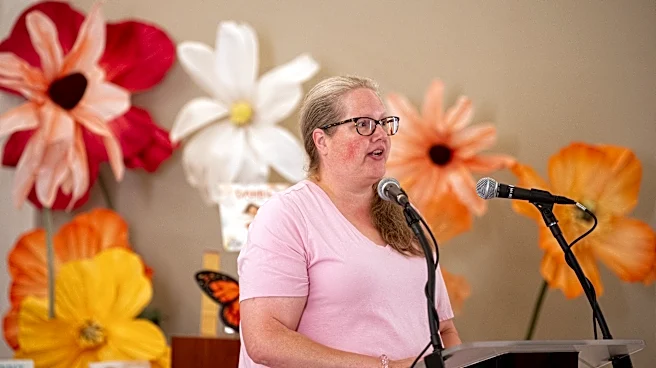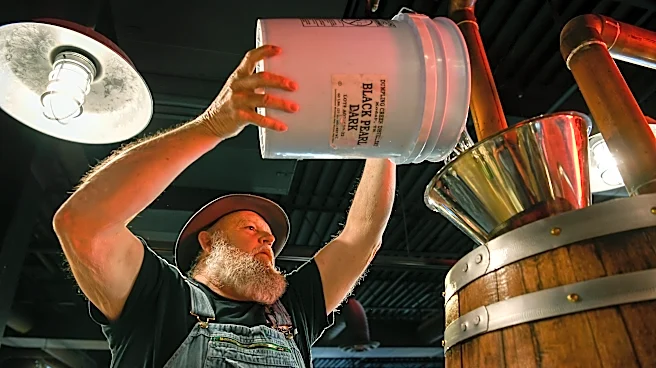





For more than 150 years, Americans have been barred from legally distilling spirits at home, but U.S. Rep. Diana Harshbarger, R-TN, recently introduced legislation that would overturn the federal prohibition and legalize home distillation.
Harshbarger introduced the "Freedom to Home Distill Act" to Congress on Aug. 27, citing existing laws surrounding the homebrewing of wine and beer, as well as Tennessee and Appalachia's deep distilling roots
.Currently, it is legal to brew only wine and beer at home for personal consumption, but the distilling of liquor is a federal offense and has been since 1868, predating the U.S.'s prohibition by more than 50 years, according to Reuters.
Harshbarger's bill, which is co-sponsored by U.S. Rep. Tim Burchett,
R-TN, and U.S. Rep. Riley Moore, R-WV, seeks to restore a piece of Appalachian culture that was lost when the law was enacted following the Civil War during the Reconstruction era.
“It makes no sense that Americans can legally make beer and wine at home for personal consumption, but not a small batch of spirits,” said Harshbarger in a press release shared with The Tennessean.
How Harshbarger's bill would allow home distilling?
The "Freedom to Home Distill Act" will allow adults age 21 and older to distill their own limited and non-commercial spirits for personal and family use. The law is heavily modeled on the preexisting beer and wine brewing law.
If passed, Harshbarger's bill will allow and implement the following:
- Eliminate federal excise tax on distilled spirits produced at a qualifying home.
- An individual can distill up to 10 proof gallons per year for single-adult households and up to 20 proof gallons per year for households with two or more adults age 21 or older.
- Prohibit the commercial sale of liquor produced at a qualifying home.
Harshbarger's bill only applies to federal law, meaning states retain the authority to regulate or prohibit home distillation.
Why distilling liquor at home was banned
The 1868 ban on home spirit distilling was part of a law passed during the Reconstruction era to combat the widespread evasion of the federal tax on liquor, Reuters reported.
Since 1868, the law has not changed substantially, with violators being subject to up to five years in prison and a $10,000 fine.
According to the Internal Revenue Code of 1986, the law Harshbarger's bill seeks to amend, the following are violations of the law:
- Distilling liquor inside your house.
- Distilling liquor in a garage attached to your house.
- Operating a still in a backyard shed connected to a residence.
- Running a still anywhere on residential property that is considered part of the home's enclosure.
- Establishing an unlicensed distilled spirits plant.
What does federal law say about homebrewing beer and wine?
In 1978, Congress updated the Internal Revenue Code, making it legal for individuals to brew wine and beer in their home tax-free for personal use.
Under the law, adults can do the following:
- Brew wine and beer at home for personal and family use without paying federal taxes.
- Brew 100 gallons a year in a household with one adult.
- Brew 200 gallons per year in a household with two or more adults.
None of the product can be sold, but it can be removed from the home for competitions, exhibitions, tastings, or organized events.
What have Harshbarger and her co-sponsors said about the bill?
"Distilling has deep roots in Tennessee and across Appalachia, tied to self-reliance and craftsmanship that go back generations," said Harshbarger in the press release shared with The Tennessean.
"It's long past time we modernize this outdated federal law. My bill restores an important piece of that tradition and puts personal responsibility back where it belongs: with the American people.”
“Nationwide prohibition ended nearly a century ago, yet the federal government continues to regulate domestic distilling operations. There is no reason to keep antiquated and inefficient laws on the books, nor is there any reason that this should not be state-level issue," added Burchett.
"West Virginia has a proud tradition of craftsmanship, independence, and yes, moonshining. The federal government shouldn’t stand in the way of responsible adults distilling spirits for personal use in their own homes. The Freedom to Home Distill Act is a commonsense bill that protects Americans’ individual liberties,” said Moore.
"Moonshiners" reality TV star and native Tennessean Eric “Digger” Manes, also advocates for the bill. "Given that multiple states have legalized marijuana, it appears logical that we should be permitted to engage in our hobby without facing repercussions," said Manes.
"Congresswoman Harshbarger has dedicated three years of research and effort to the development of this bill solely because one of her constituents inquired about her interest in becoming a hero to four million citizens. The moonshine community cannot express its gratitude enough to Representative Diana Harshbarger," he continued.
Following the introduction of the bill, Harshbarger took to X to announce the news. "Who doesn't love a little moonshine?" she wrote.
"When my constituents, @MoonshinersTV stars Digger Manes & Mark Ramsey, approached me about ending the 158-year-old federal ban on home distilling, I knew it was a fight worth taking on!"
Peter Burditt covers trending news and service journalism for The Tennessean. Contact him at PBurditt@nashvill.gannett.com
This article originally appeared on Nashville Tennessean: Tennessee lawmaker wants to end 158-year ban on home distilling in the US