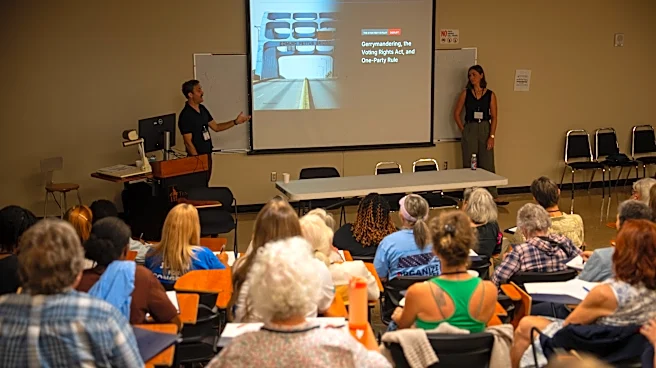




On an early Saturday morning in Nashville, it was standing room only inside the classrooms of Tennessee’s only public historically Black university. But those inside weren’t students, and the lessons being shared weren’t accredited.
On Aug. 29, the topic was voter suppression.
“We’re worried about voter intimidation, misinformation and confusion caused by redistricting,” said Anna Dorman, counsel and clinical coordinator with Protect Democracy, a nonpartisan anti-authoritarianism group, as she led a session. “A lot of historical practice prepared for third parties doing that sort of action, but this year we’re prepared for threats from the actual federal government.”
Behind her in the darkened room was a projector showing a flow chart with the words
“Deceive, Disrupt, Deny” — actions the organization is concerned will be enacted by the federal government during the upcoming midterm elections.
The focused silence in the audience was only occasionally broken by hums of agreement or the flipping of pages as listeners took rapid notes.
The class was part of the annual Democracy Summit hosted by Organize Tennessee, a voter advocacy group. While the sessions have previously been focused on voter empowerment and engagement, this year, the topics have taken on a new urgency.

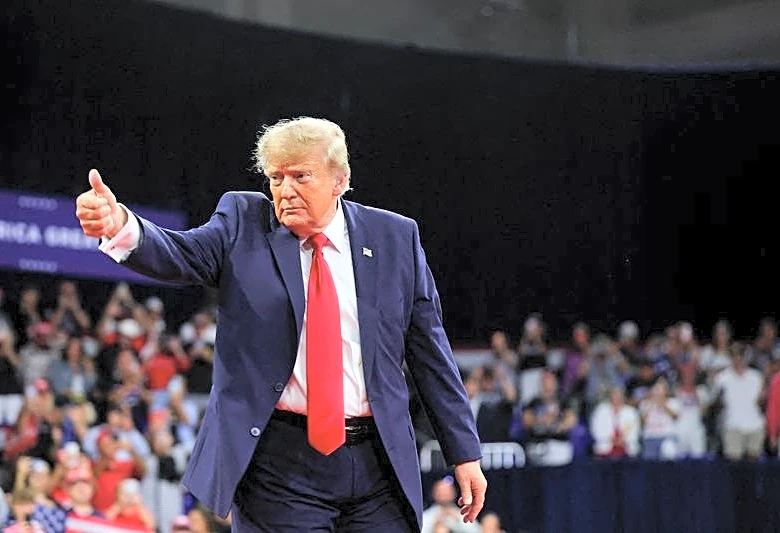
Voting rights organizations across the country are lining up for a fight ahead of the Nov. 3 election, which is anticipated to be a referendum on the second Trump administration amid record low approval ratings.
Groups like Protect Democracy are ringing the alarm bell after months of efforts by the Trump administration related to election administration, like the use of a federal immigration database to verify voter eligibility,requests for state data on voters and changes to mail-in voting systems that were blocked by the Supreme Court in September.
Trump says his efforts are to combat voter fraud. Voter rights groups say the data requests and changes violate privacy laws and separation of federal and state powers.
The urgency for voter fairness is more layered in South, however, following the weakening of the Voting Rights Act, which led to multiple states — including Tennessee — redistricting in the spring.
The Voting Rights Act of 1965 outlawed discriminatory voting practices, largely targeting Southern states that adopted policies to discourage Black voters after the Civil War. The passage of the law was seen as a crown jewel of the Civil Rights Movement.
Tennessee legislators passed in May a new congressional map that fractured the only Black-majority district in the state in an effort to increase the number of Republicans in Congress. The move faced several unsuccessful lawsuits and spurred the state's voter advocacy groups to redouble their efforts ahead of the midterm elections.
“When we talk about ‘disrupt,’ that’s already happened here,” Dorman said.
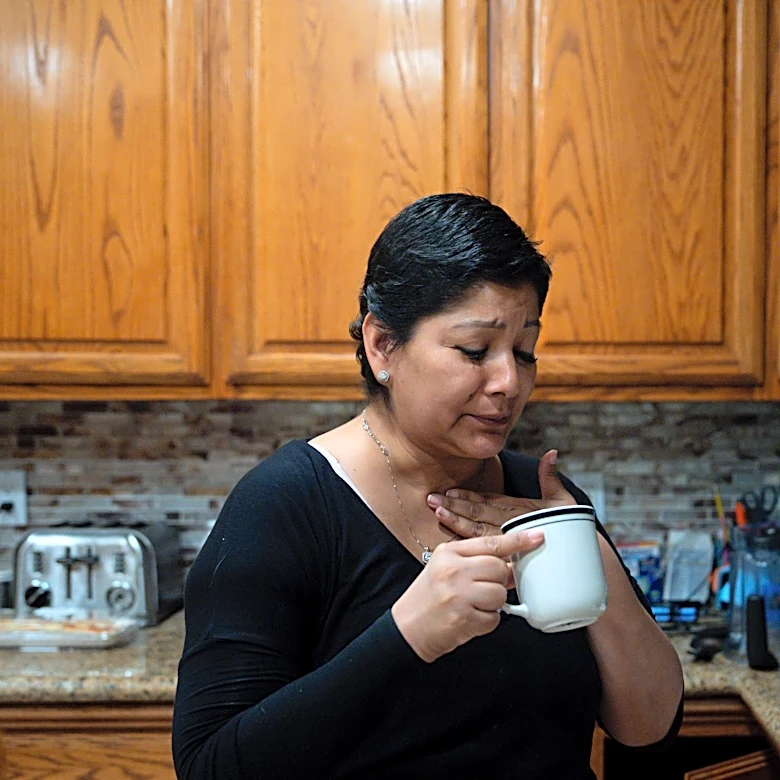
Cicely Sharp, a Memphis resident helping direct summit participants to classrooms, previously volunteered as a poll observer in her free time. But after her district was splintered, she decided she needed to do more.
“I had (the livestream) up, and I was watching the vote,” she said. “It took not even a whole five minutes for them to change the law and redraw the districts. It was surreal. But right after that, it was like, ‘OK, we have to get to work.’”
Sharp applied for an open position as a Shelby County coordinator with Organize Tennessee, allowing her to work across the state representing the interests of her community that she said felt ignored in the explosive May vote.

She said the reaction started as anger but has moved to determination.
“Initially, there was confusion and anger,” she said. “But that has tempered down a bit as people recognize the seriousness of the moment and (get) ready to show up.”
Advocacy groups take notice
On Sept. 18, it was nearly 100 degrees in the parking lot outside the Salahadeen Center off Nolensville Pike in Nashville as Iman Khoshnaw waited for a crowd of about 300 men to emerge from Friday prayers. The late-summer sun beat down on her umbrella as she laid out stacks of stickers and flyers with information about voter registration and renter rights.
“Salam alaikum!” she said, greeting worshippers as they emerged from the service. “Are you registered to vote?”
Khoshnaw works with the American Muslim Advisory Council, a national Muslim advocacy group based in Nashville that mobilized voter registration drives across Tennessee and the nation as part of National Muslim Voter Registration Day.
“Our main goal is to try to get our community as involved as possible because at the end of the day, our voice is our vote, right?” Khoshnaw said.
Adman Niazi, a graduate of AMAC’s Youth Leadership Program and a freshman at Belmont, helped Khoshnaw with the outreach.
They both wore T-shirts that read “No ICE. No war. Free Palestine.” — three key issues they said resonate with voters in Nashville’s Muslim community, of which there are about 50,000.
“That’s a pretty big part of the voting population,” Khoshnaw said. “So we would love our representatives, of course, to represent us.”

Just three miles from the National Civil Rights Museum, hope for better representation lives on
Back in Sharpe’s home county of Memphis in late August, Pastor J. Lawrence Turner brought worshippers to their feet at Mississippi Boulevard Christian Church when he urged them to “get off their blessed assurance and vote.”
“The time is now. The need is urgent. The opposition is great,” Turner said during interludes of a choir swaying behind him. “But greater is 'He' who lives on the inside of us than 'He' that's in the world."
The city, known for its role in the Civil Rights Movement as well as the site of Martin Luther King Jr.'s final moments, now also marks the epicenter of the fracturing caused by state redistricting.

Turner said he could not remember another time when so many people in his community were engaged in politics.
"People feel disregarded and disrespected," he said. "It was a very clear attempt to break up, not just Democratic power, but Black political power."
Churchgoers that Sunday in September wore T-shirts emblazoned with "Voting is my Black job."
"Yeah, the deck has been stacked against us," Turner said. "But if we really do the work ... we can still choose who represents us."
Angele Latham’s role covering First Amendment issues at The Tennessean is made possible by a collaboration among Freedom Forum, Journalism Funding Partners and the USA TODAY Network. Freedom Forum does not provide editorial input. Reach Angele Latham at alatham@gannett.com, on X at @angele_latham and on TikTok at @angelelatham.
Annie Goldman, a reporter at The Commercial Appeal, and Vivian Jones, a reporter at The Tennessean, contributed to this report.
This article originally appeared on Nashville Tennessean: Redistricting fuels new push to boost turnout across Tennessee