




If you pay a visit to the Exotic Avian Sanctuary of Tennessee in Hermitage, brace yourself for quite a racket.
That’s likely to include everything from screams and shrieks to the piercing refrain of what sounds suspiciously like a car alarm.
There’s a balance to the chaos, though. If you’re lucky, you may also hear an “I love you” from Sophie the umbrella cockatoo, or the familiar tune to “Old MacDonald Had a Farm” sung by Andy the yellow-crowned parrot.
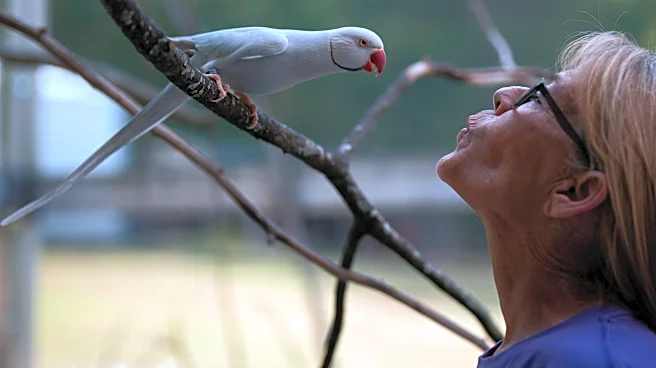
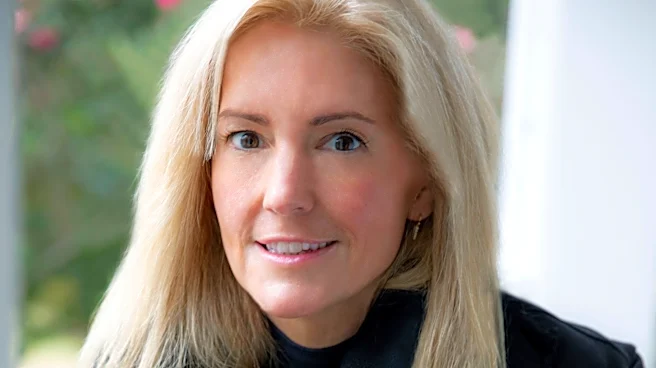
With about 130 birds living at the sanctuary today, noise is aplenty. But Kim Hannah, the nonprofit’s founder and executive director, is unfazed. In fact, she spends so much time around the birds that she can call out each one by name just from the sounds they make.
Hannah’s kept the same mission
since she first incorporated the nonprofit welfare organization in 2012: give a safe haven to parrots whose owners can no longer care for them and educate the public about exactly how much work it takes to be a responsible bird owner.
It’s been a long road to get here, starting inside Hannah’s former 1,900-square-foot suburban home. By the time she was gearing up to move to the current property on Old Lebanon Dirt Road, on a 5-acre plot straddling the Wilson County line, she was sharing that living space with nearly 40 exotic birds.

Now, there’s much more room to go around. The main sanctuary building is about 2,000 square feet on its own, and a standalone adoption center showcasing the birds who are ready to find their new homes has been online for about a year and a half. There, Hannah and a team of 30 volunteers work dutifully to meet the nonprofit’s mission.
“I mean, the bottom line is they don’t belong in captivity, period,” Hannah said. “But they’re here, and we have to do the best that we can for them. And we have to make sure the people that we reach, or that we adopt to, are educated.”
How the nonprofit handles adoptions
More space brought with it the capacity to care for a much larger roster of birds. That came in handy two years ago, when Hannah rescued 40 birds from a hoarding case.
Sophie the umbrella cockatoo, now a resident of the adoption center, was one of them. When Hannah enters, Sophie clambers about on a quilt-covered couch in the center of the room, looking to get in on the action.
Sophie’s been adopted from the sanctuary once before, but life changes for her new owners resulted in her returning to Hannah about a month ago. She’s awaiting adoption once again.

Being able to return a bird back to the sanctuary if things don’t work out is part of the adoption contract, Hannah said. In part, that’s because there are plenty of unknown factors someone who’s looking to adopt might not realize they need to be aware of.
“People don’t realize they’re loud, they’re messy, they bite, they’re destructive,” Hannah said. “And so we try to educate, you know, to let people know what it’s really like, that you’ve got to take the good with the bad.”
Exotic birds can be expensive to care for, too. A bird like Sophie could live 60 to 80 years, which means a lot of money spent on supporting her diet, bedding and toys for enrichment.
But adoptions are only part of the story. The nonprofit also strikes arrangements with former full-time bird owners for their pets to move to the sanctuary through its lifetime care program.
Burt and Gigi the Triton cockatoos, for example, belong to a gentleman with Parkinson’s disease who lost the ability to look after them as the disease progressed. Now, he’s able to visit them any time at the sanctuary, where their day-to-day care isn’t a question.
“A lot of them have really sad stories,” Hannah said. “They came from really bad places. But a lot of them just came from people that aged out going into nursing homes, or they got sick. They needed a place for their birds to go.”
A colorful cast of characters
Like Sophie, each little bird comes with a big personality. And, of course, just about everybody’s got something to say.
Samba the 25-year-old Moluccan cockatoo, for example, elicits a general warning from Hannah whenever new guests enter the main aviary space; Samba's a bit of a bouncer, with a habit of hanging on the outside of bird cages and nipping at unsuspecting passersby. Andy the 45-year-old yellow-crowned parrot is usually following not far behind. Samba’s his “girlfriend.”
The sanctuary’s African grey parrots will saunter across the floor when people are around, sometimes chasing shoes and turning their necks at a 90-degree angle to gaze up at the much taller humans around them.
Chili the military macaw dances from side to side when new people are around, which Hannah said could be a sign of either nervousness or excitement.

And Iggy the cockatiel, one of the roughly 60 cockatiels and budgies that live at the sanctuary, loves to be scratched behind his head, almost like a cat. He’s popular with the educational tour groups that sometimes come to visit.
Iggy’s also a good ambassador for a type of exotic bird that’s easy to find at most pet stores, but who often end up turning into rescue cases. Hannah said about half of the budgies and cockatiels in the sanctuary were rescued outside. At the sanctuary they all stick together, sometimes shoulder to shoulder, inside an enclosure filled with perches and a running stream, to better mimic how they might be found in nature.
“In the wild, budgies flock in groups of hundreds and thousands,” Hannah said. “It makes me incredibly sad when I see a budgie alone in a cage, just a foot by foot. I mean, there’s nothing sadder than that.”
How to get involved
It all makes for equally rewarding and stressful work, Hannah said. Volunteers come to help every Monday, Wednesday and Friday, and a board of directors helps guide the nonprofit’s work, but the rest of the time it’s just Hannah running the show.
“It’s not just the birds, it’s the phone calls and the emails,” Hannah said. “I mean, it’s nonstop. I have to say no to people almost every day because I just don’t have the room.”
The logistics get especially tricky when Hannah looks at adding something new, like a standalone quarantine space that’s currently in the works. The idea is for that to be where birds go first when they arrive at the sanctuary, so they can be vetted and Hannah can decide whether they’re a better fit as a permanent resident or a potential adoptee.
The nonprofit’s currently seeking donations to raise the final $5,000 or so it’ll take to finish outfitting that new space. And the search for volunteers is always ongoing, with the ideal candidate able to commit to at least one day a week of cleaning aviaries and socializing with their feathered occupants.

“It’s hard work,” Hannah said. “You’re bending and stooping. Do you get to play with the birds while you’re doing it? Sure, but it’s not like a one and done.”
More information about the Exotic Avian Sanctuary of Tennessee’s mission, as well as how to donate and volunteer, is available at tnavianrescue.org.
Austin Hornbostel is the Metro reporter for The Tennessean. Have a question about local government you want an answer to? Reach him at ahornbostel@tennessean.com.
Get Davidson County news delivered to your inbox every Wednesday.
This article originally appeared on Nashville Tennessean: Inside the Hermitage sanctuary giving exotic birds a second chance