



National voting rights groups are urging Tennesseans to turn out to vote as they worry that the risk of federal election interference is increasing.
At least five Southern states moved to redraw congressional districts after a Supreme Court ruling in April weakened the landmark 1965 Voting Rights Act. John Haubenreich, deputy general counsel with Protect Democracy, a nonpartisan anti-authoritarianism group, said the move is one of many causing increasing unease over voter fairness.
“People were taken aback with how fast (the redistricting vote) happened,” said Haubenreich, who is based in Nashville and watched the May vote splinter Tennessee’s 9th district. “But it’s just one of many problems.”
The federal government has made a series of efforts
related to election administration over the past year.
In January, Trump said in an interview with The New York Times that he regretted not ordering the National Guard to seize voting machines in swing states after his 2020 loss to Democratic rival Joe Biden.
In February, he said Republicans "ought to nationalize the voting" due to concerns about election fraud.
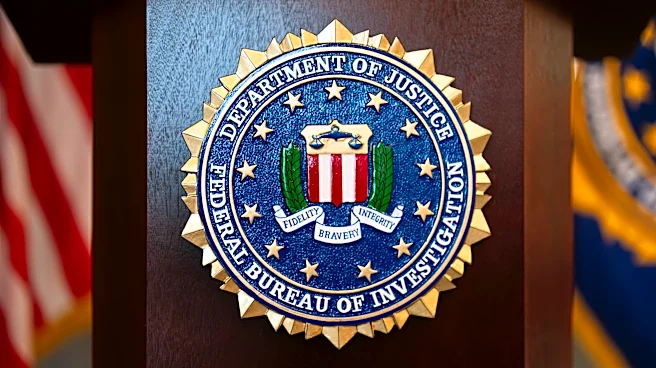
In July, Department of Justice Assistant Attorney General for the Civil Rights Division Harmeet Dhillon sent letters to election officials in all 50 states, threatening them with criminal prosecution if they facilitate noncitizen voting, according to NBC News.
A compilation of studiesdone by the Brennan Center for Justice, a nonprofit legal advocacy group, found that noncitizen voter fraud is "extraordinarily rare" and that "allegations of noncitizen voting that prove unfounded are far more common than allegations that turn out to be true."
Also in July, the Trump administration removed all three members of the bipartisan Election Assistance Commission (EAC), an independent agency created by Congress after the 2000 presidential election to assist states in administering elections.
The Trump administration has also urged states to purge their voter rolls in an effort to remove undocumented immigrants, after Department of Homeland Security officials said they found over 250,000 noncitizens registered to vote in four states. Voter advocates have said the the data is erroneous and a purge could remove eligible voters from registration lists.

The DOJ has sued 30 states and the District of Columbia to force them to turn over voter data including drivers’ licenses and the final four digits of Social Security numbers. Tennessee provided the data willingly and is not being sued.
In all 21 court decisions following the lawsuits so far, judges emphasized privacy concerns and sided with the states refusing to provide data.
In an interview with USA TODAY, Rep. Jim Himes of Connecticut, one of the top Democrats on the House Permanent Select Committee on Intelligence, said Trump administrative officials have been setting the stage to intervene in the midterm elections via false claims about the vulnerability of America's electoral system to foreign interference.
"This is not just a legitimate concern; it's a probable scenario,” Himes told USA TODAY. "The stage is being set for an announcement that the elections he loses badly were corrupt … and that the president is going to reject the results of the election."
Concerns like these have voter advocacy groups worried that election fairness is what is actually on the ballot this year.
Haubenreich said Protect Democracy is one of many organizations with litigation prepared in anticipation of potential election interference — but the solution, he said, has to start deeper.
“We have to file litigation and fight as hard as we can, but what this really comes down to is organizing and taking back political power at the state level, and bringing proportional representation to the forefront,” he said.

Tennessee has an overall grade of F for gerrymandering, according to the nonpartisan Gerrymandering Project research group. Their research shows that Tennessee electoral lines create “significant” Republican advantages, particularly for incumbents, split counties more than other states and form “very” uncompetitive districts.
The Volunteer State is one of 15 to bear the F rating — 10 Republican and five Democrat.
Haubenreich said longstanding, one-party rule with no competition leads to disconnection between constituents and their lawmakers.
“When you have people stuck in offices forever and ever, they have very few reasons to moderate their views or get anything done, because they’re safe,” he said. “Whether you’re red or blue, we want more responsive representation.”
At the Democracy Summit in Nashville on Aug. 29, the desires of constituents to be heard were evident as Haubenreich and his co-presenter Anna Dorman, also of Protect Democracy, were peppered with questions as they led a panel discussing potential federal election interference and gerrymandering.

From deep within the stadium-style seating, one woman asked the pair how she could "leverage (her) time most effectively.”
“I want to do more,” she said. “But I am still trying to figure out how.”
The answer, according to Haubenreich and Dorman, starts simply: vote early, encourage others to do the same, and be the voice of reason in a political world increasingly overwhelmed by disinformation.
“There will be scary things going on,” Dorman said. “Think twice before you share information. The whole point (of election interference) is to create a sludge of chaos and mess. We’re going to bring down the temperature.”
Haubenreich agreed.
“What we don’t want is anticipatory obedience,” he said. “Don’t let these threats scare you … don’t be bullied into not exercising your rights.”
“This is not through November,” Dorman said. “This is a long haul.”
Angele Latham’s role covering First Amendment issues at The Tennessean is made possible by a collaboration among Freedom Forum, Journalism Funding Partners and the USA TODAY Network. Freedom Forum does not provide editorial input. Reach Angele Latham at alatham@gannett.com, on X at @angele_latham and on TikTok at @angelelatham.
Josh Meyer, the domestic security correspondent with USA TODAY, contributed to this report.
This article originally appeared on Nashville Tennessean: Voting groups urge high turnout amid fears of interference