






The wastewater you’re flushing down the drain might be an afterthought for now, but soon it could be worth millions.
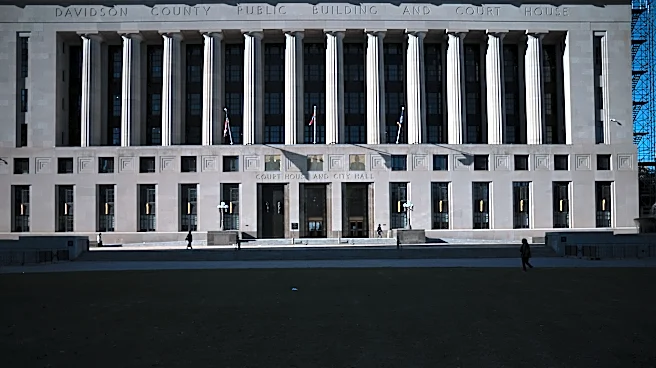
The Metro Nashville Council is considering a pair of agreements between Metro Water Services and a Virginia-based developer to construct a renewable natural gas facility that city officials say will generate not only a steady supply of energy but also millions of dollars in revenue.
That new facility would take a byproduct of the wastewater treatment process, called biogas, produced at Metro Water Services’ biosolids facility at 1810 Cement Plant Road and convert it into renewable natural gas to be injected into a nearby gas pipeline.
There could still be a long way to go before that becomes reality, though. The bill authorizing
gas rights and lease agreements related to the project passed on its second reading Sept. 15 but still needs another round of approval before it’s official, and after that it could take two years for the new facility to come online.
Here’s what to know for now.

How the agreements would work
The agreements up for consideration are with Arlington, Virginia-based Burnham, an infrastructure development firm that partners with public utilities to modernize wastewater system operations, reduce costs and create clean energy.
Both the gas rights and lease agreements have 20-year terms, with options for two five-year extensions provided both parties accept. Under the agreements, Burnham would finance, design, construct, own and operate a renewable natural gas facility.
In exchange for the biogas provided from the nearby Metro Water Services facility, Burnham will share a portion of the revenue generated after the gas enters the pipeline and starts accumulating renewable energy credits. A fiscal note included with the council agenda notes that Burnham will pay quarterly royalties at a minimum of $1 million per calendar year for the biogas provided by the city, calculated at 70% of the net revenue received from the sale of the renewable natural gas produced at the facility.
According to the U.S. Environmental Protection Agency, those credits are produced when one megawatt-hour of electricity is generated and delivered to the electrical grid from a renewable energy source. The credits are meant to differentiate that energy from the non-renewable energy that feeds into the same power grid. Customers who want to use renewable energy can buy the credits separately to match their energy consumption.
If the gas rights agreement is approved, Burnham would agree to start construction 18 months after its effective date and achieve commercial operation by six months later. Burnham would own the facilities it constructs.
The lease agreement, meanwhile, would lease about 1.2 acres at 1815 Cement Plant Road to Burnham, who’d pay $1 a year to Metro Water Services in annual rent over the life of the agreement.
The science behind the proposal
So what exactly is a biosolid? Or a biogas, for that matter?
For starters, they’re probably not what you’re thinking.
Wastewater is any used water which might arrive at a treatment plant with substances like human waste, food scraps, oils and other chemicals in it. Biosolids are not that untreated wastewater itself, but rather what’s left over after it's been treated.
During that process, the liquids are separated from the solids, the latter of which are treated to produce a semisolid, nutrient-rich product known as a biosolid. According to the U.S. Environmental Protection Agency, the term “biosolids” typically refers to sewage sludge that’s been treated to meet the agency’s regulatory requirements for use as a soil conditioner or fertilizer.
But wastewater treatment also produces another material: biogas. The Metro Water Services facility in Germantown produces an average of 1.5 million cubic feet of it every day as a product of what’s called anaerobic digestion, the process through which bacteria breaks down organic matter in the absence of oxygen.
Most of that biogas is currently burned off through waste gas burners. But that would change if this new facility is constructed, which the coucil agenda noted would allow for the beneficial reuse of 100% of the biogas produced at the biosolids facility.
Austin Hornbostel is the Metro reporter for The Tennessean. Have a question about local government you want an answer to? Reach him at ahornbostel@tennessean.com.
Get Davidson County news delivered to your inbox every Wednesday.
This article originally appeared on Nashville Tennessean: Nashville could make millions from wastewater with renewable gas project