








On the eve of its 30th anniversary, Nashville nonprofit Thistle Farms is eyeing the crumbling, historic Tennessee State Prison and its 120-acre property for a massive expansion, the nonprofit's founder, the Rev. Becca Stevens, revealed last week.
"We could take something that’s really considered blight and turn it into something with greater purpose, a place where we can all connect and heal," Thistle Farms CEO Tasha Kennard told The Tennessean.
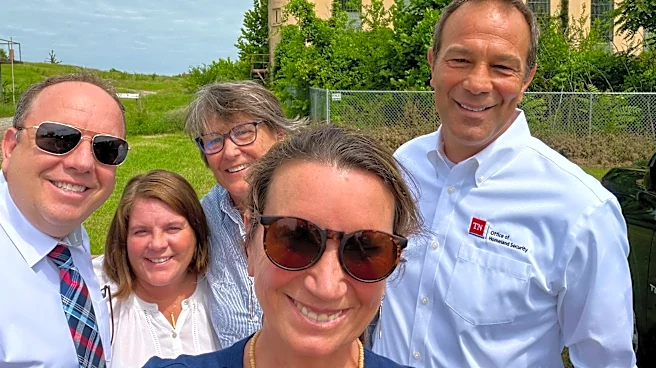
Leaders of Thistle Farms, which serves women survivors of addiction and exploitation, toured the 128-year-old former prison known as "The Castle" on Aug. 4 with Gov. Bill Lee's sister Cynthia Lee and two state Safety Department executives.

Stevens discussed the Thistle Farms dream to take over the old Tennessee
State Prison on Sept. 17 at a fundraiser breakfast for nonprofit St. Luke's Community House, where Stevens' mother, the late Anne Stevens, once served as executive director.
Stevens and Thistle Farms CEO Kennard, in a brief interview afterward, said they were in the early stages of making a proposal to move all the nonprofit's manufacturing and administrative offices to the old prison grounds.
Stevens said their dreams are as much about restoring a prison marred by riots and overcrowding as they are about growing and consolidating Thistle Farms operations.
"I think it’s crazy, everything is getting revitalized and is getting new life in this whole part of Nashville in the Nations," she said, "and The Castle is just dying out there."
Thistle Farms, a $13 million-a-year nonprofit, provides two-year residential programming for up to 40 women and housing, employment and other services for graduates. The organization pays for nearly half its expenses — and provides jobs for 125 people —by making and selling products like candles, soaps and lotions and clothing, and operating a cafe connected to its store at 5122 Charlotte Ave.
Tennessee State Prison stopped housing inmates in 1992 after overcrowding concerns came to a head. Since then, the state Corrections Department has used parts of the property for some operations, including record keeping, state Department of General Services communications director Michelle Sanders Parks said in an email.
The site also has been used for filming for 1999 Tom Hanks vehicle "The Green Mile", and 2001's "The Last Castle," with Robert Redford and James Gandolfini.
Nothing can happen at the Tennessee State Prison "for the next few years" as the state Corrections Department continues to use the property, said Sanders, who downplayed the Aug. 4 visit between Thistle Farms and state government executives.
The state General Services Department "has not entered into any formal process with Thistle Farms," she said. "The meeting and tour were exploratory only."
Tennessee State Prison opened in 1898 near Centennial Boulevard and the Cumberland River with an 800-inmate capacity, but overcrowding started immediately — more than 1,400 prisoners were sent there the first day.
Within five years, several inmates used explosives, killing one, to blow up part of the building for a prison break. It was the first of several tragedies, including serious fires and riots. The 2020 tornadoes also did significant damage.
A total of 125 inmates were executed in an electric chair between 1916 and 1960, state records show.
"We're not scared of that history," Stevens said.
"And there’s an opportunity," Kennard added, "to shed light on the darkness that has covered the prison for a long time."
Thistle Farms leaders haven't come up with an estimate for how much restoration and cleanup would cost. But both Stevens and Kennard acknowledge that figure would be higher than $100 million.
For the immediate future, Thistle Farms is launching a campaign to raise $1.5 million to expand residential programming capacity from 40 to 55 women, Kennard said.
Reach Brad Schmitt at brad@tennessean.com.
This article originally appeared on Nashville Tennessean: Nonprofit tours crumbling 'The Castle' for possibilities | Exclusive