







After several years of high taxes and battles to keep many hemp products legal in Tennessee, the state's new law that more heavily regulates the sale and taxes of several THCA products has led to a loss of more than $50 million in tax revenue.
Three years ago, on July 1, 2023, Tennessee implemented a 6% sales tax on hemp products sold in the state. The hemp tax was on top of Tennessee's already steep 7% sales tax. Then a new law was enacted that changed regulations and taxes on hemp.
In January 2026, the high tax on hemp products was repealed by Public Chapter 526, which not only updated the taxation on THCA, but also the regulation and distribution of THCA products.
Public Chapter 526 banned the sale of products containing cannabinoids at a dry-weight
volume of 0.3% or higher, including THCA. The law made many products that were previously legal, now illegal. Products containing very low THCA concentrations, like lotions, are still legal under Public Chapter 526.
It also updated the taxes on THCA products. The new taxes are: two cents per milligram of a hemp derived cannabinoid, a wholesale tax on hemp plant products of $50 per ounce and a tax on liquid products of $4.40 per gallon of liquid.
What is THCA?
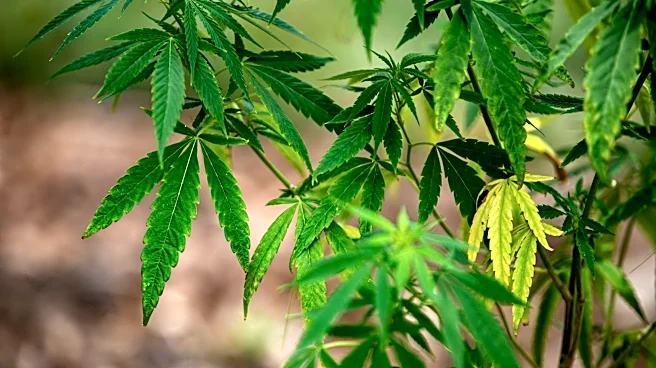
THCA, short for tetrahydrocannabinolic acid, is a chemical found in the flowers of cannabis plants. There is usually more THCA in fresh cannabis plants than there is in plants that have been dried, according to WebMD.
THCA is not psychoactive, but when it is heated through methods including smoking and vaping, it is converted to THC, which is psychoactive and is mind-altering, according to the Center for Disease Control.
Tennessee down in hemp revenue
The new law partially went into effect on Jan. 1 and since then hemp tax revenue has been down significantly in Tennessee. Since Public Chapter 526 became law, the state has taken in less money than it expected each month. The most recent data shows that in July alone the state predicted $9.4 million in hemp tax revenue but only took in $427,000, according to tax revenue charts.
Most of the new regulations in Public Chapter 526, including new tax rates, age restrictions, penalties and licensure requirements, went into effect on Jan. 1. The state postponed the outright ban on THCA to July 1 in order to give growers and sellers of hemp more time to adjust.
The state projected it would make $8.8 million in hemp tax revenue in just the month of February, but Tennessee monthly revenue collection tables show the state only brought in 3% of the projected revenue, collecting just $61,000.
Here's what Tennessee expected to make on hemp tax revenue in 2026 so far compared to what it actually made:
- February: $8.8 million expected, $61,000 actual
- March: $8.3 million expected, $183,000 actual
- April: $9.9 million expected, $318,000 actual
- May: $10.3 million expected, $247,000 actual
- June: $9.1 million expected, $224,000 actual
- July: $9.4 million expected, $427,000 actual
In total, Tennessee expected to bring in $55.8 million in hemp revenue but brought in only $1.4 million so far this year, meaning there was a roughly $54.4 million shortfall in hemp tax revenue.
Although there is a shortfall in Tennessee's projected hemp tax revenue, the state is collecting 5% more than projected in year-to-date tax revenue, according to The Sycamore Institute.
The 5% increase in expected revenue totals $1.2 billion above expectations, according to the Tennessee Department of Finance and Administration.
What hemp products are and are not legal?
Under Tennessee law, the term marijuana refers to cannabis that has over 0.3% THC by dry weight. The ban implemented on July 1 outlawed THCA products over the 0.3% concentration limit. This means that although hemp and marijuana are the same species, what is legally referred to as marijuana is illegal and hemp is not.
a 0.3% concentration or less remain legal in Tennessee. Lotions and some gummies fall under the legal category because those products contain less THCA than the law allows.
Other cannabinoids listed as hemp products (and therefore legal under the concentration limit) in the law are:
- Delta-8 tetrahydrocannabinol
- Delta-10 tetrahydrocannabinol
- Hexahydrocannabinol
- Tetrahydrocannabivarin (THCV)
Afton Pratt covers trending news for The Knoxville News Sentinel and Tennessee. She can be reached at ampratt@usatodayco.com.
This article originally appeared on Nashville Tennessean: Tennessee expected $55.8M in hemp taxes in 2026. It collected just $1.4M