







A Middle Tennessee town is removing controversial Flock license plate readers after pushback from residents.
In a Sept. 19 Facebook post, Coopertown Mayor Jeff Smith announced the town, located about 35 miles from Nashville, will end its contract with Flock and have the cameras taken down, along with removing Flock's access to the town's system. Flock cameras, along with other automatic license plate recognition systems like them, have drawn controversy over privacy and data collection nationwide. They have also stirred concerns that innocent people are being tracked or targeted by law enforcement.
Smith said the artificial intelligence-powered cameras were installed in Cooperstown "with ethical and only good intentions to assist in crime prevention,
solving crime and getting loved ones home safe and not innocent tracking." He praised the work of the Cooperstown Police Department and Chief Tyler Haley, saying police work is a "very challenging profession" and that departments are struggling with recruitment.

Smith said he and Haley had extensive discussions about the benefits and concerns stemming from Flock cameras.
"After consideration of emails, public and private comments both in favor of and against, we feel this is the best move for the community to support what the majority of citizens want," part of Smith's post read. "There will be no searches, and while the cameras may continue to temporarily appear active until fully removed or covered, they will not be used."
Smith said Robertson County still has its own cameras within the town's limits, but Cooperstown police will no longer use them. He referred questions on the county cameras to the Robertson County Sheriff's Office. A spokesperson for the office did not immediately respond to questions and a request for comment on Sept. 20.
Controversy over Flock cameras, LPRs grows in Tennessee
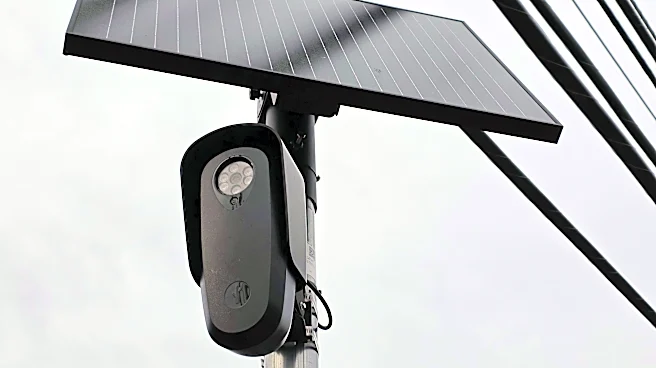
The decision in Cooperstown comes as people push back against Flock cameras across Tennessee and the nation. The cameras record and track vehicles, but not individuals, according to Flock Safety. They identify vehicles in public view and capture details that can help with investigations, including license plates and the make, model and color of the vehicle. They can also document other characteristics such as bike racks, trailers and toolboxes.
"Flock cameras are designed to capture what is already visible from public roads, in plain view," a May 22 Flock Safety blog post reads. "They focus on vehicles, not people, and they are built to help investigators identify vehicle information rather than collect personal details unrelated to a vehicle search.
Those details are uploaded to a national database that law enforcement agencies with a Flock contract can search.
The American Civil Liberties Union, a nonprofit and non-partisan organization, calls the growing surveillance networks used by law enforcement "unprecedented spying" in its "Get the Flock Out" campaign launched in June. The campaign page highlights the lack of regulation and oversight of the technology among its concerns. It also says less than 1% of cars scanned by automatic license plate recognition cameras, like Flock, are connected to crimes or wrongdoing.
"Automatic license plate reader (ALPR) companies like Flock Safety are quietly trying to build a nationwide mass surveillance system," the campaign site said. "If there are Flock cameras in your city, they are tracking, logging, and sharing your movements without a warrant."
Meanwhile, Nashville has stalled its rollout of a citywide license plate reader program. Some Nashville community members and elected officials have wsvoiced skepticism about surveillance technology, citing concerns of potential misuse by federal authorities like U.S. Immigration and Customs Enforcement.
How many Flock cameras are there? Am I being tracked?
In June, Flock reported it operates more than 120,000 cameras across 49 states. While there is no official database of Flock cameras and their locations, crowd-sourced platforms such as DeFlock, Eyes on Flock, FlockHopper and Atlas of Surveillance track Flock cameras and other surveillance technology. The crowd-sourced Have I Been Flocked? website, which is also crowde sources, offers a way for users to search if their license plates have been captured by Flock.
This article originally appeared on Nashville Tennessean: Why a Middle Tennessee town is removing Flock cameras